After the storm in Nagoya, Arika Gurung searches for her sun
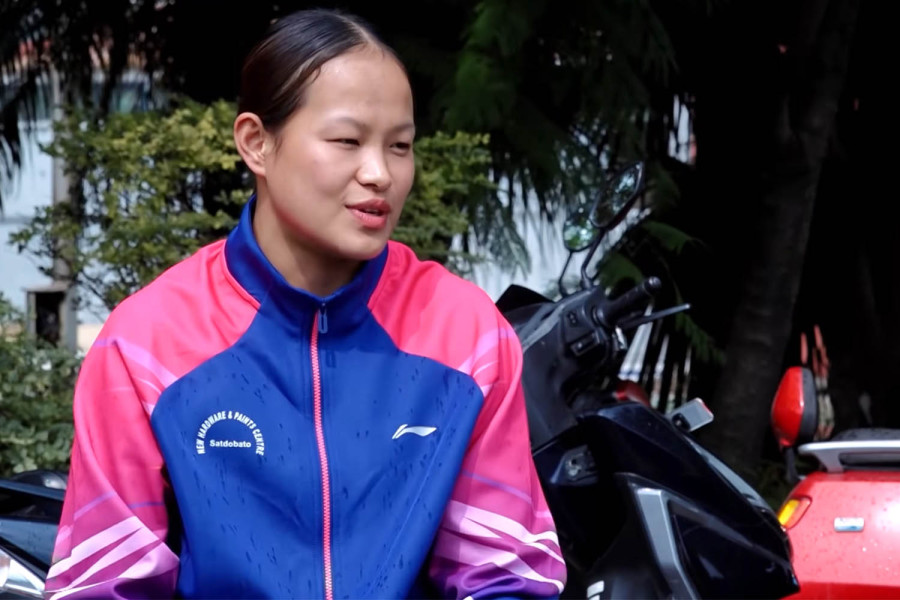
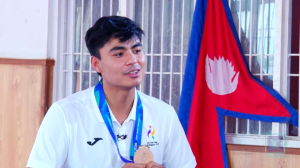
Gurung, ranked ninth in the world, carried Nepal’s golden dream to Japan and returned empty-handed. In a candid reflection, she breaks down her darkest defeat and the quiet resolve driving her comeback. Karateka Arika Gurung speaks during an interview with Kantipur Television at Dasharath Stadium in Tripureshwar, Kathmandu, on Tuesday. Post Photo
At just 22, karateka Arika Gurung is already one of Nepal’s most decorated athletes.
She won the landmark silver in the Hangzhou Asian Games in 2023. After that, herinternational rise has been meteoric—bronze at the Karate 1 Premier League in Rabat, Morocco; gold at the Karate 1 Series in Kuala Lumpur, Malaysia; silver at the Karate 1 Premier Leagues in Istanbul, Turkey, and Leshan, China; and bronze at the 22nd Asian Senior Championship in Bali, Indonesia.
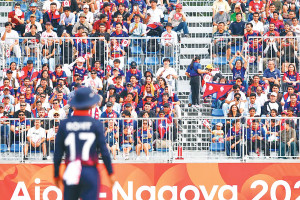
Last month, Gurung went into the Aichi-Nagoya Asian Games aiming for nothing less than gold. She entered the regional competition ranked eighth in the world in the female kumite +68kg category. If there was anyone who would bring a maiden gold medal for Nepal from the Asian Games, it would be her.
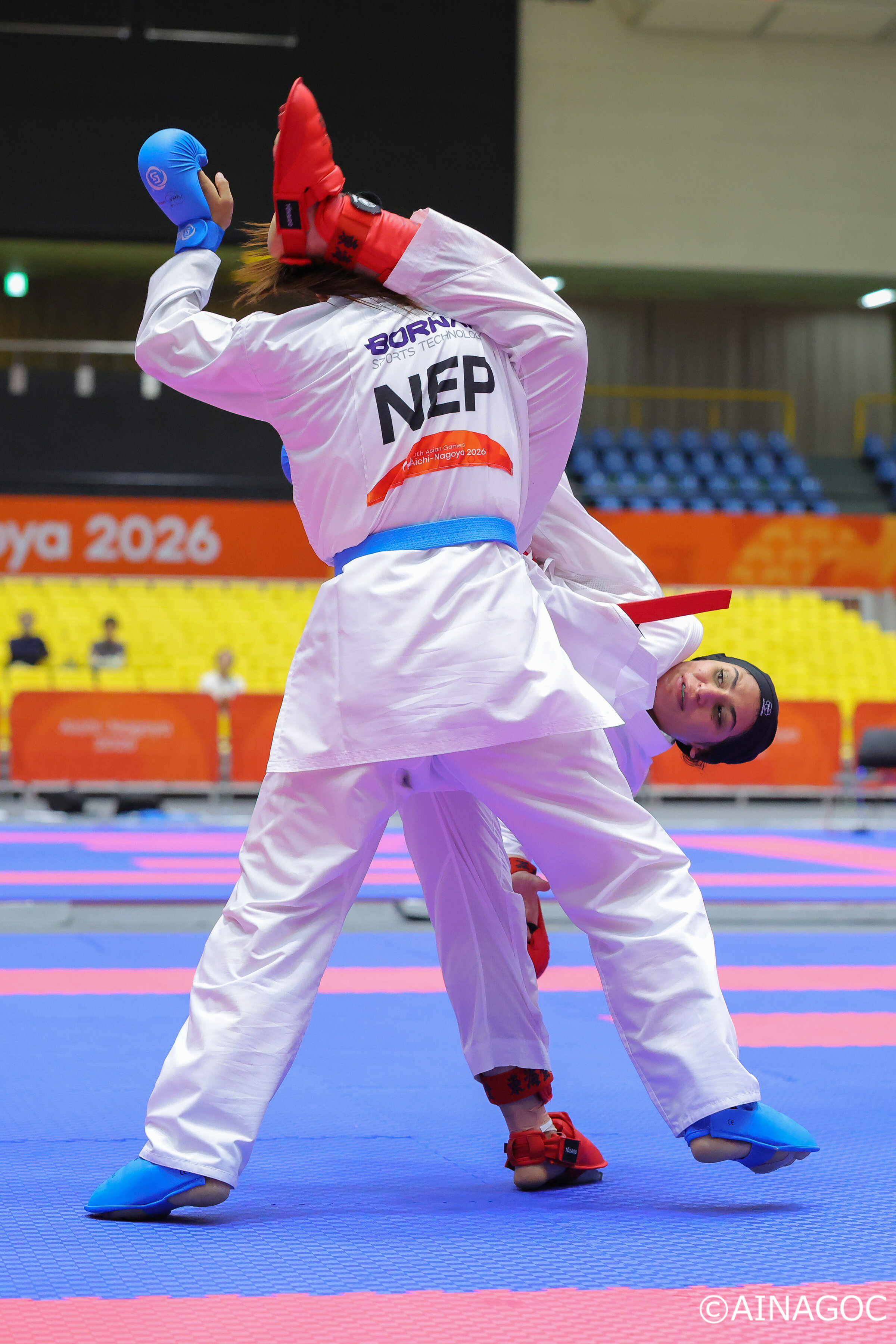
Instead, Nagoya brought heartbreak. Gurung crashed out after getting defeated by Saudi Arabia’s Dina Ahmed S Mostafa in the bronze medal match on September 20.
Not just Gurung, Nepal’s ambitious 135-member contingent of 22 sports had a disappointing campaign, returning with just two bronze medals. For Gurung, missing out on the podium after heavy national investment left an immense burden of guilt. Sitting inside Dasharath Stadium two weeks later, her smile was faint and forced—a flicker that faded whenever conversation drifted back to Japan.
Gurung had announced herself on the continental stage in style. At just 18, she won a historic silver at the delayed Asian Games in Hangzhou, China, in 2023. A gold in Japan would have been a natural next step in her burgeoning career. But it was not to be.
Gurung, however, is determined not to dwell on the disappointment. She is focused on moving forward, she said.
Gurung’s mental toughness was forged long before Nagoya, born through years of relentless grit on the domestic circuit. From her early days at Manamaiju Dojo to entering the national setup, her journey has always been defined by a quiet refusal to stay down.
“When you lose that way, you almost hate the sport,” Gurung recalled of the painful nights in Japan. “The guilt and disappointment make you feel like you never want to step on the mat again. But when you wake up the next morning and realise you still want to get on the mat—that is when you know how much you truly love the sport.”
The defeat in the bronze medal match brought nightmares to Gurung. She says it was the first time that she cried in front of everyone.
“Tears once rolled down my eyes when I could not perform well in the World Championships [in Cairo, Egypt, in November last year],” Gurung said. “But it was only in front of Kushal [Shrestha] guru. I had never cried in front of others.”
Because of Gurung’s consistency, a medal felt almost guaranteed whenever she stepped onto the mat for Nepal. The government and sports authorities had invested heavily in her preparation, eyeing the elusive Asian Games gold. Gurung said she is hurt that she could not meet those expectations that came with the investment.
“I want to say I am sorry to everyone...especially to Nepal aama,” Gurung said, joining her hands. “I know there was a lot of investment in me. I was given international exposure. My biggest guilt is that wherever I was sent for exposure, I delivered good results. But when the time came to deliver at the main event, I couldn’t deliver anything at all.”
Gurung argues that her medalless campaign was a result of her own negligence as well.
“I was fully prepared to face Kazakhstan’s Sofya Berultseva. We know each other well,” Gurung said. “But she defeated me again. After that loss, and before entering the mat for the bronze medal bout, I said that I did not want to win bronze. Now I feel that I was extremely negative about myself and other medals except gold.”
Berultseva is world’s No 1 in the +68kg category. It was Berultseva who had denied Gurung gold in the 2023 Asian Games, Karate One Premier League in Istanbul and Karate One Premier League in Leshan.
Until around 15 seconds left for the three-minute round to end, Gurung was leading 1-0 against Berultseva during the semifinals in Nagoya. However, the world No 1 made a comeback in the dying seconds to progress to the final and went on to win the gold again.
Nepal’s Arika Gurung and Saudi Arabia’s Dina Ahmed S Mostafa are pictured during their bronze medal bout in the women's Kumite +68kg at the Asian Games in Nagoya, Japan, on September 20. Photo: Courtesy of 20th Asian Games Aichi-Nagoya 2026
“In every match, even a fraction of a second—0.01 seconds—holds immense value,” said Gurung. “After the match, those few seconds turn into recurring nightmares: ‘What if I had shown a different movement or thrown a different technique in those few seconds?’”
And it is that technical aspect where Gurung wants to improve further to make sure that neither Berultseva nor any other opponent blocks her path to gold.
Gurung, meanwhile, suggests that the government needs to invest not only in selected athletes but the overall Nepali squad.
“Rather than having a couple of us go abroad and gain experience, I think it is better to bring experienced coaches to Nepal and have a big bunch of athletes learn from them,” said Gurung, citing that she was extremely happy when her teammate Tenzing Sherpa won bronze. “It is cost effective and beneficial in many other ways.”
Gurung continues, “I have always said that I have improved because of my teammates. If we all get equal opportunities and exposure, we can push each other further—all for the benefit of the country.”
Gurung has come a long way in her karate career.
In 2019, when Gurung was only 17, she won a bronze medal for the Armed Police Force during the 8th National Games. In the 9th National Games in 2022, Gurung, who was then playing for Nepal Police, won gold.
“I was participating in a tournament by APF, representing Bagmati. After I won there, APF asked me to join,” Gurung recalls. “Then I joined Nepal Police before the 9th National Games.”
Now, Gurung is planning to resume training for the 10th National Games, taking place in Karnali in December.
“Once I resume training, I think I will overcome this bad memory of Japan,” she said.
As Gurung shared her mixed feelings on the overcast Tuesday afternoon last week, it started to rain, driven by a low-pressure system in the Bay of Bengal.
Gurung looked up at the sky and smiled. Despite the disappointment of the past month, Gurung had not lost her sense of humour. “It seems it is raining so that I can hide my tears,” she said, only half-jokingly.




 15.92°C Kathmandu