The provincial power deal reached between CPN-UML Chairman KP Sharma Oli and Nepali Communist Party (NCP) Coordinator Pushpa Kamal Dahal has sparked discontent within both parties, with senior leaders questioning both the process and the political rationale behind the move.
The pact, struck on Saturday after a series of meetings between the two leaders, was made without formal endorsement from either party’s central committee. While Oli is said to have held informal consultations with party vice-chair Bishnu Paudel and general secretary Shankar Pokharel, the proposal was not tabled before the party’s decision-making bodies before the deal was announced.
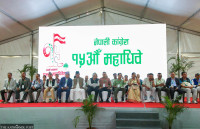
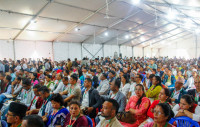
The understanding comes weeks after Oli, Dahal, Madhav Kumar Nepal and Jhalanath Khanal shared a stage at an event marking the 75th birth anniversary of the late communist leader Madan Bhandari on June 28, where they publicly stressed the need for greater unity among the country’s left forces.
In their joint agreement, Oli and Dahal said cooperation was necessary to resolve unhealthy political competition, restore stability and improve governance.
“To address recent disagreements over provincial budgets, the situation created by budget deadlocks and unhealthy political competition, and to maintain political stability, good governance, prosperity and provincial development in line with public aspirations, our two political parties have reached this agreement,” reads the document signed by the two leaders.
However, the decision has drawn criticism from within the UML and the NCP.
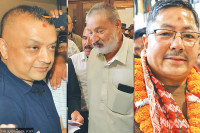
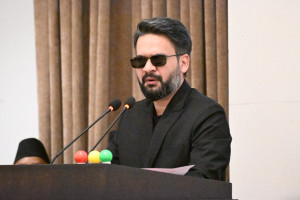
UML Vice-chair Gokarna Bista said the party had never held a formal discussion on forging provincial alliance with the NCP.
“We came to know about the agreement only after it had already been reached with Dahal,” said Bista. “There has been no formal discussion on this issue within the party.”
Several UML leaders argue that the leadership has yet to explain why yet another partnership with Dahal’s party is politically necessary, especially after repeated collapses of previous alliances.
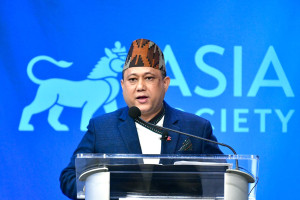
Former UML senior vice-chair Ishwar Pokharel said the agreement lacked a convincing foundation because the parties had failed to critically examine the reasons behind their earlier unity and subsequent split.
“Without a serious review of the previous unification and division, this agreement does not appear to rest on a strong foundation. It is cooperation driven by the interests of two leaders,” said Pokharel. He also questioned whether the latest understanding reflected any broader political vision.
“This agreement has not emerged from political debate or ideological analysis. It remains unclear how far it will go and what larger political objective it seeks to achieve,” he said.
But UML Secretary Bhanu Bhakta Dhakal defended Oli’s move, stating that the party chair had consulted senior leaders as necessary and that not every decision required formal committee approval before negotiations.
“The agreement was reached because circumstances demanded it. Some decisions can also be taken on the basis of informal consultations,” said Dhakal.
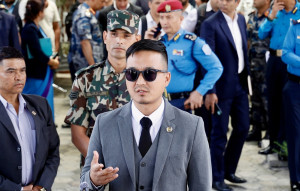
Deputy General Secretary Yogesh Bhattarai was more critical of the deal, and described it as a “guerrilla” deal. “There is turmoil within both parties. The same guerrilla style again. No participation. No transparency,” Bhattarai wrote on social media platform X. “Questions over both intent and process. The same mistakes repeated. Where is accountability?”
The agreement has also exposed differing views within the NCP.
Party leaders said Dahal had assigned Barshaman Pun and Pramesh Hamal to prepare the groundwork for talks with the UML. Before finalising the agreement, he reportedly held informal discussions with co-coordinator Madhav Kumar Nepal and other senior leaders, arguing that Nepal’s left movement faced mounting challenges, the government had become increasingly vindictive and the federal democratic system itself was under pressure.
According to a leader, Nepal cautioned Dahal that any cooperation with Oli should proceed carefully, expressing concern that the UML chair could withdraw from the alliance at any time.
NCP leader Beduram Bhusal defended the deal saying it was made after discussions among the party’s top leadership. “Cooperation with the UML has begun once again. This is also a test of broader unity among the left forces,” said Bhusal.
Another senior NCP leader, however, warned that the latest understanding would not last unless the parties first conducted a serious review of the split that dismantled the former Nepal Communist Party in 2021.
The renewed coalition partnership is widely seen as an attempt to rebuild left cooperation before next year’s local and provincial elections. UML and the then CPN (Maoist Centre) had forged an electoral alliance in the 2017 general elections before formally unifying in 2018. The unified party later collapsed following a prolonged power struggle between Oli and Dahal, ending one of the strongest parliamentary mandates in Nepal’s democratic history.




 15.34°C Kathmandu