An ever-booming Nepali diaspora is being served by severely understaffed missions
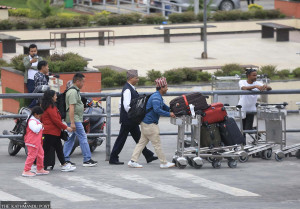
Heavy consular workloads are keeping diplomats busy with routine services instead of trade, investment and economic diplomacy. The Nepali community in Japan has grown to about 342,000.
Nepal’s diplomatic missions abroad are struggling with staff shortages as the number of Nepalis living, working and studying overseas continues to rise. This has increased pressure on consular services and limited the missions’ ability to pursue broader diplomatic and economic goals.
The government has repeatedly pledged to strengthen its missions to promote exports, bilateral trade and investment, tourism and economic diplomacy. But missions in countries with rapidly growing Nepali communities say they lack the personnel and resources to deliver even routine services efficiently, let alone pursue those wider objectives.
Japan offers one of the starkest examples.
Nepal opened its embassy in Tokyo in 1965, when roughly 1,000 Nepalis lived in Japan. The mission began with three diplomatic staff. Six decades later, the Nepali community has grown to about 342,000, but the diplomatic establishment has barely changed.
The embassy has five diplomatic positions, including the ambassador. With the ambassadorial post vacant for the past 11 months, only four diplomatic staff are currently working there. Just one position was added last year.
“There were three staff members 61 years ago. Now there are four of us,” Harihar Kant Poudel, chargé d’affaires ad interim, said. “The Nepali diaspora is growing every day, but the resources and staffing of the embassy have not increased accordingly.”
The increase has been particularly rapid in recent years. Japan had about 97,000 Nepalis in 2021, according to the embassy. By August 2026, the number has risen to around 342,000.
The growing population has brought a sharp increase in demand for passports, document verification, powers of attorney and other consular services. The embassy issued about 19,000 passports in the last fiscal year.
Three years ago, applicants would generally receive services on the same day. The embassy now often asks them to leave their documents and return later.
“The workload is so heavy that we are busy even on weekly holidays,” Paudel said.
The pressure is also affecting the embassy’s ability to respond to emergencies. Seventy-three Nepali citizens died in Japan last year for various reasons. The embassy had to assist with the administrative and legal procedures following their deaths, including compensation claims and arrangements concerning their remains, including repatriation. Staff sometimes struggle to visit hospitals and police stations because they are tied up with routine consular work.
The embassy has repeatedly asked the foreign ministry for two additional diplomatic staff and two local employees. It has also sought more resources to assess and verify worker demand, inspect employers, address labour disputes, protect workers’ rights and visit immigration detention centres and prisons to check on Nepali detainees.
Economic diplomacy has suffered. Japan is a major development partner and an important potential source of investment and trade, but embassy officials say they have little time to pursue those opportunities.
Last year, funds allocated by the foreign ministry for economic diplomacy went unused because the mission’s limited staff were occupied with routine consular services.
The embassy in Australia faces similar problems.
Nepal opened its embassy in Canberra in 2007, when only about 7,000 to 8,000 Nepalis lived in Australia. The community now numbers around 300,000. The mission also serves Nepalis in Fiji, New Zealand, Papua New Guinea and other countries in the region.
The mission has four diplomatic staff apart from the ambassador, although the ambassadorial position has also been vacant for months.
Tara Gautam, chargé d’affaires ad interim, said hundreds of people visit the embassy for passports, consular services and powers of attorney.
About 150 people come to the embassy each day for passports alone, and staff must process their photographs and biometric data. More than ten applications for powers of attorney, which must be certified by the head of mission, are also received daily.
“I thought the workload would be lighter here than in Saudi Arabia, where I previously worked,” Gautam said. “But it is not. The resources and staff are insufficient for the number of people we serve.”
The embassy has repeatedly requested additional staff.
Foreign Ministry officials acknowledge that most Nepali missions have been operating with bare minimum staff for years.
Lok Bahadur Poudel Chhetri, spokesperson for the foreign ministry, said the missions were expected to promote Nepal’s interests abroad, economic diplomacy, trade and Nepali culture, while also taking on growing responsibilities for the welfare and protection of Nepalis overseas.
“Our missions are providing maximum services with minimum staff,” he said.
Nepal currently has missions at 45 locations, including embassies in 31 countries, three permanent missions to the UN and other organisations, and ten consulates general, along with a field office in Visakhapatnam, India.
In its budget speech in May, the government announced plans to close the embassies in Denmark, Brazil and South Africa, the consulates general in Chengdu and San Francisco, and the field office in Visakhapatnam. The closures have yet to be completed.
Experts say Nepal’s missions abroad, operating with barely enough staff to function, cannot be expected to deliver on the government’s economic diplomacy ambitions.
Former foreign secretary Madan Kumar Bhattarai says strengthening missions in countries where the Nepali population and economic ties have grown rapidly is essential.
“Where there is greater need and a heavier workload, staffing and other resources should be increased,” he said. “Given the country’s limited financial capacity, priorities should be based on the size of the Nepali diaspora and the economic, commercial, social and cultural importance of each country.”
Staffing levels vary considerably among missions.
The Nepali mission in the United Arab Emirates serves a community of around 700,000 Nepalis. The consulate general in Dubai has only four staff, including the consul general.
Several smaller missions, including those in Myanmar, Brazil, Spain, Denmark and South Africa, have only an ambassador and two diplomatic staff positions. Missions in Ottawa (Canada), Islamabad (Pakistan), Cairo (Egypt), Colombo (Sri Lanka), Tel Aviv (Israel), Paris (France), Berlin (Germany), Brussels (Belgium), Muscat (Oman), Manama (Bahrain), Moscow (Russia), Lisbon (Portugal) and Vienna (Austria) generally have an ambassador and three diplomatic staff. The consulate general in Jeddah (Saudi Arabia) has four staff apart from the consul general.
The embassies in Canberra, Tokyo, Dhaka (Bangladesh), Bangkok (Thailand) and Seoul (South Korea) each have four diplomatic staff positions apart from the ambassador.
Nepal opened its first overseas mission in London in 1934. It currently has five diplomatic staff apart from the ambassador. Nepal’s embassy in Abu Dhabi (UAE) has eight staff, Kuwait seven, Kuala Lumpur (Malaysia) nine, Doha (Qatar) nine, Riyadh (Saudi Arabia) eight and Washington, DC, seven.
Nepal’s permanent mission to the UN in New York has 11 staff, while its permanent missions in Geneva and Vienna have seven and three, respectively. The Nepali consulate general in Kolkata has six staff.
Across all 45 missions, there are currently 244 approved positions, including ambassadors and consul generals. Of these, 47 are held by officials from outside the Foreign Service. They include seven joint secretaries from the civil administration service, seven military attachés, one police counsellor, one intelligence counsellor, nine administrative undersecretaries, two revenue undersecretaries, one legal undersecretary, one accounts undersecretary, nine administrative section officers, three accounts officers, one revenue section officer and five administrative/accounts assistants.
In addition to Foreign Service personnel sent by the ministry, the missions also hire local staff. These include office secretaries, legal advisers, messengers, translators, gardeners, security guards and office assistants, among others.
There are 374 approved positions for local employees. The Foreign Employment Board had been providing financial support for local staff at missions in countries with large numbers of Nepali migrant workers, including Qatar, Saudi Arabia, the UAE and Malaysia. The board had been spending Rs25.7 million annually to fund 19 local employees at various embassies. But after the Office of the Auditor General deemed the arrangement contrary to rules, the number of board-funded staff was cut from last year, further increasing the workload on the limited diplomatic staff.
The government has conducted new organisational and management (O&M) surveys for all 17 ministries. Because the surveys were aimed at cutting public expenditure, the Foreign Ministry has been unable to add positions despite its requests for more staff.
The ministry has sought to transfer foreign service staff from the six missions proposed for closure to embassies where additional personnel are needed. However, because the O&M restructuring has not yet been certified by the Prime Minister’s Office, the ministry’s plan has yet to materialise. Foreign Ministry spokesperson Chhetri said the ministry wants to transfer staff from missions proposed for closure to those in need without imposing additional financial burden on the state.
Under the proposal, the ministry would also cut positions in the administration, revenue and accounts groups at missions and replace them with Foreign Service personnel. It has proposed scrapping two minister (economic) positions at the Nepali embassies in New Delhi and Beijing, five consul-general positions in Hong Kong, Lhasa, Kolkata, Chengdu and Guangzhou, and seven joint-secretary-level positions from the administrative service.
It has also proposed cutting labour counsellor positions in the general administration group in Seoul, Kuala Lumpur, Riyadh, Doha and Abu Dhabi, along with the cultural counsellor in New Delhi, the economic counsellor in Visakhapatnam, and nine administrative undersecretary positions, including those from the revenue group in Washington, DC, and Kolkata. The proposal also calls for cutting ten administrative section officer positions at various missions.
Officials from the administrative service have opposed the proposed cuts. Pressure from the administrative service has also meant that Chief Secretary Govinda Bahadur Karki has yet to certify the Foreign Ministry’s O&M proposal.




 17.81°C Kathmandu