It takes some Rukum East villagers five days to visit their ward office
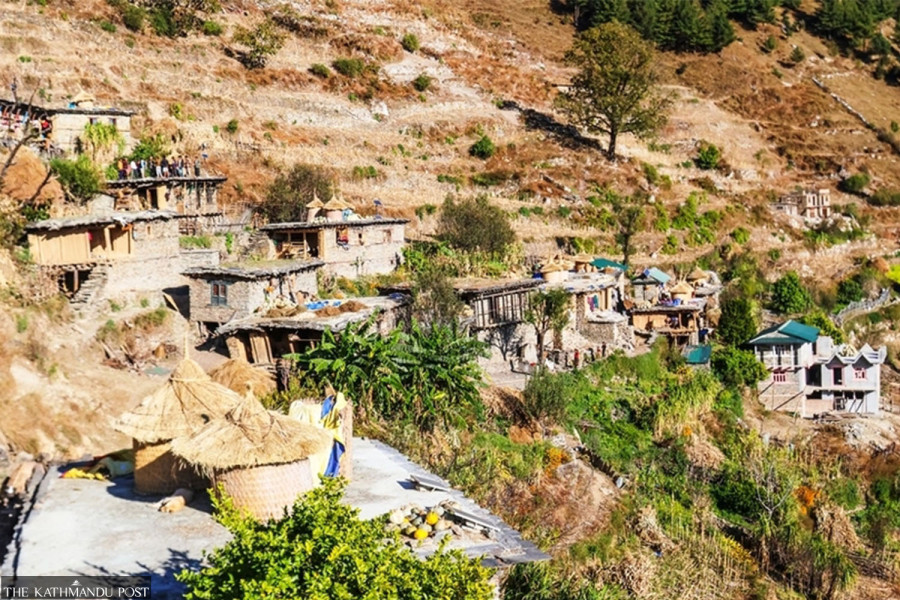
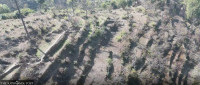
Residents of four remote settlements in the district want a separate ward or merger with a neighbouring ward to end their hardship. Hardibang village in Putha Uttarganga Rural Municipality of Rukum East. MAHESH KC/TKP
Residents of four remote settlements in Putha Uttarganga Rural Municipality of Rukum East, spend at least five days travelling to their ward office and back for basic government services. Steep mountain terrain, snow, and river crossings make the journey arduous.
People from Jusmar, Hardibang, Ral and Tijyang in ward 2 walk for two days to reach the office in Pelma. They need another two days to return and at least a day to complete official work. For senior citizens, it takes longer.
“I am an elderly woman. It takes me at least three days to reach the ward office and the same amount of time to return,” said 64-year-old Kiuchari Roka Magar of Tijyang. Her village has a poor network of telephone service, so she cannot check whether officials are at work before setting out.
On one visit, Kiuchari claims, she found no ward officials and waited three more days to complete her work. She was away for a week, prompting relatives to travel to Pelma to look for her. They learnt only after reaching the office why she had not returned.
The present ward 2 was formed by merging wards 4 and 5 of the then Ranmamaikot Village Development Committee (VDC). The ward office was placed in Pelma, part of old ward 4, while the four settlements belonged to old ward 5. Residents complain the arrangement ignored local geography.
To reach Pelma, villagers must pass through Maikot in neighbouring ward 1, although its office is closer to their homes. “It takes about two to three hours to walk from our settlement to Maikot. We pass the ward 1 office and continue all the way to Pelma,” said Jokhanlal Kami of Hardibang.
The villagers of Jusmar and Hardibang usually walk on the first day to Pusar in ward 1, stay overnight, and reach Pelma the next evening. For people from Ral and Tijyang, the journey is even harder.
Streams swell during the monsoon and snowfall blocks trails in winter. Even after reaching the office, residents may return without getting their work done.
Devi Gharti of Ral described the danger of travelling with her young son to register his birth. “I barely survived the journey to Pelma a month ago. I did not know what the weather would be like. Heavy rain began the night I reached Dule, but I thought it would not last and set off,” she said. With nowhere to take shelter in the forest, she walked through the rain with her son. The child fell ill and is only now recovering.
No road reaches the settlements, and foot trails are difficult to use. Residents lack nearby health care, reliable communications, and schools beyond the primary level. They must walk a day to Maikot for treatment. Ral has a school only up to early childhood education, Tijyang up to grade 3, and Hardibang up to grade 5. Ral and Tijyang also lack electricity and telephone services. The four settlements have more than 500 residents.
Jagat Gharti, ward 2 chair of Putha Uttarganga Rural Municipality who is from Hardibang, said that he had repeatedly raised the issue with the rural municipality, District Coordination Committee and provincial and federal governments. “We are astonished at how this ward was demarcated. We have gone everywhere we need to go and told everyone who needs to know. This cannot continue,” he said.
The villagers want the four settlements, formerly part of ward 5, to become a separate ward. If that is not possible, they want them included in ward 1, which is easier to reach. Gharti said they were preparing a final campaign and warned they might boycott the upcoming local elections if the government failed to address our demand.
A federal framework could offer an opportunity. A notice published in the Nepal Gazette on June 18 introduced the ‘Criteria for Reviewing the Number and Boundaries of Rural Municipalities, Municipalities and Wards, and the Classification of Municipalities, 2026’. The Ministry of Federal Affairs and General Administration issued the criteria to guide a review under the Local Government Operation Act, 2017. Residents want their case considered under it.
There is also a wider proposal to reorganise the rural municipality. Tikasai Gharti, the rural municipality’s spokesperson and ward 5 chair, said residents had called for a separate rural municipality. Reaching the current centre in Taksera is difficult for them, he said. “The proposal was made when the local units were first formed, and the need remains. A separate rural municipality would also make it easier to resolve the problems [administrative and geographical difficulties faced by the residents] in ward 2,” he said.




 8.12°C Kathmandu