Bankers fear loan misuse ruling could shake confidence in lending
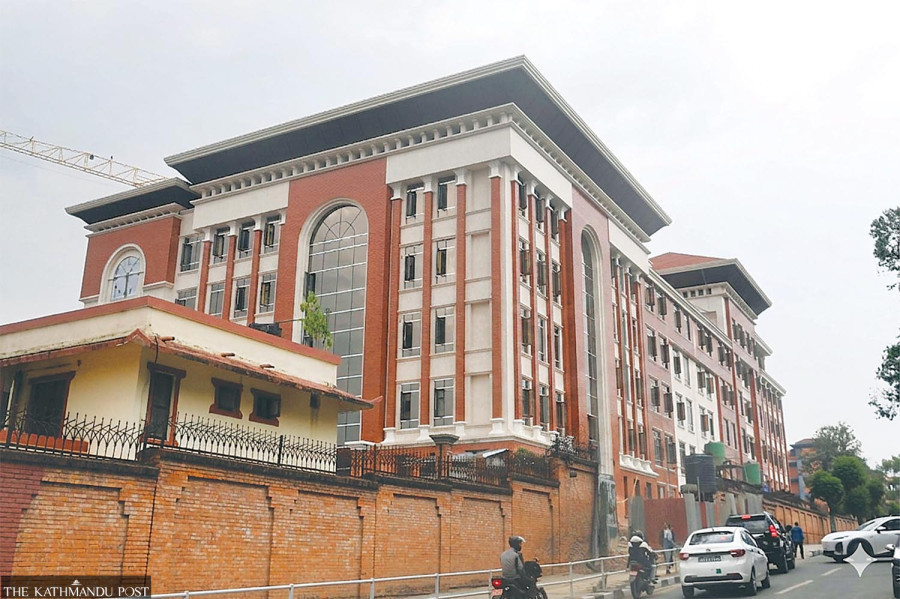
With excess liquidity, historically low interest rates and weak credit demand, bankers warn that the prospect of criminal cases against borrowers who divert loan funds could further dampen lending, particularly if past loans are affected. The Supreme Court ruled that diverting a loan from its stated purpose constitutes a government-prosecuted criminal banking offence, regardless of whether the borrower is regularly paying off the principal, interest, and instalments. Post file Photo
A Supreme Court ruling that borrowers can face criminal proceedings for using loans for purposes other than those for which they were approved has unsettled Nepal’s banking sector, with bankers warning that it could expose borrowers to legal risks even when they are repaying their loans on time.
The ruling says that diverting loan funds from their stated purpose can constitute a banking offence under existing law, regardless of whether the borrower has regularly paid the principal, interest and instalments.
The court, however, made clear that a borrower does not automatically become guilty merely because a loan appears to have been used for another purpose. The allegations must be investigated on the basis of evidence and tested through judicial proceedings.
Bankers fear the interpretation could have far-reaching consequences, given that loans have routinely been used for purposes other than those originally approved in Nepal.
The ruling was issued by a joint bench of Supreme Court justices Tek Prasad Dhungana and Meghraj Pokhrel in a habeas corpus petition filed by Muna Chhetri on behalf of Shashidhar Sharma, a borrower from Prabhu Bank. The court delivered its verdict on July 30, 2026. Its publication last week prompted concern across the banking industry.
“Before Nepal Rastra Bank introduced its working capital lending guidelines, many loans were used for purposes other than those for which they had been approved. Much of that money is still tied up in investments. If borrowers are now exposed to criminal cases, the financial sector could face a major crisis,” said Santosh Koirala, president of the Nepal Bankers’ Association. “There is no issue with loans disbursed after the working capital lending guidelines came into force. But it would be alarming if the ruling also affected loans issued in the past.”
Koirala said the banking system was already awash with excess liquidity, while interest rates were at historic lows and credit demand remained weak. The court’s interpretation could further discourage lending, he said.
In the case involving Sharma, who lives in ward 4 of Tilottama Municipality in Rupandehi, the Supreme Court made clear that loan diversion need not be treated merely as a matter of debt recovery or a commercial dispute between a bank and its borrower. It can also be investigated as a criminal offence under banking laws.
The court said that when a loan is used for a purpose other than the one for which it was obtained, the Banking Offence and Punishment Act provides grounds for investigation. Regular repayment does not, by itself, exempt a borrower from scrutiny over the misuse of funds. “The misuse of a loan is a criminal offence in which the government is the plaintiff. The Act does not make a complaint by the lending bank or prior notice to the borrower demanding repayment a prerequisite for initiating an investigation,” the verdict states.
The court also referred to a regulatory inspection report which found that the lending bank had failed to secure adequate collateral and had disbursed the loan in breach of its own internal guidelines. The court said the bank’s lack of a complaint did not invalidate the investigation.
It further ruled that Nepal Rastra Bank, in its capacity as the regulator responsible for inspecting and supervising banks and financial institutions, was acting within the law when it forwarded findings from its inspection to an agency authorised to investigate the matter.
Rajesh Upadhyay, officiating president of the Confederation of Banks and Financial Institutions Nepal (CBFIN), said borrowers who had diverted loans but were otherwise in good standing should not face criminal proceedings. “Even now, Nepal Rastra Bank can direct banks to recover loans that have been used for unauthorised purposes. But it does not tell them to initiate criminal proceedings against borrowers,” he said. “There are already measures to address misuse, including requiring banks to make provisions and borrowers to repay the loans. The matter should not have to escalate to criminal prosecution.”
Upadhyay said the court’s interpretation could have a negative impact on the financial sector.
Nepali banking regulations already prohibit borrowers from using loans for purposes other than those approved by the lending institution. However, the practice has persisted for years, with banks and borrowers often treating it as a routine matter. Nepal Rastra Bank, too, has tended to overlook such cases when borrowers continued to make repayments regularly.
Sharma borrowed Rs480 million from Prabhu Bank on January 17, 2025, stating that the money would be used to purchase land for a resort in Rupandehi. A subsequent special on-site inspection by Nepal Rastra Bank found that the funds had not been used for the approved purpose.
According to the court’s account of the inspection report, the loan money had been transferred to accounts belonging to people related to Sharma, before being moved to various individuals and institutions. Some of the funds were also used to repay loans taken by other companies owned by the same person.
On July 14, 2026, Nepal Rastra Bank forwarded the report to the Central Investigation Bureau of Nepal Police for further investigation. Police then began an investigation under Section 8 of the Banking Offence and Punishment Act, 2008, and arrested Sharma.
His family subsequently filed a habeas corpus petition challenging his detention. The Supreme Court rejected the petition.
The court interpreted an offence under Section 8 as a government-prosecuted criminal matter. An investigation does not become unlawful simply because the lending bank has not filed a complaint or demanded repayment from the borrower, it said. Once an inspection by Nepal Rastra Bank establishes that a loan was used contrary to its approved purpose, the authorities can proceed with an investigation.
The court also cautioned against unnecessary detention during investigations. When authorising extensions of custody, judicial officers must consider the stage of the investigation, whether detention is necessary, and whether there are sufficient grounds and reasons for keeping a suspect in custody.
Although the Supreme Court rejected Sharma’s habeas corpus petition, it did not make a definitive finding on whether he had misused the loan.




 18.81°C Kathmandu