A 23-year-old woman from Doti regrets that she was unable to continue her education and become financially independent.
She married before turning 17, while she was in Grade 11. She had asked her family to let her finish school before getting married, but they refused. She eventually agreed after her prospective in-laws promised to support her education. That promise was not kept.
“I thought I would continue studying after marriage. But whenever I raised the subject at home, I was scolded,” she said, asking not to be named for fear of consequences.
Despite family pressure, she managed to complete Grade 12. But her difficulties did not end there. She now has two children, and with her husband unemployed, the family relies on relatives to meet its daily needs. Financial dependence on others has also left her vulnerable to psychological abuse and pressure within the family, she shared.
Her experience is far from unique. It illustrates how child marriage can restrict girls’ education, economic independence and opportunities. Many girls across Sudurpaschim face similar circumstances.
Another young woman from Doti married at 15 after eloping while in Grade 8. By the age of 22, she had become a mother of three. She says repeated pregnancies and the demands of raising children have left her physically weak.
She was not allowed to rest even after giving birth. Alongside the burden of household work, she says, she suffered physical and psychological abuse from her husband and in-laws.
Many girls who marry young face domestic violence and become mothers before they are physically or emotionally ready. Boys, meanwhile, face pressure to shoulder family responsibilities and earn money. Some leave school and migrate to India for work while still young.
Nepal’s law prohibits marriage before the age of 20. Section 173 of the National Penal (Code) Act, 2017, makes child marriage a criminal offence, declares such marriages void and mandates up to three years in prison and a fine of up to Rs30,000.
Yet legal provisions and government-funded programmes have done little to ensure that all children are protected from early marriage.
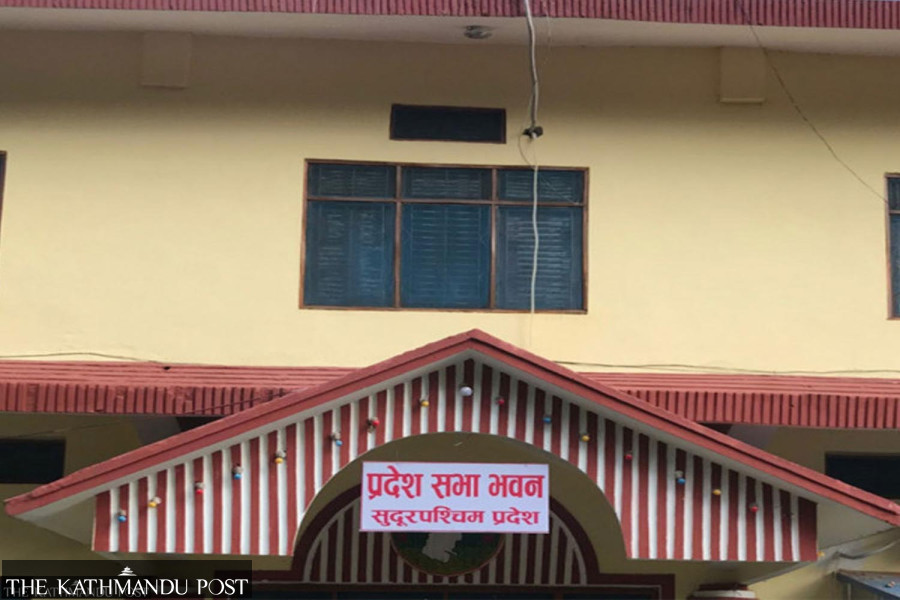
The Sudurpaschim provincial government has allocated funds for prevention campaigns year after year. But child marriage persists, raising questions about the effectiveness and continuity of its efforts.
Child marriage is common not only in rural areas but also in urban communities. Yet few cases reach the police, with many remaining within families and communities.
According to Sudurpaschim Police, just 36 child marriage cases were registered across the province between fiscal years 2020-21 and 2025-26.
Kailali recorded the highest number, with nine cases, followed by Kanchanpur with seven, Baitadi with five, Doti with four and Dadeldhura with three. Bajura, Bajhang, Achham and Darchula each recorded two cases. Police have also conducted awareness programmes to prevent child marriage.
Data from the 2021 national census, however, point to a far more widespread problem. The census found that 29.1 percent of marriages in Sudurpaschim involved child marriage, underscoring the gap between the scale of the practice and the number of cases reported to police.
Bajhang had the highest reported prevalence in the province, at 34.1 percent, followed by Darchula at 33.4 percent. The figures were 29.7 percent in Dadeldhura, 29.6 percent in Achham, 29.4 percent in both Doti and Kailali, 27.8 percent in Bajura, 26.9 percent in Baitadi and 26.6 percent in Kanchanpur.
Figures from the Crime Investigation Department for the fiscal year 2024-25 also show that the practice continues. Of the 61 child marriage cases registered nationwide that year, seven were in Sudurpaschim.
Senior Superintendent Padam Bahadur Bista, spokesperson for the Sudurpaschim Provincial Police Office, said only a small proportion of child marriages came to the authorities’ attention. Cases were more likely to be reported when a marriage involved people from different castes or took place without parental consent, he said.
“Child marriage continues partly because other people in the community do not take an interest,” Bista said. “People should inform the police as soon as they witness a child marriage. But that does not happen.”
Bideshram Chaudhary, focal person for the Sudurpaschim Province Office of the National Human Rights Commission, also said the practice remained entrenched in communities.
He noted a shift in how some child marriages occurred. Rather than parents forcing children to marry, some adolescents were now marrying on their own, partly through the misuse of social media.
“Provincial and local governments and the National Human Rights Commission are making efforts to prevent child marriage. But the practice continues in communities,” Chaudhary said. “We are also seeing adolescents marry on their own through the misuse of technology.”
Although government agencies and non-governmental organisations have introduced various prevention programmes, their impact at community level remains limited, he said.
Annual spending, but no assessment of results
The Sudurpaschim government has been running a campaign against child marriage under the slogan “I am still young, let me grow; not marriage, let me study”. But while funds have been spent, the campaign’s impact has never been formally assessed.
According to the Ministry of Social Development, the provincial government allocated Rs14.1225 million for various child marriage prevention programmes over the past five fiscal years. Of this, Rs12.87008 million was spent.
In the fiscal year 2021-22, the government spent Rs2.953 million on prevention initiatives. These included a day-long orientation on responsible parenting; community awareness programmes on gender-based violence, child protection and child marriage conducted through social development facilitators; the formation and orientation of local child rights committees; peer education in schools; and discussions with religious leaders on reducing child marriage, gender-based violence and other harmful social practices.
The ministry spent Rs1.858 million in 2022-23, Rs2.758 million in 2023-24, Rs2.293 million in 2024-25 and Rs3.052 million in 2025-26.
During this period, 9,147 children and parents across the province participated in the programmes.
But the ministry has not assessed how much the spending has contributed to reducing child marriage. There is little evidence of a clear link between the continuity of government campaigns, spending priorities and measurable results.
The programmes have also remained largely similar from year to year, with workshops, discussions and orientation sessions accounting for much of the activity, according to ministry records.
Asked about the campaign’s effectiveness, Jaydev Mahar, information officer at the ministry, acknowledged that there was no mechanism to measure its impact.
“We conduct the programmes, but we have not been able to measure their impact,” Mahar said. “Universities could conduct such studies at the ministry’s initiative, but we have not developed that mechanism.”
Bindu Kumari Chataut, a women’s development officer at the ministry, said the campaign had begun without a baseline study, specific targets or indicators to measure progress.
“When the programme started, no baseline, target or indicator was established to measure its impact. As a result, we have not assessed what difference it has made,” she said.
The ministry still lacks a dedicated mechanism to evaluate the campaign. Chataut believes it may have had some effect, however. According to ministry figures, 19 child marriages have been prevented in Bajura under the campaign.
Without a system to measure results, the basis for allocating funds in subsequent years remains unclear. Chataut said the allocation for child marriage prevention had also become increasingly limited.
“The budget is barely enough to hold one event in a municipality,” she said. “Instead of assessing the impact, we end up organising a programme in one place a year and moving to another place next year.”
The ministry plans to involve local governments more directly in the programmes from the next fiscal year, she added.
Non-governmental organisations have also spent substantial sums on child marriage prevention in Sudurpaschim.
One of them is PeaceWin, which runs programmes in around 19 local governments across Bajhang, Baitadi, Bajura, Doti and Achham, according to its programme coordinator, Juddha Rawal.
The organisation spends more than Rs10 million annually on initiatives that include building adolescents’ skills, orienting parents, providing sexual and reproductive health education in schools, helping local governments formulate policies and conducting community-level campaigns against child marriage.
“Our project records show that we have prevented 32 child marriages that were about to take place,” Rawal said. “But we have not conducted a baseline, endline or separate survey to measure the overall impact beyond the project.”




 14.72°C Kathmandu