NHRC seeks action against security officials over Tinkune incident
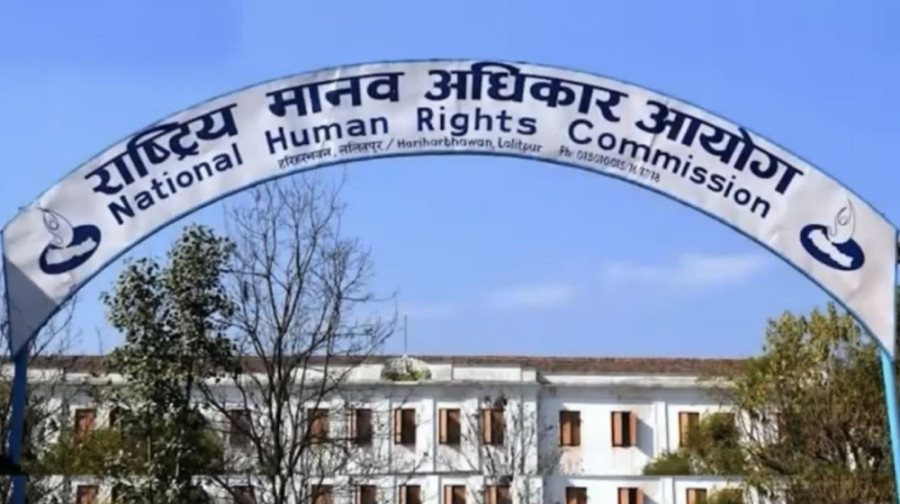
The watchdog has also called for a probe into Durga Prasai and other organisers’ role in provoking the violence during the pro-monarchy protest. The NHRC held both the state and protest organisers responsible for the March 2025 violence under then prime minister KP Sharma Oli, citing flawed security planning, inadequate threat assessment, and ineffective crowd control. File Photo
More than a year and a half after a pro-monarchy protest turned deadly in Tinkune, Kathmandu, the National Human Rights Commission has recommended action against senior security officials and called for a detailed investigation into the role of protest organiser Durga Prasai and others in the violence.
The constitutional human rights watchdog has recommended action against then Kathmandu Chief District Officer Rishiram Tiwari, then Kathmandu District Police Range chief Senior Superintendent of Police Bishwo Adhikari, Superintendent of Police Apil Raj Bohara and Armed Police Force Superintendent Shailesh Shrestha for failing to prevent human rights violations during the March 28, 2025 protest.
The commission has also recommended an investigation into Bohara and Shrestha, who served as field commanders, and other security personnel to determine whether firearms and other forms of force were used in bad faith or negligently, and whether the use of lethal force was necessary.
The findings put responsibility on both the state and the organisers for the events that unfolded under the government led by then prime minister KP Sharma Oli. The protest, organised to demand the restoration of the monarchy and abolition of federalism, was initially designated as a peaceful demonstration but turned violent, leaving journalist Suresh Rajak and Sabin Maharjan dead.
The commission said the district security committee and the chief district officer had failed to properly assess the activities of the organisers and prepare and implement an effective security plan. It also found that the authorities had failed to make alternative security arrangements and adopt adequate crowd-control measures.
“Conduct programmes to boost the morale of security personnel, avoid the use of lethal weapons for crowd control, and, where their use is unavoidable, ensure that weapons causing the least possible harm are used,” reads the recommendation.
The NHRC has therefore asked the government to take action against the concerned officials under Article 249(2)(b) of the Constitution and draw the attention of the Office of the Prime Minister and Council of Ministers, the Home Ministry, Nepal Police and the Armed Police Force to its findings.
The commission has also concluded that the protest organisers were involved in provoking the violence.
It has called for a detailed investigation into Prasai and other organisers, saying their statements before, during and after the demonstration, their social media activity, published news reports and other evidence suggested that they had a role in provoking the protest.
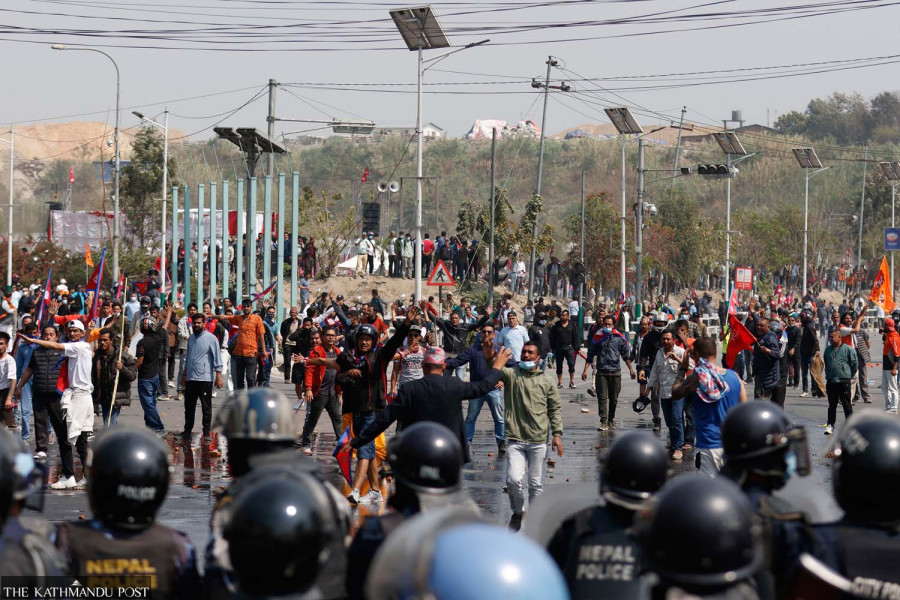
The March 2025 protest, organised to demand the restoration of the monarchy and abolition of federalism, was initially designated as a peaceful demonstration but turned violent, leaving journalist Suresh Rajak and Sabin Maharjan dead. File Photo
The commission wants investigators to establish the extent to which Prasai and other organisers were involved in the loss of life and property damage, whether their statements contributed to protesters becoming agitated and violent, and whether they were responsible for activities that disrupted public peace and order.
The commission has asked authorities to identify anyone else involved and take necessary action while ensuring their right to a fair hearing.
Prasai was among those mobilising supporters for the March 28 demonstration, which was led by the Nawaraj Subedi-led joint movement committee. The Rastriya Prajatantra Party had also backed the demonstration, although its president Rajendra Lingden denied that his party was involved in the violence.
The violence began after protesters broke through a police security cordon and attempted to move into a restricted area. Protesters threw stones at security personnel, while police responded with tear gas and other crowd-control measures. The unrest later spread beyond the protest site, with private houses, businesses, political party offices and media organisations vandalised or set on fire.
The commission has also questioned the political environment surrounding the protest.
“Draw the attention of the then head of government (Oli) and ministers who, according to media reports, made hateful remarks against political parties and groups with differing views, urging them to refrain from such statements, which can have a negative impact on society,” reads the recommendation.
The NHRC has also criticised the decision to allow the pro-monarchy movement and a republican demonstration to take place in Kathmandu on the same day. It said allowing groups with opposing political ideologies to hold programmes on the same day, particularly in sensitive locations around the airport, Parliament and major roads, reflected a serious administrative lapse.
The human rights watchdog has recommended that authorities designate specific places for rallies and assemblies and avoid allowing rival groups to hold programmes at the same place and time.
It has also criticised the security agencies for using expired tear-gas shells and lacking adequate equipment. The government has been asked to ensure sufficient resources for security personnel and prevent the use of expired crowd-control equipment.
The watchdog has recommended compensation for the families of Maharjan and Rajak and for those injured during the protest. It has also called for compensation for private houses, vehicles, businesses, warehouses and other property damaged during the violence.
The commission has separately faulted Tiwari over the detention of 85-year-old politician Nawaraj Subedi, saying he was held at his residence for 25 days without a warrant. It has recommended that Tiwari be cautioned and that Subedi receive Rs12,500 in compensation for the unlawful detention.
The NHRC has also called for a fresh and scientific investigation into Rajak’s death. The journalist was covering the protest when protesters set fire to the building where he was working. The commission said the disappearance of his camera had raised questions about the incident and asked the police, Central Investigation Bureau and Office of the Attorney General to work to establish the actual perpetrators.
The constitutional human rights watchdog has also recommended action against those who attacked journalists and media organisations during the unrest. It cited the assault of a Khabar.com journalist, damage to a Himalaya Television vehicle, an attempted arson attack on Annapurna Post and attacks on the Kantipur Television office.
Binod Ghimire covers parliamentary affairs and human rights for The Kathmandu Post. Since joining the Post in 2010, he has reported primarily on social issues, focusing on education and transitional justice.




 17.13°C Kathmandu