Arnold Dix says Nepal rescue teams face challenge unlike any before
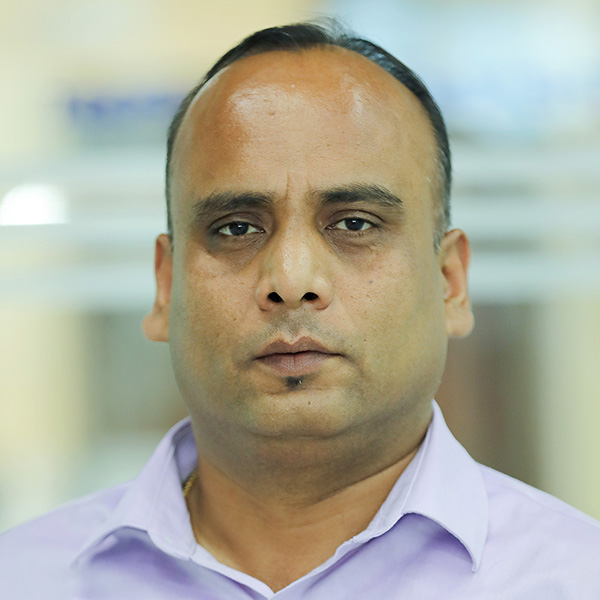
The Australian tunnel expert, who arrived in Kathmandu on Saturday, joined Nepali and Indian teams searching for people believed to be trapped inside the Chilime hydropower tunnel. Photo: Courtesy of Arnold Dix's LinkedIn
Australian tunnel expert Professor Arnold Dix, who is in Nepal to assist search and rescue efforts at the Chilime Hydropower Project, says the teams working there are confronting a challenge unlike anything they have faced before.
“Right now, in Nepal, we are facing something I have never faced before,” Dix said in a series of social media posts on Monday.
Dix arrived in Nepal to support the search for people believed to be trapped inside the Chilime hydropower tunnel following the devastating floods in the Bhotekoshi river on August 26. Upon his arrival on Saturday, Dix visited the Pashupatinath Temple and sought blessings before travelling to the project site.
The Australian expert said the operation involves multiple potential rescues at different locations, each carrying its own risks and uncertainties.
“This is not one rescue—but multiple potential rescues unfolding at the same time, in different places, each with its own dangers, uncertainties and lives that may still be saved,” he wrote.
The situation has reminded Dix of the 2023 Silkyara tunnel rescue in India’s Uttarakhand state, where 41 construction workers were trapped underground after a section of the Silkyara Bend-Barkot tunnel collapsed. All 41 were rescued alive after spending 17 days inside the tunnel.
At Chilime, Dix has reunited with some of the colleagues he worked with during the Silkyara rescue, including Colonel Parikshit Mehra, who is leading the Indian Army and National Disaster Response Force (NDRF) team deployed at the site.
The Indian government mobilised the tunnel rescue team through the NDRF on the fourth day after the disaster.
According to Dix, 41 people remain trapped inside the Chilime tunnel.
Reflecting on the Silkyara operation, Dix said the experience had taught him not to confuse something being unlikely with being impossible. Nepal, he said, was presenting a different challenge, with several lives potentially depending on rescue efforts at the same time.
After reaching the Chilime project, Dix worked with Nepali and Indian experts to assess conditions and revise plans for reaching the underground powerhouse, where those missing are believed to have possibly taken refuge.
He said the rescue effort would require teams to keep working despite uncertainty over the outcome.
“Hope must become discipline, compassion must become action, and duty cannot depend on certainty of success,” Dix wrote.
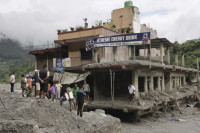
The search at Chilime is part of a wider operation following the catastrophic flooding along the Bhotekoshi-Trishuli corridor, which has left hundreds dead and thousands missing.
Dix concluded his message by saying rescue teams should not abandon those whose lives may still be at stake.
“East or West, the principle feels the same,” he wrote. “We are measured not only by the lives we save, but by the lives we refuse to abandon.”
Anil Giri is a Chief Sub Editor covering diplomacy, international relations and national politics for The Kathmandu Post. Giri has been working as a journalist for more than two decades, contributing to numerous national and international media outlets.




 14.7°C Kathmandu