‘Every second counts’: Families await tunnel rescue
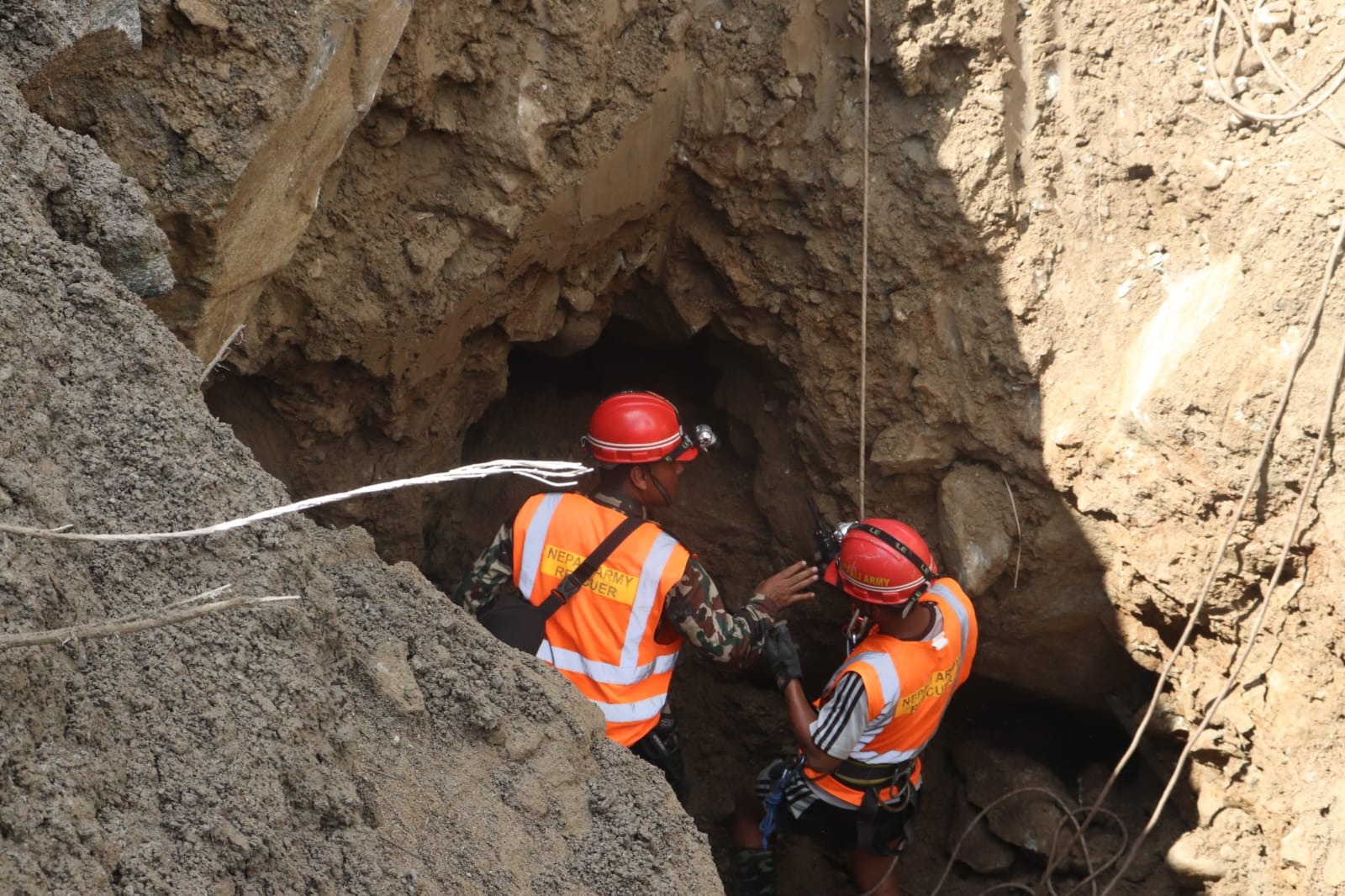
Relatives of workers trapped or missing inside flooded hydropower tunnels say every hour of delay is diminishing their hope of finding them alive. Nepal Electricity Authority officials say the workers may have access to oxygen and water, although conditions inside the facility remain unknown. Photo: Courtesy of Nepali Army
For Sita Pandey, going to the Nepal Electricity Authority headquarters in Ratnapark has become a daily routine since Wednesday.
Her husband, Jiblal Adhikari, is believed to be trapped inside the underground powerhouse of the Upper Trishuli 3A hydropower project in Nuwakot.
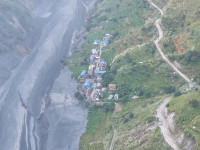
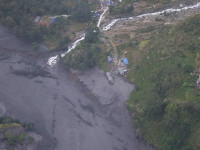
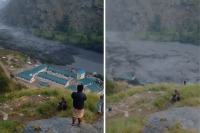
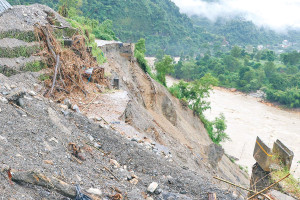
A devastating flash flood in the Bhote Koshi River, a principal upper tributary of the Trishuli, triggered by a rock-and-ice avalanche, has left a trail of death and destruction along the river corridor. Hundreds of people have died or gone missing, while hundreds of workers at hydropower projects remain out of contact.
According to figures reported by the Nepal Electricity Authority and the Independent Power Producers’ Association of Nepal, at least 897 people associated with hydropower projects are unaccounted for.
Five days after the disaster, their whereabouts remain unknown.
Every day, Pandey and relatives of other missing workers gather at the power utility’s headquarters, pressing officials to speed up search and rescue operations.
“My husband was working inside the plant. I still have a 50 percent hope that he is alive because there is an oxygen system inside,” Pandey told Kantipur. “But with every hour that passes, that hope becomes thinner.”
Adhikari spoke to his wife shortly before entering the underground plant on Wednesday morning. It was the last time she heard from him.
“He had breakfast and entered the plant at around 7 am on Wednesday. We usually spoke online at around noon during his lunch break because mobile networks did not work inside,” she said. “After the flood, we lost all contact.”
Adhikari, who normally works at the Kulekhani hydropower project, had travelled to Trishuli 3A to inspect machinery during its annual overhaul and maintenance.
The 60 MW project, which began commercial generation in 2019, was undergoing scheduled maintenance when the disaster struck.
Between 30 and 40 people, including experienced technicians and engineers from the Nepal Electricity Authority and specialist teams hired from other projects, were working inside the underground powerhouse.
The delayed rescue operation has increasingly frustrated the families.
They say the government should have sought specialised international expertise earlier, arguing that Nepal has limited experience and equipment for complex rescue operations inside flooded hydropower tunnels.
On Saturday, China sent nine specialist tunnel rescuers to Nepal following a direct request from Kathmandu. Rescuers also began pumping air into the hydropower tunnel, officials said.
“It’s frustratingly slow operation,” said Jiban Khadka of Pyuthan, whose relative Surya Bahadur KC is also believed to be trapped inside the plant.
“What is being attempted today [Sunday] should have begun two days ago,” he said. “If the rescue process had started on Thursday or Friday, there would have been a greater chance of finding our people alive.”
“The longer it takes, the more our hope dies. This operation must move much faster because every second is meaningful to us.”
The families’ hopes rest partly on the design of the underground powerhouse.
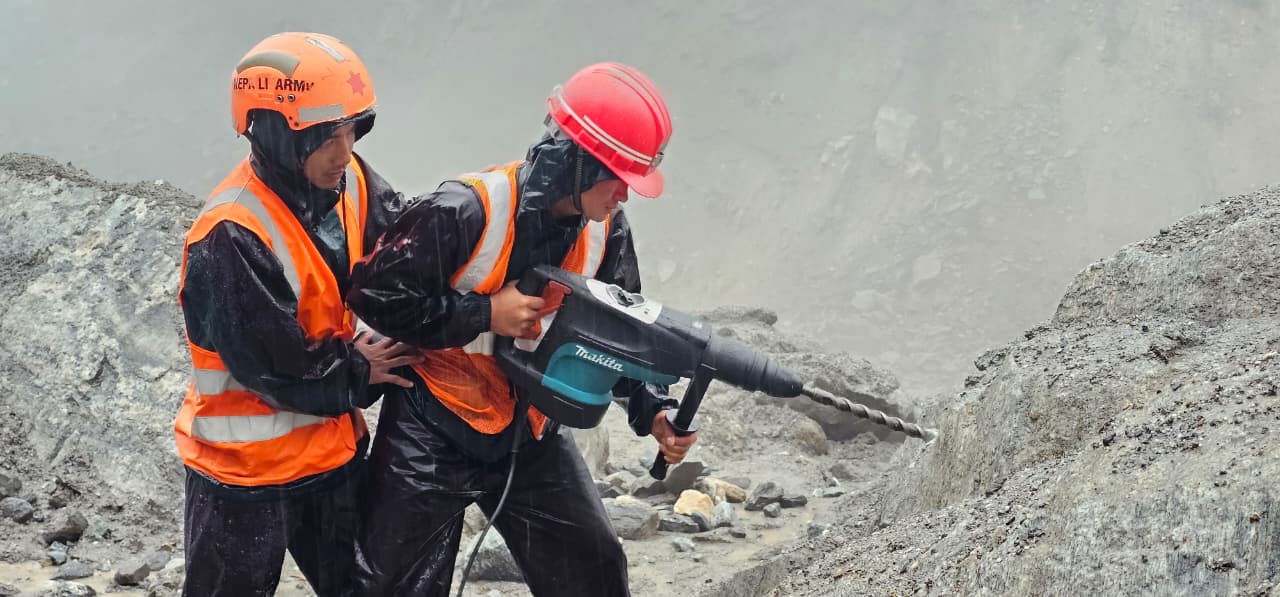
According to figures reported by the Nepal Electricity Authority and the Independent Power Producers’ Association of Nepal, at least 897 people associated with hydropower projects are unaccounted for. Photo: Courtesy of Nepali Army
Nepal Electricity Authority officials say the workers may have access to oxygen and water, although conditions inside the facility remain unknown.
“We work regularly inside the plant, and the possibility of an immediate shortage of oxygen is low,” said an authority official. “There is also access to water inside. The facility has structures extending several storeys underground.”
The underground complex has three separate access points, including a tunnel large enough for vehicles, a water passage and a cable passage, according to the official.
The project has a 4.1-kilometre headrace tunnel and an underground powerhouse built deep inside a mountain. The rescue operation is now focused primarily on reaching the powerhouse and its network of tunnels.
Rescuers have been attempting to reach the facility through the cable route, excavating in the hope of creating an access point.
Home Minister Sudan Gurung said on Saturday that rescue teams had reached the upper section of the tunnel and begun sending air through a small opening.
“We have started pumping air through a small hole,” Gurung wrote on Facebook on Saturday night. “Now excavation will begin and rescue teams will be sent inside.”
After three days of continuous work, the Nepali Army said its team located the crown, or uppermost section, of the tunnel on Sunday afternoon.
The crown is the uppermost curved section of an underground tunnel. Drilling through it can allow rescuers to pump fresh air into the tunnel and create an entry point when the main entrance is blocked by mud and debris.
According to Army spokesperson Rajaram Basnet, a joint team of specialists used drilling machines, excavators and hydraulic cutters to reach the upper section.
“After drilling through, we found water at a higher level inside a tunnel with a diameter of around 7 metres,” Basnet told Kantipur.
Rescuers entered through the opening after breaking through the crown, according to the secretariat of Prime Minister Balendra Shah. But when the rescuers called out from inside, there was no response.
The secretariat said larger equipment was being brought in, while preparations were under way to widen the opening and use blasting where necessary to accelerate the rescue operation.
The silence from inside has deepened the anxiety of the waiting families.
But relatives say they are unwilling to abandon hope until rescuers reach the underground powerhouse and determine what happened to those inside.
The crown is the uppermost curved section of an underground tunnel. Drilling through it can allow rescuers to pump fresh air into the tunnel and create an entry point when the main entrance is blocked by mud and debris. Photo: Courtesy of Nepali Army
The disaster has also left authorities struggling to establish exactly how many people remain trapped across hydropower projects affected by the flood.
The Independent Power Producers’ Association of Nepal says 897 people associated with 11 hydropower projects, including projects under construction, remain out of contact. The highest number of missing people has been recorded at Upper Trishuli-1, with 576 people missing from the 216 MW project.
Authorities have yet to determine how many of them are trapped inside tunnels and how many may have been swept away by floods or buried by landslides.
Families, hydropower developers and the Nepal Electricity Authority have all expressed concern over delays in locating the missing workers.
The Ministry of Energy, Water Resources and Irrigation says 361 people have been rescued from various hydropower projects.
The state-owned power utility said 265 of its workers remain out of contact at four projects: Chilime, Rasuwagadhi, Trishuli 3A and Trishuli 3B.
The authority estimates that between eight people are missing at Chilime, more than 93 at Rasuwagadhi, 42 at the Trishuli 3A powerhouse, and 122 at Trishuli 3B.
“We have not been able to establish contact with them,” said Dirghayu Kumar Shrestha, executive director of the Nepal Electricity Authority.
“The flood has caused such extensive destruction that, in some places, we have not even been able to determine where the powerhouse or tunnel structures are.”
Shrestha said getting oxygen into the tunnels could be critical to keeping anyone trapped underground alive.
“If we can ensure the supply of oxygen to those trapped inside the tunnel, it may help protect their lives,” he said.
For Pandey, however, official explanations and technical assessments offer little comfort.
She is waiting for news of her husband, counting the hours since their last conversation on Wednesday morning.
“We can understand that the rescue operation is technically complex. We know that rushing blindly into a flooded tunnel could endanger rescuers too. But we cannot accept delays,” said Khadka.
“Our people are inside there. For us, every second counts.”
Hom Karki is a reporter with two decades experience covering migrant workers issues and the Nepali diaspora. He was previously based in the Gulf for Kantipur Daily.




 22.28°C Kathmandu