Parties call for joint Nepal-China study of glacial lake risks
Eight parties also agree at an all-party meeting to form a parliamentary mechanism to oversee flood recovery and push for stronger cross-border early warning systems.
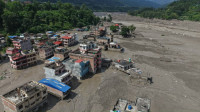
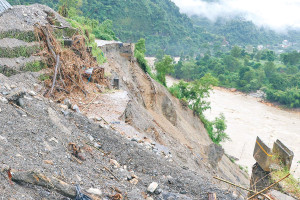
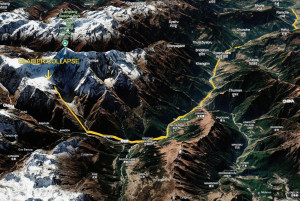
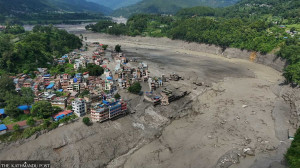
Eight political parties have urged the government to open talks with China on establishing a joint scientific and technical mechanism to assess and reduce the risks posed by glacial lakes along the border following the Bhotekoshi floods.
At an all-party meeting convened by Rastriya Swatantra Party chair Rabi Lamichhane on Thursday, the parties also agreed to establish a parliamentary mechanism to oversee reconstruction and address longer-term disaster risks.
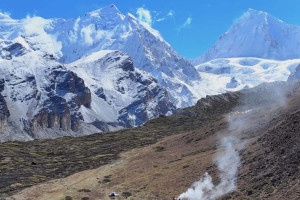
The parties said similar flooding could occur again and called for closer monitoring of glacial lakes in China’s Tibet region. They said climate change is increasing the risk of glacial lakes in Nepal’s mountain regions and Tibet bursting or overflowing.
They called for immediate scientific study and mapping of high-risk glacial lakes in Nepal, as well as high-level diplomatic efforts with China to establish a joint mechanism for cross-border risk assessment and mitigation.
They also urged the establishment of a stronger early warning system between Nepal and China, including real-time data sharing on cross-border river systems.
Such a system should alert downstream communities as soon as unusual activity is detected upstream, allowing authorities to move people to safety, the parties said.
The parties also agreed to establish a parliamentary mechanism to oversee reconstruction in flood-affected areas and address longer-term disaster risks. The mechanism will monitor post-disaster reconstruction, climate adaptation, national disaster policy and the government’s response to future emergencies.
The parties said disaster management should not be limited to immediate relief and emergency response, but should also focus on long-term solutions, disaster preparedness and resilience.
The agreement was signed by Lamichhane, Nepali Congress president Gagan Thapa, Nepali Communist Party coordinator and former prime minister Pushpa Kamal Dahal, CPN-UML general secretary Shankar Pokhrel, Shram Sanskriti Party lawmaker Dhurba Rai, Rastriya Prajatantra Party chair Rajendra Lingden, Janata Samajbadi Party-Nepal chair Upendra Yadav and Janamat Party leader Chandan Singh.
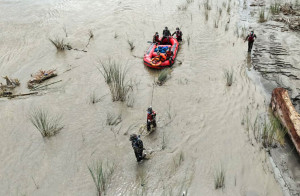
Thapa said political parties should work with the government and help mobilise resources for search and rescue, relief and reconstruction. He also backed deploying party workers as volunteers in affected areas.
He said rescue and relief were the immediate priorities, but work on reconstruction and longer-term disaster management should begin at the same time. He called for the new parliamentary mechanism to become operational quickly and monitor the government’s response.
The parties also appealed to the international community for humanitarian, technical and financial assistance for rescue, relief, rehabilitation and reconstruction in flood-affected areas. They called on the United Nations, development partners, international non-governmental organisations, friendly countries and the Nepali diaspora to support the effort.
They said the disaster highlighted the disproportionate impact of climate change on Nepal, despite the country’s negligible contribution to global emissions. They urged the government to raise the issue of climate-related losses and damage at international forums and press for greater international support in line with the principle of climate justice.




 14.61°C Kathmandu