Nepal seeks answers on flash flood as India, China, US and World Bank offer support
Nepal says a Tibet earthquake may have triggered a glacial outburst, but officials on both sides of the border remain unable to establish the exact cause as rescue and relief efforts intensify. The disaster has revived concerns over Nepal’s vulnerability to glacial lake outburst floods and the lack of a formal cross-border mechanism for sharing real-time information. RSS
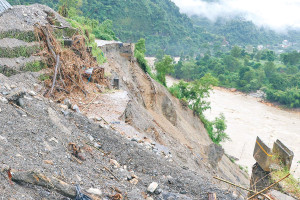
Nepal has yet to determine what triggered the devastating Bhotekoshi flash flood, but officials suspect an earthquake in Tibet may have caused a glacial outburst. This is one of Nepal’s worst disasters since the 2015 earthquakes.
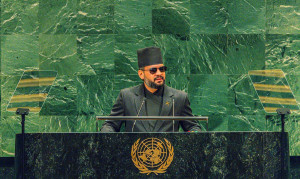
Foreign Minister Shisir Khanal told Parliament on Wednesday that the earthquake struck at 8:37 am, and the flash flood was reported three minutes later, at 8:40 am. “We, however, need to verify this,” he said.
According to the US Geological Survey, a magnitude 4.4 earthquake struck Tibetan territory at 8:37 am, about 47 kilometres north of Gosainkunda.
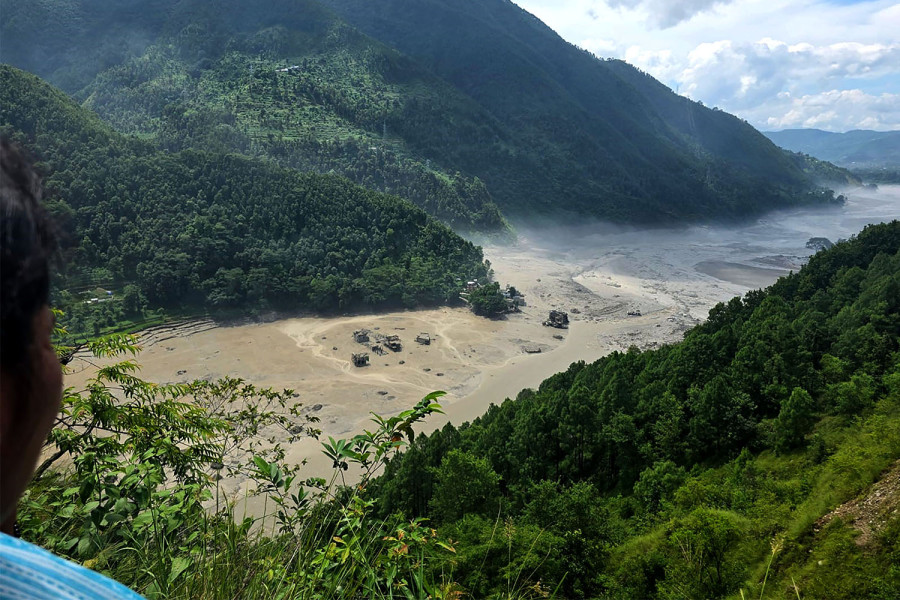
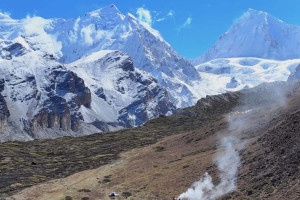
The National Disaster Risk Reduction and Management Authority said a preliminary study, based on an analysis of Planet Labs satellite imagery, indicates that a debris-laden flood entered the Lhende river after a glacial-rock slide occurred along the Nepal-China border, about 20 kilometres northeast of the Rasuwagadhi border point. The flood then flowed through Timure and entered the Trishuli river.
Authorities in both Nepal and China, however, were unable to determine what exactly caused the massive flood that ravaged several villages, destroyed critical infrastructure and killed several people along the Nepal-China border. The disaster is the second of its kind to hit the region within a year.
Khanal said Nepal was seeking real-time data and information from Chinese authorities as well as Nepali research institutions to establish how the massive flood was triggered.
“Since there is no one at the Nepal-China border point and no information is available from the scientific community due to bad weather, we are seeking real-time information from different research centres as well as from the Chinese authorities,” Khanal told the Post.
Laxmi Prasad Niraula, Nepal’s consul general in Lhasa, said some patchy information was emerging about the cause of the flood, but the Chinese side was also struggling to establish what triggered the disaster.
“The Chinese are also clueless about the reason behind the outburst,” Niraula said.
He said the floods had completely disrupted communications, road networks and internet services in the affected areas.
“The root cause is yet to be known. The scientific community is struggling to narrow down the reason behind the floods,” he said.
Niraula said neither Nepali nor Chinese authorities had been able to establish contact with security personnel deployed along parts of the Nepal-China border. As a result, there was no authoritative information on what had triggered the massive outburst.
“We are unable to contact the Nepali side, and the Chinese also have no authentic information about what triggered the massive outburst,” Niraula said. “We suspect it may have been a glacial outburst, but that has not yet been confirmed.”
Tibetan authorities are using satellite imagery and information from local contacts to determine the cause of the disaster.
Niraula said there had been heavy rainfall in the Manasarovar and Ali areas on Tuesday and that could have triggered the massive floods and outburst. “The Chinese side is currently investigating this possibility,” he said.
“They haven’t yet been able to determine not only the cause of the flood, but also where and from what point it originated,” he said, adding that no information had been received from the affected areas because communications remain cut off.
According to Niraula, Chinese officials have also been unable to establish contact with their security personnel stationed along the border, leaving them without reliable information about the scale and cause of the disaster.
Khanal said scientists in Beijing were also trying to determine the exact reasons behind the flash floods.
The disaster has revived concerns over Nepal’s vulnerability to glacial lake outburst floods and the lack of a formal cross-border mechanism for sharing real-time information.
In July last year, a lake formed on top of a glacier in China’s high mountains and burst 35 kilometres upstream from the Rasuwagadhi border point. The surge rushed down the Lhende Khola and Bhotekoshi, crossed the border and affected communities and infrastructure over 80 to 100 kilometres downstream. At least 11 people were killed, including local residents and project workers.
The Miteri Bridge (Friendship Bridge) at Rasuwagadhi was completely washed away.
Following that incident, the two countries agreed to share cross-border real-time information on floods and landslides and flag potential risks of glacial lake outburst floods.
But no formal agreement has been signed to implement such a mechanism.
The issue was again raised during Khanal’s visit to China in May, but the two sides have yet to sign an agreement. The delay has prompted concern among stakeholders over the absence of a functioning early-warning mechanism in a disaster-prone border region.
Following Wednesday’s floods in Rasuwa, the government issued multiple warnings to people living along the Bhotekoshi, Trishuli and Narayani rivers, urging them to move to safer locations in case of further flooding.
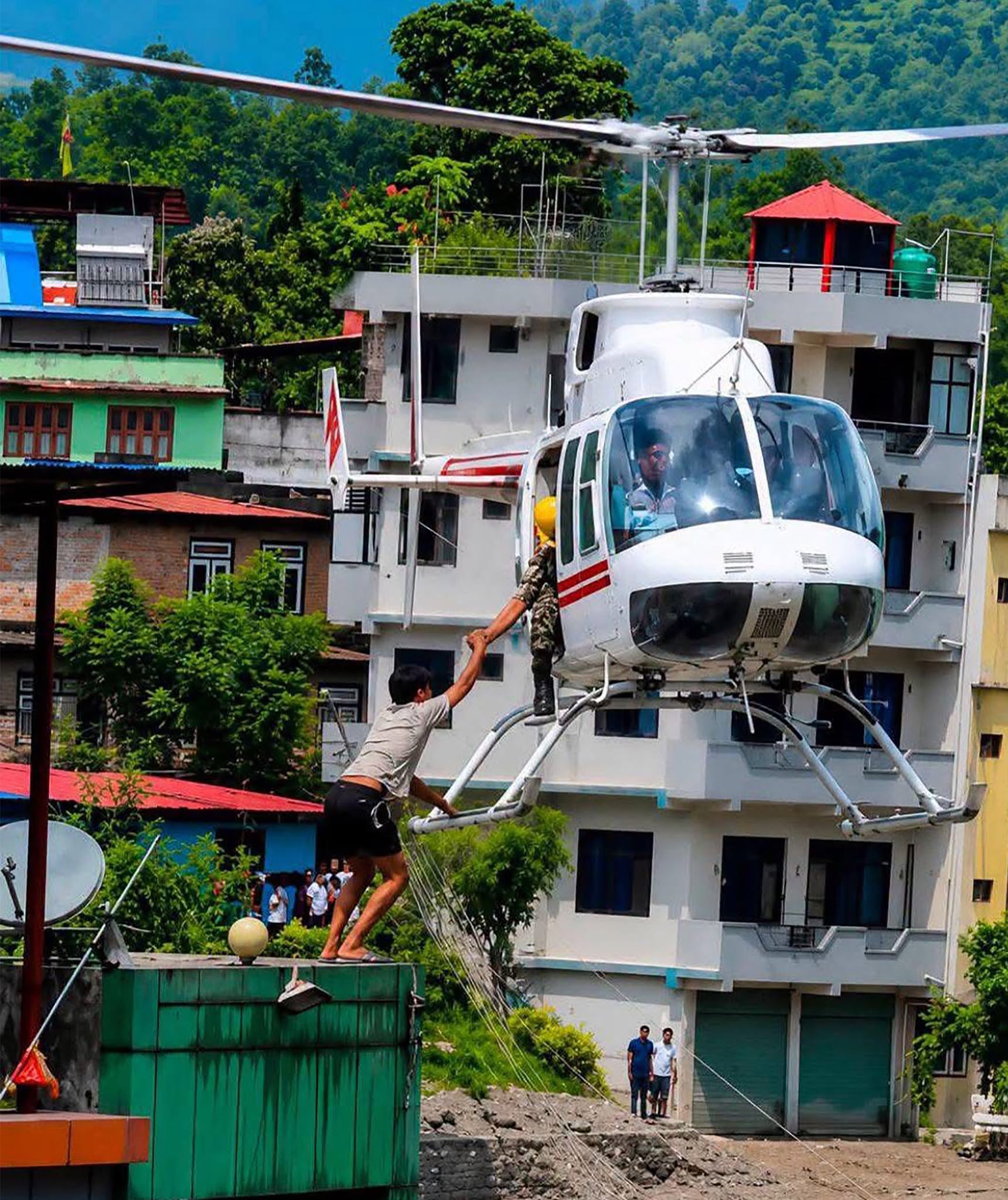
The Flood Forecasting Division says the warning sent to downstream areas helped many people reach safety. Photo: Courtesy of Nepali Army
India, China, US and World Bank offer support
Nepal’s immediate neighbours, India and China, along with the United States and the World Bank, have offered support for rescue, relief and reconstruction following the catastrophic floods on the Bhotekoshi river.
The floods ravaged settlements along the Nepal-Tibet border, sweeping away people and damaging public and private property worth billions of rupees.
Indian Prime Minister Narendra Modi expressed sorrow over the loss of life and property. In a phone conversation with Prime Minister Balendra Shah, Modi said the people of India stand with their Nepali brothers and sisters in this difficult situation.
“The Indian side has already informed us that they will send immediate relief materials to Nepal,” Foreign Minister Khanal told the Post.
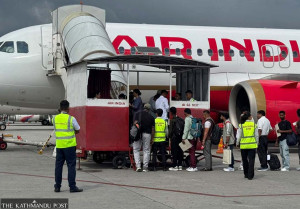
Diplomatic sources said Indian Air Force’s C-17 and C-130 aircraft carrying earthmoving equipment, relief materials and medicines were on standby to fly to Nepal. Disaster relief teams were also on standby to be airlifted, the sources said.
The Indian government has been coordinating with Nepali authorities, but, under the existing protocol, Nepal must first assess its needs before formally seeking assistance.
“The Chinese side has also communicated with us to extend possible support,” Khanal said. “We are now assessing our requirements.”
Both India and China have told Nepal that they are ready to provide assistance based on its request, Khanal said.
Indian relief supplies could reach Kathmandu soon, a foreign ministry official said.
The United States has also communicated with Khanal and expressed its readiness to support Nepal.
The Cabinet meeting on Wednesday discussed the nature of assistance Nepal would require from India and China, according to Education Minister Sasmit Pokharel, who is also the government spokesman.
The World Bank has also offered support and informed the foreign ministry accordingly.
According to the private secretariat of Finance Minister Swarnim Wagle, India, China and the World Bank have moved swiftly to coordinate financial and other assistance for rescue and reconstruction in flood-affected communities and infrastructure.
David Sislen, the World Bank’s country director for Nepal, informed Wagle that up to Rs25 billion could be mobilised from various sources as emergency assistance.
The Post could not independently verify whether the emergency assistance would come in the form of a loan, grant or other financing.
India has asked the Nepali government to provide a list of relief materials urgently needed by flood victims. Khanal said preparations were underway, in coordination with the prime minister, finance minister and other senior ministers, to bring Indian relief supplies to Kathmandu.
China has also decided to provide immediate cash assistance. Chinese Ambassador Zhang Maoming has asked Nepal, through the Finance Ministry, to initiate the process for receiving the funds.
Wagle said discussions were underway to determine the modalities of support through intergovernmental coordination.
The government also moved to open the way for mobilisation of domestic and external assistance by declaring affected municipalities in Rasuwa, Nuwakot and Dhading “crisis-hit zones” at a Cabinet meeting on Wednesday.
Chinese President Xi Jinping has ordered authorities to make every effort to search for and rescue missing people, relocate those at risk and promptly treat the injured to minimise casualties.
He also stressed the need to strengthen monitoring and early-warning systems, ensure scientific rescue operations and prevent secondary disasters, according to China’s state news agency Xinhua.
Chinese Premier Li Qiang separately instructed the authorities to quickly verify the number of missing people and casualties and mobilise resources for rescue and relief operations.
He called for a prompt and orderly relocation of people in danger and urged authorities to follow scientific rescue methods and take strict measures to prevent secondary disasters.
Li also instructed the foreign ministry to strengthen communication and coordination with relevant countries, promptly report developments and jointly handle rescue and relief efforts.
Following Xi’s instructions and Li’s directives, the Chinese government has tasked Zhang Guoqing, a member of the Political Bureau of the Communist Party of China Central Committee and vice premier of the State Council, with leading officials from relevant departments to the disaster site to guide rescue and relief operations.
Tibet mobilised resources for search and rescue operations on Wednesday.
Anil Giri is a Chief Sub Editor covering diplomacy, international relations and national politics for The Kathmandu Post. Giri has been working as a journalist for more than two decades, contributing to numerous national and international media outlets.




 15.38°C Kathmandu