Nepal once had a vibrant civil society. Now it is faded and fragmented
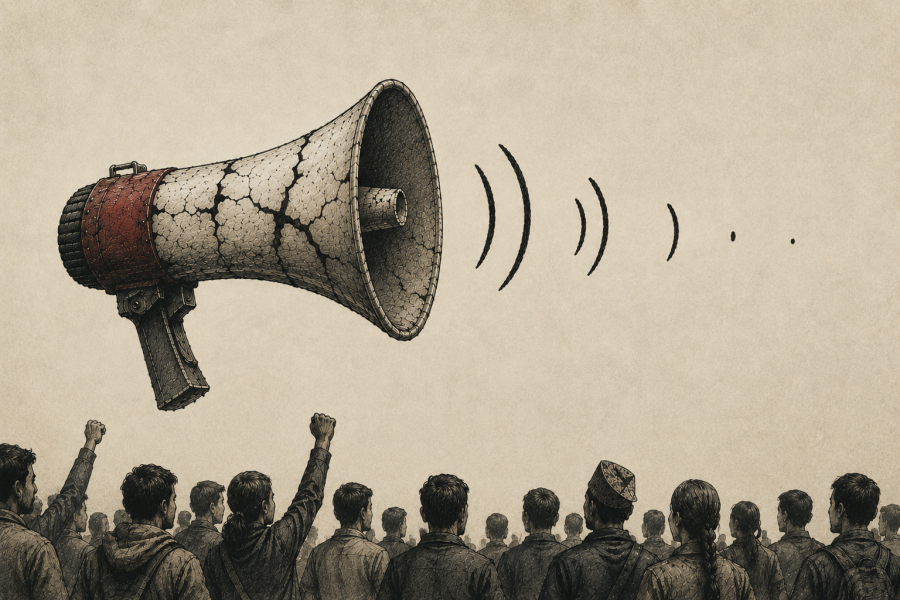
From a force for democratic change to a diminished role, civil society is struggling to find its place in a transformed political landscape. AI-generated image
Devendra Raj Panday was known less for his formal titles as an economist, former minister and planner than for his role as a “citizen leader.”
Standing outside active party politics, he consistently questioned the state, governments and political parties. His views on Nepal’s political crises, democratic backsliding and issues of public interest were difficult for governments and political parties to ignore.
His death came at a time when the independent civic voice he represented has become far quieter than it once was. The civil society and citizen movement that played a crucial role in Nepal’s democratic struggles, creating public pressure for democracy, human rights and accountability while challenging governments and political parties, now appears fragmented, particularly after the constitution was promulgated in 2015.
Has Nepal’s civil society and citizen movement weakened, or has it simply taken a new shape in response to changing circumstances?
Analysts say that at a time when parliamentary opposition has weakened, and the role of the press has narrowed, the broad civic coalition that once spoke with a collective voice has splintered into separate campaigns and movements without a common platform.
Analyst Dovan Rai believes the once-powerful citizen movement has weakened and become ‘tired’.
“When we were fighting regression in the past, we knew exactly what we were fighting for and against. That clarity is missing today,” she said. “The leaders of the citizen movement have failed to grasp the political moment. Once the Balendra Shah government claimed ownership of ideas like youth, change and a new political order, the citizen movement was left without a distinct message of its own.”
The Balendra Shah-led government was formed after the Rastriya Swatantra Party won the March elections with nearly a two-thirds majority, months after the youth-led movement in September last year.
Rai’s assessment points to a deeper crisis: as Nepal’s political landscape has changed, the citizen movement has struggled to redefine what it stands for.
The roots of this crisis go beyond recent political developments. For years, Nepal’s civil society, often described as the citizen movement, has faced the challenge of maintaining the collective power and public authority it demonstrated during earlier democratic struggles.
Several studies have noted that Nepal’s citizen movement has been most influential during periods of political transition. During the struggle against the Panchayat system, lawyers, professors, writers, journalists and professional organisations formed the intellectual foundation of the democratic movement. The citizen movement emerged as an organised force during the 2006 People’s Movement
Many studies define Nepal’s “civil society” primarily as non-governmental organisations or registered civic institutions. For instance, the Asian Development Bank’s 2024 publication Civil Society Brief: Nepal analyses civil society mainly through the lens of civil society organisations, including NGOs, community organisations and professional bodies.
According to the brief, institutional presence of such organisations remains extensive in Nepal, cooperation with the government continues at various levels, international donor support remains significant, and the World Social Forum held in Kathmandu in 2024 demonstrated the organisational capacity of Nepali civil society.
However, after the 2006 People’s Movement, the independent civic voice that intervened in matters of public concern outside political parties increasingly came to be identified not as ‘civil society’ but as a ‘citizen movement’.
Analyst CK Lal, in his July 22 column in Kantipur, argues that the term “citizen movement” was chosen instead of “civil society” based on his own proposal during discussions among independent citizens, including Panday, about the movement. The movement brought together human rights activists, lawyers, professors, journalists, writers, former bureaucrats and leaders of professional organisations. They campaigned for democracy and peace, questioned governments and political parties, and demanded accountability.
In his article in the Martin Chautari publication ‘Civil Society in Democracy: A 25-Year Review’, Chudamani Basnet writes that before the 2006 People’s Movement, intellectuals were worried that political parties would be unable to mobilise citizens.
There were doubts that people would take to the streets under the leadership of parties that had been associated with corruption and disorder since the restoration of democracy in 1990. It was amid this uncertainty that the citizen movement emerged.
After the February 2005 state of emergency, political space gradually opened up, while the royal regime came under mounting international pressure. Many intellectuals who had left the country returned and began meeting at the Nepal South Asia Centre in Anamnagar for discussions.
Panday had established the centre soon after the 1990 democratic movement.
Basnet writes that among the senior figures who gathered there were Panday, Padma Ratna Tuladhar, Khagendra Sangraula, Krishna Khanal, Saroj Dhital, Daman Nath Dhungana, Sundar Mani Dixit, Shyam Shrestha, Mahesh Maskey and Krishna Pahadi.
Although they held different ideological positions, they were united against the royal takeover.
Young researchers and activists from smaller organisations such as the Collective Campaign for Peace (COCAP), Martin Chautari and the Human Rights and Peace Society gradually joined the movement.
The citizen leaders had experience in struggles, but not in mass mobilisation.
According to Panday’s own account, one incident pushed him to act. On July 19, 2005, the seven political parties had called a ‘session’ of the dissolved House of Representatives at the Nepal Academy.
When leaders including Girija Prasad Koirala and Madhav Nepal arrived, security personnel stopped them at the main gate, forcing them to return home.
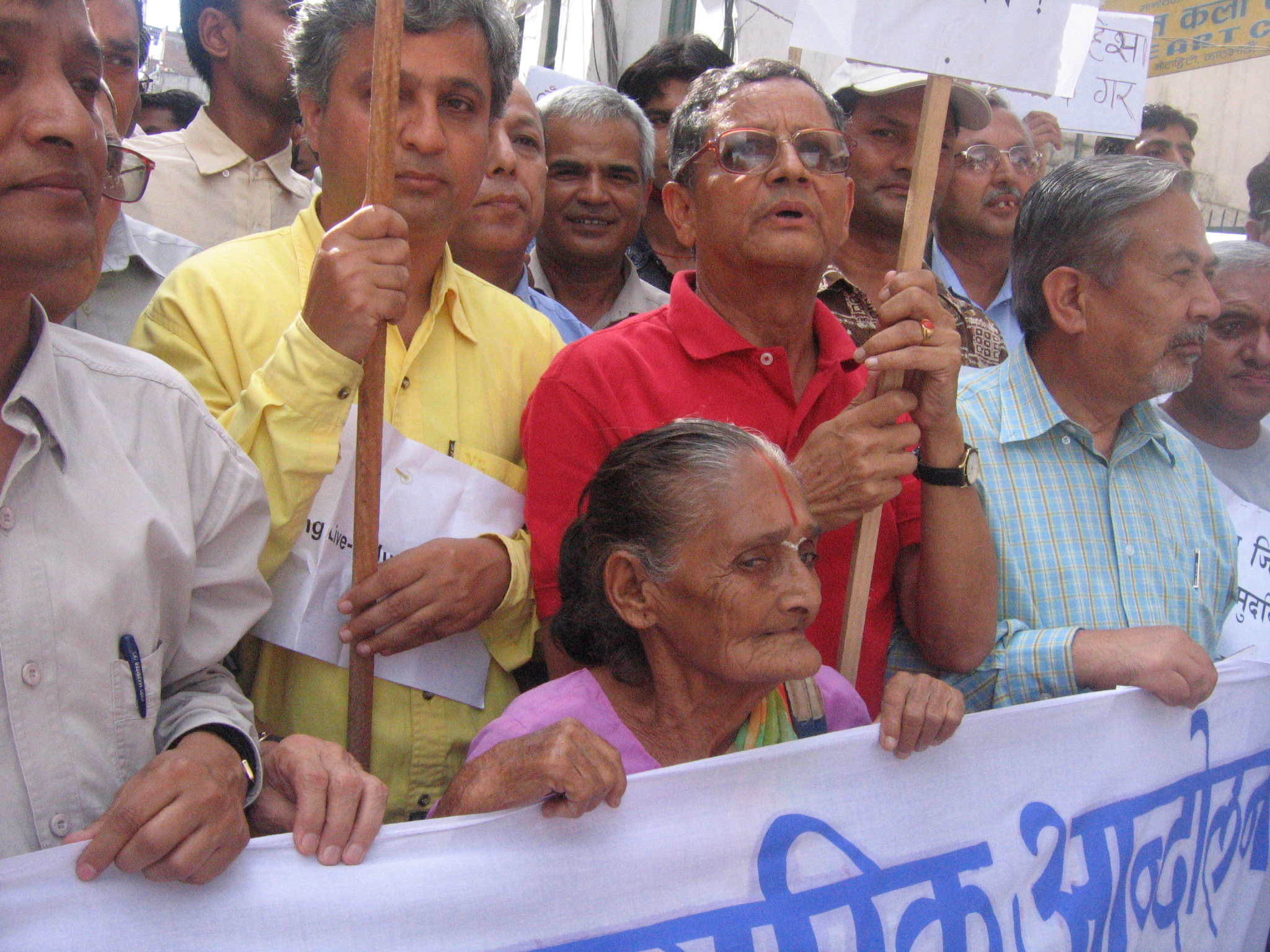
Nepal's once-powerful citizen movement, which helped restore democracy in 2006, has splintered into issue-based campaigns with no unifying voice. Photo: Prakash Chandra Timilsena
Panday, then 65, watched the scene with his young colleague Anil Bhattarai. Disappointed that the political parties had no clear strategy against King Gyanendra’s takeover, Panday wrote in his autobiography ‘Ek Jyan, Duijuni’ that he told Bhattarai: “Let us take to the streets without waiting for the inspiration and blessing of the seven parties.”
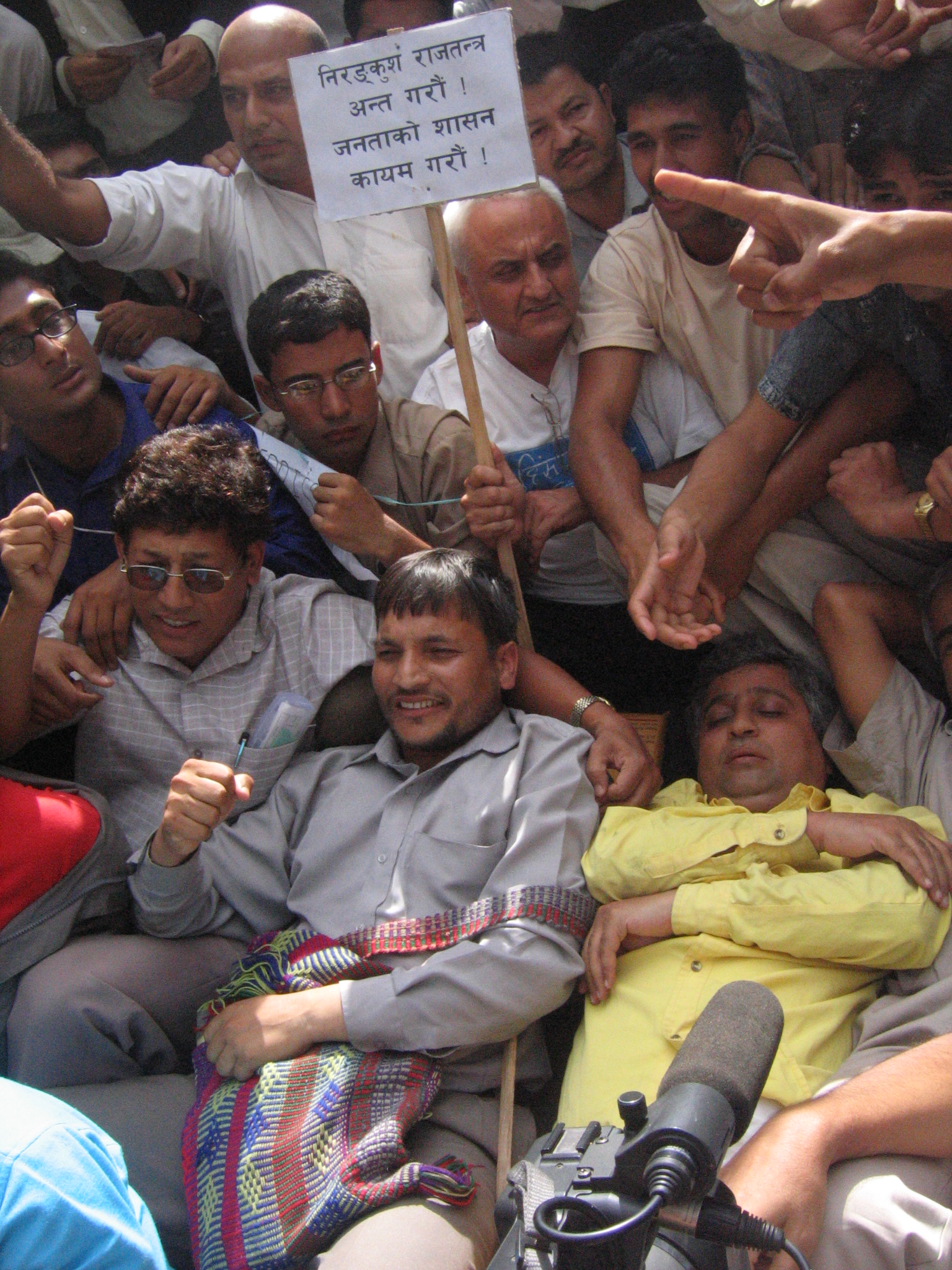
Following that decision, a group of independent citizens announced a demonstration at the restricted Ratna Park on July 25.
Basnet writes that the Ratna Park protest, along with the police’s heavy-handed response, propelled the “Citizen Movement for Democracy and Peace” into public consciousness. The movement, later known simply as the “citizen movement”, quickly emerged as a powerful civic force.
With media support and public participation, a mass gathering was organised at New Baneshwar on August 5. Around 10,000 people attended the rally, making it the largest protest since King Gyanendra seized power on February 1, 2005, Basnet writes.
Panday said the citizen movement had neither an organisation nor financial resources. Yet it managed to organise rallies across the country.
From the east to the west, the same slogan echoed: “Maoists, give up your weapons. The seven parties, give up the king.”
The 2006 People’s Movement eventually became a turning point in Nepal’s political history. King Gyanendra was forced to hand power back to political parties, while the 240-year-old monarchy was subsequently abolished.
The civil society that played an important role during that historic transition remained active for another decade, continuing to question governments and political parties.
After the Constituent Assembly elections, individuals involved in civil society and the citizen movement continued participating in public debates on federalism, inclusion, human rights and transitional justice.
But that presence began to fade after the constitution was promulgated.
Some argue that the citizen movement completed its historic mission once the democratic transition ended with the promulgation of the constitution. Others say the movement lost public trust because it was dominated by Kathmandu-based, male elites who failed to listen to groups dissatisfied with the constitution.
Writer and columnist Chandrakishore argues that the decline of civil society’s influence began accelerating after the constitution was promulgated in 2015.
“The Nepali Congress, UML and then Maoists grew more confident as they came together to bring in the constitution. They started believing that their consensus itself represented the national interest,” he said. “As a result, they began dismissing the role of civil society. That gradually weakened the citizen movement’s influence.”
Chandrakishore argues that debates over identity further divided the movement. Many prominent civil society figures struggled to take a clear position on movements by Madhesi, Tharu and Janajati communities demanding greater recognition of their ethnic and regional identities.
“Earlier, the movement had a clear target: Gyanendra and the active monarchy,” he said. “But when identity-based movements emerged, it became much harder to decide which causes to support and which positions to take.”
Questions remained over acceptance of the constitution among large sections of society when the constitution was promulgated on September 20, 2015. But the citizen movement, which had played a prominent role in street protests and public debates before its adoption, no longer appeared as a force with the same influence.
“Madhesh was observing it as a day of mourning at a time when Kathmandu was celebrating the constitution. Where was civil society then?” Chandrakishore wondered. “When Kathmandu’s citizen movement did not support identity-based movements, it lost trust among people on the ground. At the same time, the state also ignored it. The citizen movement was trapped between the two.”
The movement’s decline has also been linked to the fact that some prominent figures who had previously been active in it entered electoral politics, received appointments to constitutional bodies, became government advisers or joined donor-funded institutions.
A study published in the Journalof Peace Research in 2026, based on research into 26 civil society organisations in Bhojpur, Sarlahi and Kapilvastu districts, concluded that “the entry of experienced civil society actors into politics after the People’s Movement weakened institutional leadership, limited effective generational transition and changed the direction of organisations in line with donor priorities.”
During the conflict years, issues such as enforced disappearances, torture, extrajudicial killings and press freedom were central concerns of civil society. After the peace process, transitional justice remained a major focus for several years.
But after the constitution, collective civic interventions on issues such as civil liberties, economic rights, state accountability, public services and digital rights became far less visible.
Analysts say the movement has struggled to redefine its role after the 2015 Constitution and the country's shifting political landscape. Photo: Prakash Chandra Timilsena
Writer and activist Sanjeev Uprety believes there are structural reasons behind this decline.
“The 2006 movement brought together many people, including Devendra Raj Panday, Krishna Pahadi and others. I was also involved,” he recalled. “But after the political transformation, the citizen movement began to lose momentum. We were unable to maintain the same level of mobilisation.”
“Sustaining it was difficult because it was a volunteer-based movement. It was neither a political party nor an NGO. People moved on to their own paths. We remained part of civil society, but not as a movement.”
Uprety says the movement regained some momentum after then-prime minister KP Sharma Oli dissolved Parliament in 2020 in what critics called an unconstitutional move.
“After that, we realised the citizen movement had to continue in some form,” he said. “Even after Parliament was restored, movements by sugarcane farmers, Chure conservation activists, usury victims and squatters continued.”
“The difference is that in 2006, the goal was to transform the political system itself. Today, movements are focused on the concerns of ordinary citizens. At that time, party cadres came to the streets. Now it is sugarcane farmers and victims of sexual violence who are coming forward.”
While citizens continue to raise issues through various campaigns, these movements include not only affected communities but also professionals and public figures who collectively represent civil society. However, analysts and activists acknowledge that the absence of the kind of unified civic voice seen in the past remains a major weakness.
They argue, however, that this should not be interpreted as the death of civil society in Nepal.
Uprety says societies do not have a single civil society but multiple civil societies. Nepal, like other countries, sees fragmented groups come together during moments of major crisis, but keeping them connected during normal times remains difficult.
“We tried to bring together movements around land rights and usury victims. Dalit rights, indigenous rights and squatters’ rights should have been connected, but we could not do that,” he said.
“The Koshi identity movement, the Chure conservation campaign and the struggle of usury victims have not been able to come together. That fragmentation has prevented them from becoming a more powerful civic force.”
The youth-led movement of September last year not only changed Nepal’s political landscape but also transformed how ordinary citizens view society and politics.
In this changed environment, questions have emerged over the future shape of civil society and the citizen movement, particularly because leaders have yet to develop a clear position on broader public concerns such as economic rights, public services and digital freedoms.
Rai argues that the citizen movement has become even more uncertain after the youth movement because it lacks a clear political narrative.
“It looks as though they have not been able to grasp the new political reality,” she said. “What does today’s politics represent? Is it progressive or regressive? Should we support it or oppose it? When the Balendra Shah government appoints a woman minister, are we supposed to welcome it or criticise it? The movement seems to have lost its direction.”
She warns that the weakening of the movement affects society more broadly.
“When reform-minded people within political parties look for advice, whom do they consult? Who stands alongside them? That creates a vacuum,” she said. “The recent mistreatment of Majid Ansari was serious. Last year’s September movement also saw widespread violence and deaths. When older generations fail to offer strategic direction, younger people end up carrying the risks of confrontation on their own.”
Uprety does not believe civil society has disappeared. Instead, he argues that its form has changed.
He says civic interventions that once appeared as nationwide movements have now spread across local campaigns, issue-based activism and digital platforms.
In recent years, public reactions against the Guthi Bill, environmental concerns over the proposed Nijgadh airport, the Citizenship Bill, the TikTok ban and social media regulation demonstrated strong civic engagement.
“Digital activism is part of a broader civil society. People are writing and speaking out. But a citizen movement happens on the streets,” Uprety said. “When a crisis emerges, these scattered groups come together again and return to the streets.”
Today, the ruling Rastriya Swatantra Party holds nearly a two-thirds majority in Parliament, leaving opposition parties weakened. Questions have also been raised about the credibility of other public institutions.
Critics of the government say they do not see a strong commitment to democratic values.
In such a situation, Birgunj-based writer Chandrakishore says the citizen movement has weakened, and the voice of dissent in Kathmandu has become quieter.
The silence in the capital, he says, appears unusual.
“I am watching Kathmandu right now. There is silence. Why is everyone afraid? Why is nobody speaking?” he asked.
He believes the root of the problem lies in ethics.
“People are afraid to speak, perhaps because some feel constrained by questions of personal ethics and accountability,” he said.
He also pointed to concerns that this government could weaken the constitutional framework and, in return, erode democracy itself.
“Yet even at such a moment, there is no one willing to speak out,” he said.
Uprety also sees such risks.
“I cannot predict where the country’s politics will go, but I see a major risk to democracy. The current government is showing signs of danger to democratic institutions,” he said.
Chandrakishore believes the current government itself may eventually bring fragmented civic leaders back together.
“I think this government will once again unite citizen leaders who are scattered today in the struggle for justice. During Gyanendra’s rule, circumstances brought them together. It will happen again,” he said.
Rai shares a similar hope.
“There is still a group that worked together during that period. As the crisis deepens, perhaps that group will consolidate again,” she said.
Sociologist Chaitanya Mishra concluded his obituary, published in NepalNews, for Panday with a warning about the possible democratic crisis Nepal faces today.
“In the changed political context, citizens are once again beginning to feel fear. Dr Panday remained concerned about this until his final days,” Mishra wrote. “If this crisis deepens, we will once again need independent, committed and courageous intellectual citizens like him.”




 14.7°C Kathmandu