Panel finds no basis to prosecute security chiefs over September killings, home minister refuses report, PM yet to receive it
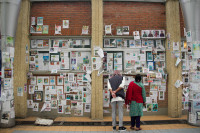
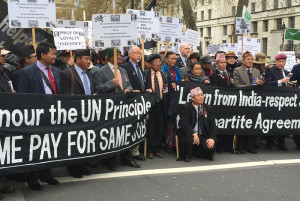
Karki committee found that missing forensic evidence and the inability to identify who fired the fatal shots left no basis for criminal charges against senior security officials. What began as a peaceful march from Maitighar in Kathmandu on September 8 last year turned into a violent clash with police, leaving 19 protesters dead on the first day of the revolt. Post File Photo
A government committee reviewing recommendations to prosecute senior security officials over the September 8-9 Gen Z protest violence, which left scores dead, most of them by police, has concluded there is insufficient evidence to pursue criminal charges.
Nearly two weeks after completing its work, however, the report remains undisclosed as Home Minister Sudan Gurung reportedly declined to receive it and Prime Minister Balendra Shah has yet to grant the committee a time for its submission.
The panel, headed by former High Court judge Prem Raj Karki, completed its work before its term expired on July 6. However, the report has still not been formally handed over to the government. The delay has raised questions about the administration’s willingness to act on one of the most politically sensitive recommendations arising from last year's deadly protests.
According to officials familiar with the process, members of the committee visited the Ministry of Home Affairs on July 9, intending to submit the report. During a meeting attended by the ministry’s secretary Raj Kumar Shrestha and other senior officials, Home Minister Gurung declined to receive the document, asking the committee to submit it directly to the prime minister instead.
“The minister said he would first consult the prime minister and then arrange a suitable time for the report to be handed over,” a home ministry official told Kantipur. “No appointment has been fixed since then.”
The committee’s tenure has already expired and has not been extended.
Rama Acharya, information officer at the ministry, said she was unaware of the status of the report.
“I have no information regarding the report. You may need to inquire with the prime minister’s office or the committee itself,” she said.
According to committee members, the panel has prepared a report of more than 75 pages after reviewing evidence, consulting former and serving officials, and examining the findings of the Gauri Bahadur Karki-led commission of inquiry.
The report concludes that while there were serious shortcomings in planning, command and crowd management, the available evidence does not support criminal prosecution of the security personnel deployed during the protests.
A committee member said the home ministry’s political leadership has already been briefed on the report’s conclusions.
“The prime minister may not have had time to receive the report because of his busy schedule,” the member said.
The committee was formed after the Gauri Bahadur Karki commission recommended criminal proceedings against senior officials who commanded security operations during the September protests. A total of 76 people were killed as a result of the violence, with many succumbing to injuries in the days that followed.
The commission concluded that the top security leadership had failed to intervene even though clashes between protesters and security forces continued for around four hours before a curfew was imposed.
It recommended criminal action against Chandra Kuber Khapung, then chief of Nepali Police, on two counts, including culpable homicide through criminal negligence and recklessness.
It also recommended prosecuting former home secretary Gokarna Mani Duwadi, then chief of Armed Police Force Raju Aryal, former National Investigation Department chief Hutraj Thapa and former Kathmandu chief district officer Chhabilal Rijal under Section 182 of the National Penal Code for culpable homicide resulting from reckless conduct.
Following the March 5 general elections, the first Cabinet meeting of the Rastriya Swatantra Party-led government under Prime Minister Balendra Shah decided to implement the commission’s recommendations. However, instead of immediately acting against the security officials, the Cabinet formed a separate expert committee to examine whether criminal prosecution was warranted.
Implementation of the commission’s recommendations was subsequently delayed after the arrests of KP Sharma Oli, who served as prime minister during the protests, Ramesh Lekhak, who was home minister at the time, and several others.
The Prem Raj Karki committee has now reached a markedly different conclusion.
According to committee members, investigators were unable to determine which officers fired live rounds during the protests or identify the specific firearms used.
The report notes that no ballistic examination was conducted on the bullets recovered after the incident. It also points out that the protest site was washed on September 9, making subsequent forensic examination difficult.
The committee says statements given by lower-ranking personnel deployed during the operation also failed to establish who fired the fatal shots.
“Considering the available evidence and the circumstances, we concluded that criminal liability cannot be established,” a committee source said.
The committee, however, has recommended departmental action against security officials, arguing that significant operational failures occurred before and during the protests.
According to sources familiar with the report, it identifies weaknesses in police command, planning and coordination, and recommends disciplinary action under the Police Act rather than prosecution under criminal law.
The report also proposes clearer guidelines on the use of force and recommends strengthening human rights and crowd-control training for security personnel.
It concludes that security agencies failed to anticipate that the protests could escalate into widespread violence and criticised inadequate logistical preparation, including the absence of sufficient barricades and water cannons.
“There were clear shortcomings in command and coordination at the operational level,” a committee member said. “Departmental action is necessary to ensure such failures are not repeated.”
The report also analyses the sequence of events that led to multiple protester deaths.
Before finalising its findings, the committee consulted a wide range of current and former officials, including then-Kathmandu Valley Police Office chief and incumbent Inspector General of Police Dan Bahadur Karki, former police chief Khapung, former chief secretary Ek Narayan Aryal, representatives of the Former Nepal Police Organisation Forum and the Former Armed Police Force Association, as well as officials from the home and law ministries.
Committee members said they held detailed discussions on crowd psychology, the deployment of security forces, available crowd-control equipment and the preparedness of personnel stationed in Kathmandu during the protests.
“We were not authorised to record fresh statements, but we reviewed previous testimonies and held discussions with several individuals involved,” one member said. “Those findings have been incorporated into the report.”
Most security officials consulted during the review argued that prosecuting officers for actions taken while performing official duties would set a dangerous precedent.
“They maintained that if there had been professional lapses, those should be addressed through departmental proceedings under the Police Act or the Civil Service Act rather than criminal prosecution,” a committee source said.
The committee also examined how other countries dealt with security personnel involved in the use of force during protests and incorporated comparative international practices into its analysis.
As part of its review, members watched CCTV footage recorded during the demonstrations and examined other documentary evidence.
“The narrative that the protests were suppressed emerged very early,” a committee source said. “The report analyses how that perception developed and the circumstances surrounding it.”
Besides former judge Prem Raj Karki, the committee included former Nepal Police additional inspector general Tek Prasad Rai and former Armed Police Force assistant inspector general Subodh Adhikari.
With the report yet to reach the prime minister’s desk, its recommendations, and the government’s next move on one of the most contentious chapters of last year’s protests, remain uncertain.




 14.4°C Kathmandu