A team of renowned archaeologists from within the country and abroad have made significant headway in providing evidence substantiating historical significance of Tilaurakot
A team of renowned archaeologists from within the country and abroad have made significant headway in providing evidence substantiating historical significance of Tilaurakot, believed to be the ancient Shakya Capital where Prince Siddhartha Gautam spent 29 years of his life before becoming Gautam Buddha, since the commencement of the third phase of excavations in the area.
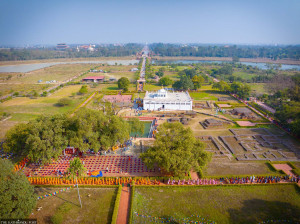
The team started excavations in four locations two days ago and found remains of an ancient settlement along with roads. They have dug a 30 metre length and one metre wide trench 20 metres west of the eastern palace gates, and two trenches, each spanning 3 metres in length and width, and another one which is 30 metres long and one metre wide near the palace temple.
Meanwhile, the team has started excavating near the remains of a wall found just half a metre below the surface where they dug after finding pieces of bricks with specific patterns on them, a probable indication of the location’s significance. Similarly, the team has found remains of a monastery southwards and a pond in the east during the excavations carried out in the palace premises situated in a field located 20 metres west of Kanthak Stupa. The geophysical survey, last year, had shown the remains of a monastery and pond at the site.
Dr Christopher Davis, chief archaeologist of Durham University, said the discoveries within two days of starting the excavations were encouraging. Likewise, Prof Dr Robin Coningham, chief archaeologist of the Durham University, said the excavation would furnish invaluable insights into the age of Tilaurakot and bring into view the architecture of the ancient city.
Unesco consultant and senior archaeologist Kosh Prasad Acharya said the excavations will prove to be a milestone in the development of the region.
While it is said the excavations would help ascertain the structure of the city and the time period, Acharya said they will also be looking for materials used to construct houses and also the economy of the ancient society. Funded by Japan Aid, the excavations and survey will last for two months. Besides senior archaeologists, including Prof Dr Ian Simpson, a soil scientist of the UK-based Stirling University, other participants of the excavations include 18 archaeologists from Stirling University and Orkney College of the UK, two Nepali consultants for Unesco, two from the Department of Archaeology, and four from the Lumbini Development Trust. Likewise, 20 students pursuing post-graduate studies in culture at Tribhuvan University have also joined the excavations.




 18.12°C Kathmandu