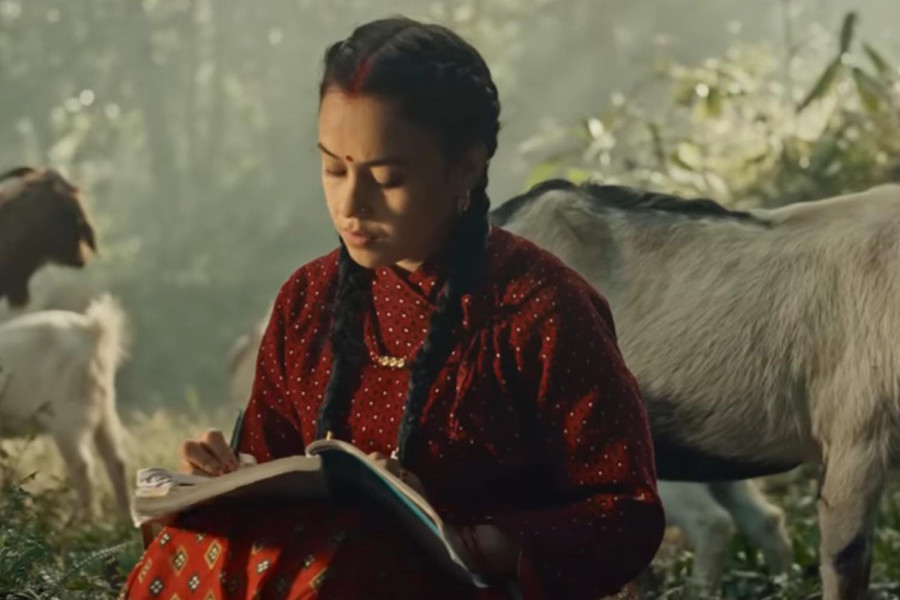
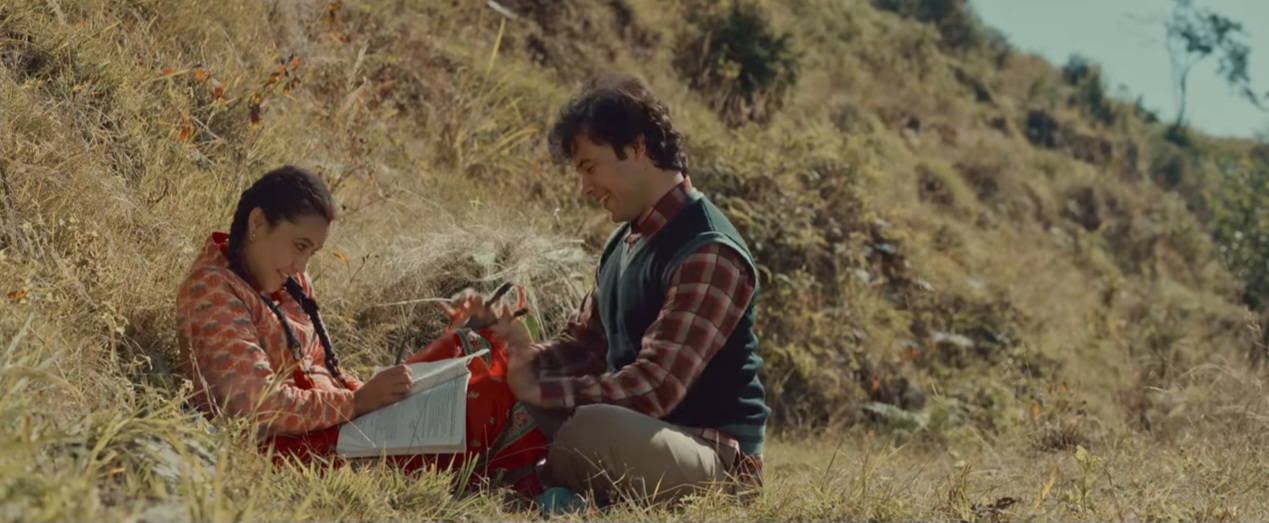
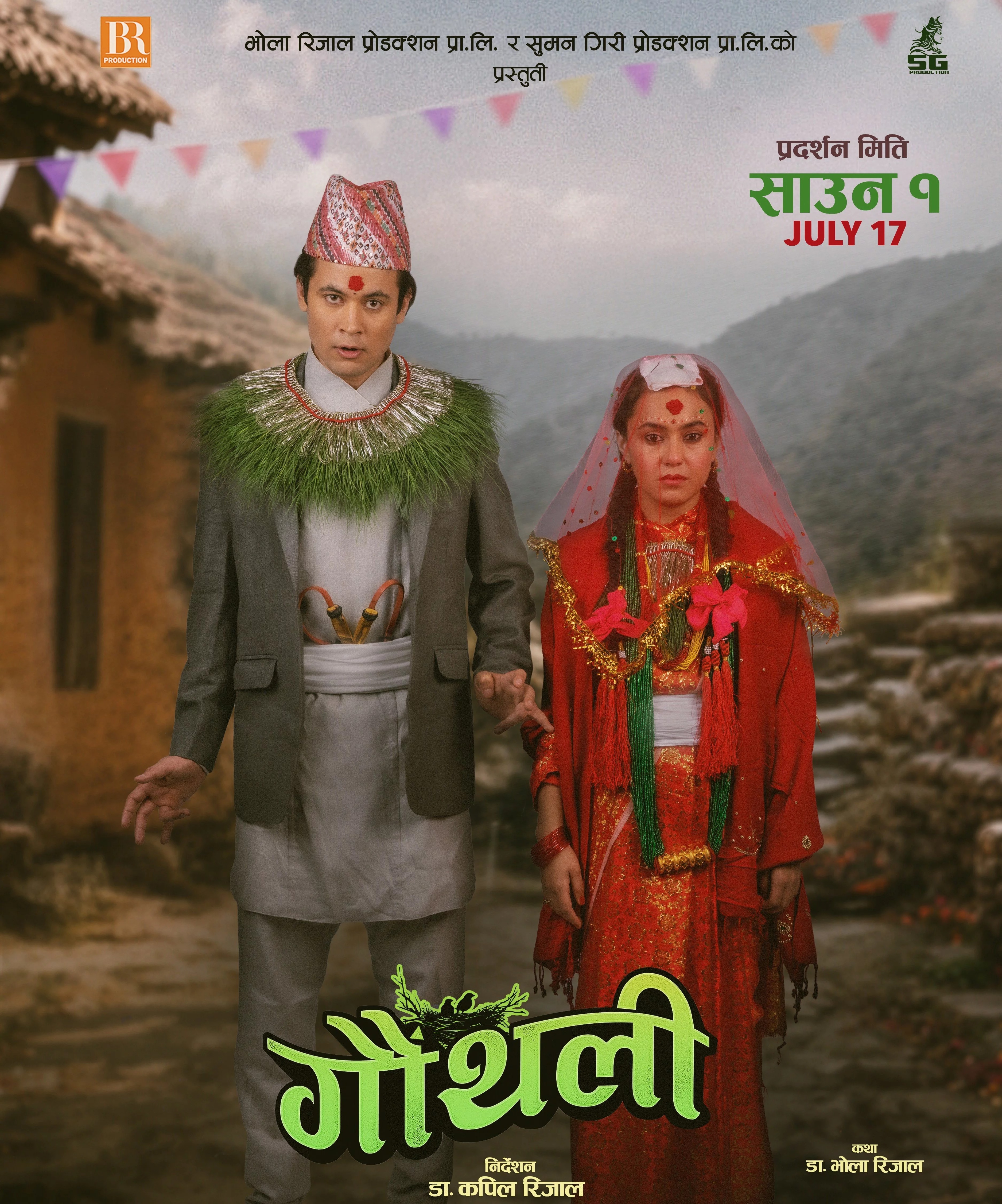
Kapil Rijal’s new movie ‘Gauthali’, named after its female protagonist, picks up salient themes of patriarchy and mental illness. Gauthali, two years out from appearing for the SEE exams, is married off by her family, at her ailing grandmother’s insistence, to what turns out to be an autistic man. The grandmother fears her own chances of getting into heaven lest she die before partaking in the piety of her granddaughter’s wedding ceremony.
Right here is a well-identified social malaise; Gauthali’s wedding is not a matter of doing what she would like but one of social convention and superstition. It is a shame, then, that having chosen to portray issues of such importance, the movie turns out to be a mediocre viewing experience, somewhat unconvincing and marred with plotholes small and big.
The movie attempts to be a story of heart-wrenching suffering and cruelty and eventual success against the odds. The success story of a young girl deprived of her right to education and thrown into a life of servitude by her own family, a real issue, no doubt. But the problem is that Gauthali's character remains a largely unconvincing one.
The scenes move quickly, and much of the narrative is expressed more through on-the-nose dialogues than any real development. It is left, at times, to heavy-handed, sombre music and, at least in a few instances, to melodramatic sound engineering to elicit the response the story on its own falls short of delivering by itself.
Gauthali wants to go to school, she wants to study and she wants to pass the SEE. That is her dream, the main motivation that drives all her actions throughout the movie. Why is it the case, then, that the makers only allocate no more than a few scenes at the very beginning in establishing this motivation through riveting dialogues such as “Gauthali will take the exams” (said by Gauthali herself)?
It is not as if the film-makers are incapable of telling a convincing story, although some of the actors might be. There are a handful of scenes in the film that are truly moving. Most moving of all is unfortunately the realistic and believable fallout, blame, abuse and subsequent expulsion from home that Gauthali faces at her baby boy being a stillborn.
Rijal clearly has a good sense of what the patriarchy looks and sounds like. He is aware of the structure of society and the role that many of its members play in propagating the abysmal condition of so many women in Nepal. But he seems to have thought that for his account of these ills to be stirring, he must put up an unrelenting portrayal of as many things going wrong as possible. It could, of course, have been unrelenting and still been good had the narrative and storytelling been more refined. But they are not, and the movie suffers for it.
Of its number of plotholes, the most implausible one is the manner in which Gauthali discovers her husband Thule is autistic. After the annoyingly sleazy pandit (one of the more realistic portrayals, intentional or otherwise) brokers the marriage, Thule arrives with a large wedding procession to Gauthali’s house. The wedding takes up the whole day, and it is shown to be dark by the time the groom’s procession party begins to return with the bride.
How is it the case then that only when the bride is getting ready to go to bed after a whole day of ritual worship in both her old house and new that she first speaks to her husband and learns of his autism?
The film’s message is a broadly progressive one, although, at times, it appears more advocating coexistence and compromise with social norms than outright rebellion.
On a more positive note, the central role of Thule’s autism in the story is a welcome inclusion. The film delivers a humane and progressive rendering of the difficulties those with autism face in understanding and functioning in society. Despite the childish fits of rage Thule is prone to, he has a loving heart and eventually learns to control his outbursts and love his wife. In some ways, Thule’s inability to understand patriarchal social norms makes him the perfect ally to his wife who is actively fighting them.
All in all, Gauthali is social commentary aimed at being comprehensible to all who view it. And at that, the movie will manage to be successful. ‘Gauthali’ has reportedly had good initial commercial success; many more will watch the movie in the days to come. And so long as some viewers walk out with a better sense of the afflictions brought onto women by so much of tradition and a humane understanding of autism, the movie will have moved the needle in a positive direction.
Rivash Rijal is a culture and lifestyle intern at the post. He is also a rising senior at St John's College in Santa Fe, NM. He will be graduating from the class of 2027 with a BA in Philosophy, Literature and Natural Sciences.




 24.51°C Kathmandu