



 19.12°C Kathmandu

Sun, Sep 20, 2026
Money
The gas shortage is changing what’s on the menu
Eateries are dropping tandoori roti, fried dishes and other gas-intensive items as they struggle to continue their services.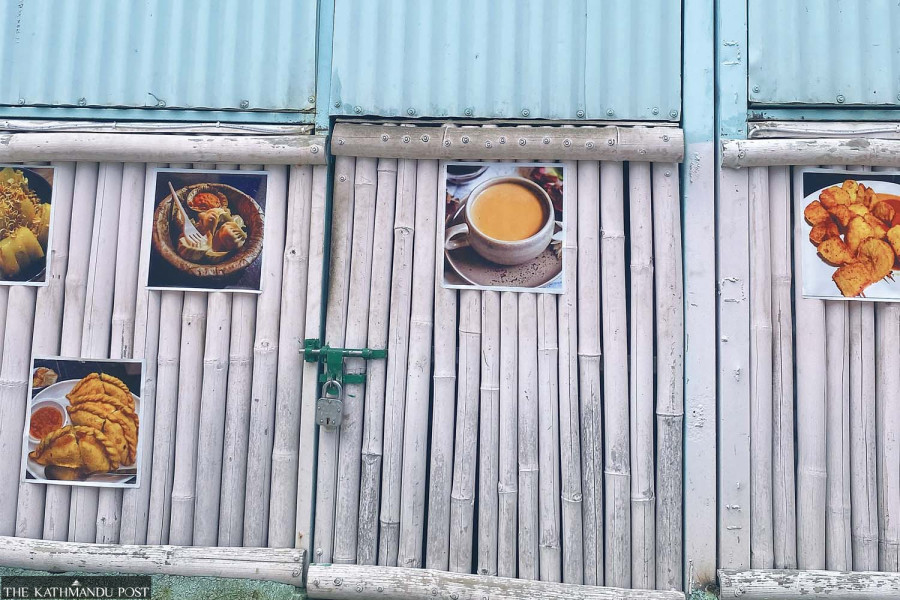
bookmark
Prakriti Dahal & Samarpan Shree
Published at : September 20, 2026
Updated at : September 20, 2026 07:13
Kathmandu
Tandoori roti has disappeared from some restaurants. Fried dishes are no longer being prepared at others. Steamed momo, sizzlers and other gas-intensive items have also been cut as restaurants struggle to secure liquefied petroleum gas.
For restaurant customers in Kathmandu, the gas shortage is changing what is available on the menu.
Some eateries are turning to infrared stoves and rice cookers to keep their kitchens running. Others are considering firewood. Service times have stretched, sales have fallen, and businesses are continuing to shoulder rent, wages, electricity and other operating costs even as their menus shrink.
At Palpali Bhojanalaya in Thapathali, owner Krishna Pandey has removed nearly half the items from the menu because many require prolonged cooking or frying.
“We have stopped making dishes that require a lot of gas for cooking or frying,” Pandey said. “When customers come, we cannot always give them what they want.”
The restaurant’s tandoor is no longer in use, while fried items such as French fries and chicken are also unavailable.
Pandey said he could not find enough gas in Kathmandu and, along with other restaurant operators, travelled to Hetauda and Birgunj to bring back supplies. But making such trips repeatedly is impractical.
“We managed to bring gas from Hetauda once, but we cannot travel every time [there’s a shortage],” he said.
With sales declining and regular expenses continuing, Pandey said the business was now operating at a loss.
“Our income is falling, and we cannot provide customers with the dishes they want, but the expenses have not stopped,” he said. “We are incurring losses daily. How can a business survive like this?”
At Gahraukalika Tandoori Bhojanalaya in Buddhanagar, the gas shortage has forced owner Raj Luitel to shut his tandoor for several weeks.
Tandoori roti was the restaurant’s biggest seller, generating about Rs7,000 in daily income, according to Luitel.
“We have had to shut down the tandoor for the past few weeks,” he said. “Now we can only sell other food.”
The restaurant normally used two gas cylinders, one for cooking and the other for the tandoor. Luitel has switched to a rice cooker for preparing rice as obtaining even a single gas cylinder has become difficult.
“We have to pull strings just to get a cylinder full of gas,” he said. “The business is making gross losses.”
The shortage is affecting businesses beyond restaurants selling full meals.
At Irani Chiya, a café in Tinkune, customers come for its signature Iranian tea. But these days, they are not always getting what they came for. Some are choosing other varieties, while others leave without being served.
Subas Bhandari, manager of the outlet, said the business has been unable to meet demand for Iranian tea for more than 15 days.
The tea needs to simmer for at least 15 minutes, he said. Before the shortage, the outlet sold 50 to 60 cups of Iranian tea a day. Sales have now fallen to around 40 cups.
“Iranian tea has to be boiled for at least 15 minutes and thus consumes a lot of gas,” Bhandari said. “Because of the shortage, we have not been able to serve customers the tea they order.”
There are 22 Irani Chiya outlets in Kathmandu, and the shortage has affected all of them, according to Bhandari. Some outlets have begun selling other varieties of tea that do not need so intensive boiling.
At Chiyaverse, a café in Buddhanagar, a notice warns customers that service may be delayed because of the gas shortage.
Owner Bhaskar Kulung has reduced the number of gas stoves and is relying on infrared cooktops for some cooking. When gas supplies were normal, two cylinders fuelled six stoves. Now only three stoves are running on gas.
The switch has helped keep the cafe open but has not eliminated delays, particularly when several orders arrive at the same time.
“Customers started complaining that the service was taking too long,” Kulung said. “We had to put up notices at the cafe and on social media explaining that the delays were caused by the gas shortage.”
Kulung briefly shut the cafe because of the shortage. He now uses infrared equipment for some of the cooking, but said it has been difficult to maintain normal service.
Restaurants elsewhere in the Valley are making similar adjustments.
Raj Aryal, operator of Marsi Thakali Chicken & Bar in Jhamsikhel, said the restaurant has had to cut its menu because of the cooking gas shortage. It has temporarily removed gas-intensive dishes such as steamed momo, sizzlers and chop suey. Preparing and heating these items requires more gas, Aryal said, so the restaurant is currently serving a limited selection.
“This is normally a good time for business,” Aryal said. “But because of the severe gas shortage, we cannot serve customers the dishes they ask for.”
The restaurant, known for its Thakali meals, currently offers a trimmed down menu. Aryal said he was considering firewood if the shortage continued.
“If the gas shortage lasts for a long time, we will have to keep the business going even by cooking with firewood,” he said.
The search for alternatives is not always straightforward. Restaurant operators say electric cooking equipment can help reduce their dependence on gas, but unreliable electricity supplies create another constraint. Switching fuels can also increases operating costs.
At View 360 Degree Resort in Chandragiri, owner Shankar Datta Panta has cut several items from the menu and is operating with limited gas supplies.
The shortage has affected not only food served to guests but also meals for the resort’s employees.
“We are managing with a limited supply of gas,” Panta said. “It is difficult even to provide meals for the six staff members working in the resort’s restaurant.”
The shortage has also come as restaurants face continuing fixed costs. Rent, salaries, electricity and water bills have not fallen even as businesses sell fewer items.
Restaurant operators say they are particularly concerned about how long the disruption will last. Cutting menus allows them to conserve fuel, but it also means losing customers looking for specific dishes.
Binayak Shah, president of the Hotel Association Nepal, said the supply situation has started to improve in recent days following the reopening of the Krishnabhir section of the Prithvi Highway.
“There is an impact when gas cannot be supplied,” Shah said. “But the situation is becoming a little easier now. Krishnabhir is open again, and we are managing the supply accordingly.”
Shah said the reduction in menus should not necessarily be taken as evidence of a severe supply crisis across the entire hospitality sector. Some businesses, he said, may also be reducing their menus to control costs. “The situation is not catastrophic at this point.”
For restaurant operators, however, the immediate challenge remains finding enough fuel to keep their kitchens running normally.
Samarpan Shree
Samarpan Shree is an Arts and Culture Correspondent for Kantipur Media Group, covering film, theatre, music, and contemporary social issues.



Most Read from Money
A flood of bad news leaves Nepal’s tourist hubs eerily quiet
How crypto found a ‘legal’ route into Nepal’s relief efforts
Nepalis cut back on food as ‘hyperinflation’ and shortages bite
LPG crisis deepens in Kathmandu, restaurants on the brink
Germany provides €8 million in assistance to Nepal after Bhotekoshi floods
Editor's Picks

What triggered the Rasuwa flood? Scientists piece together a complex chain of events

The floods keep coming. Nepal keeps starting over

In a settlement destroyed by the Bhotekoshi flood, a disabled couple offer strangers the little they have

Nepal working on detailed assessment as Bhotekoshi flood reconstruction could cost up to $5 billion

Rabindra Dhant gave Nepal a reason to smile. Now his camp wants real action behind the praise
E-PAPER | September 20, 2026

×