



 21.44°C Kathmandu

Fri, Oct 23, 2026
Money
Extreme heat threatens Nepal’s economy as warming accelerates
A new World Bank report warns Nepal is warming faster than most South Asian countries, with heatwaves increasingly hurting workers, straining infrastructure and putting economic growth at risk.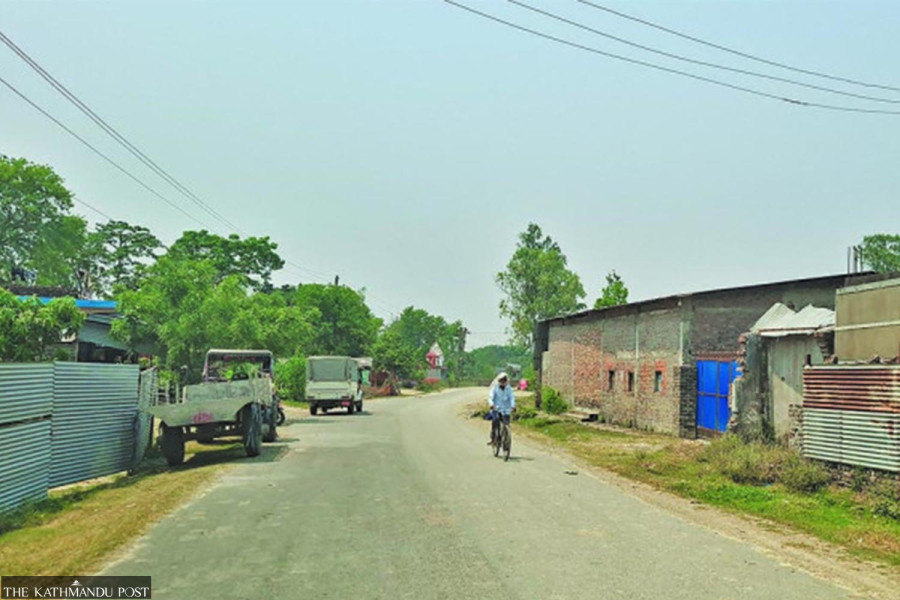
bookmark
Sangam Prasain
Published at : July 30, 2026
Updated at : July 31, 2026 09:24
Kathmandu
In the scorching mid-June afternoon, as temperatures hovered around 40 degrees Celsius, 67-year-old Gopal Damai was still pulling his rickshaw through the streets of Mahendranagar in far-western Nepal.
For four decades, he has earned his living transporting goods in the three-wheeled cart. But increasingly frequent and intense heatwaves have made that livelihood harder to sustain.
“I only work in the morning and evening. I can't work during the day,” he told Kantipur Daily in May.
“Some days, I don't even earn Rs100. I have to buy vegetables on credit.”
The blistering heat has emptied Mahendranagar's streets. Fewer people venture outdoors during the day, leaving Damai with few customers and even fewer opportunities to earn.
More than 250 kilometres east, in Bardiya's Gulariya Municipality, 37-year-old Puja Bhujuwa faces a similar struggle.
She spends long hours pushing a cart and selling roasted corn near the district land revenue office.
The heat radiating from the asphalt burns her feet, while the 40-degree temperature leaves her with persistent headaches. Despite the oppressive conditions, she must keep roasting corn over a wood fire to support her family.
“Business was good until April,”Bhujuwa told Kantipur in May. “Since June, the heat has intensified, people have stopped coming out during the day, and our sales have dropped sharply.”
The hardships faced by Damai and Bhujuwa illustrate a broader trend.
Extreme heat is no longer confined to Nepal's southern Tarai. Hill towns and cities, including the Kathmandu Valley, are also experiencing steadily rising temperatures, exposing millions of workers to growing health and economic risks.
In Kathmandu, the heat is increasingly taking a toll on informal and daily wage workers who spend long hours outdoors, often without access to shade, cooling facilities or adequate drinking water.
Nepal, long regarded as a cool Himalayan country, is now emerging as one of South Asia's fastest-warming nations, according to the World Bank's 2026 report, A Livable Future: Protecting Jobs and Growth from Extreme Heat in South Asia's Cities.
The report says Nepal has already warmed by 1.26 degrees Celsius above pre-industrial levels, making it one of the region's fastest-warming countries. Under a medium-emissions scenario, temperatures are projected to rise by another 2.8 degrees Celsius by the end of the century.
The warming will be most pronounced across the Himalayas and foothills, where rising temperatures are expected to alter regional weather patterns, increase humidity and intensify heat across the Indo-Gangetic plains.
Urban centres in Nepal's hills are also warming rapidly. Kathmandu already experiences a pronounced urban heat island effect, with temperatures in the city core reaching up to 4 degrees Celsius higher than surrounding parts of the valley because of dense construction, concrete surfaces and shrinking green spaces.
Although Kathmandu still experiences fewer days of extreme heat than many lowland South Asian cities, the report warns that warming trends indicate even high-altitude cities will increasingly face dangerous heat stress.
Between May 2024 and May 2025, Nepal recorded 89 days with temperatures above the historical 90th percentile, underscoring how quickly extreme heat is becoming the new normal.
According to the World Bank, extreme heat is steadily eroding Nepal's economic productivity by reducing workers' capacity to perform physically demanding jobs, particularly in construction, agriculture and the informal sector. Rising temperatures are also increasing electricity demand, overheating buildings and disrupting transport systems.
Poor households are expected to bear the heaviest burden. Families living in informal settlements often lack reliable electricity, cooling facilities and access to healthcare, making them especially vulnerable to prolonged heatwaves.
The report estimates that more than 700 million people across India, Bangladesh and Nepal already live in areas where outdoor heat stress exceeds safe physiological limits for at least one day every year.
The health burden is also rising rapidly across the region. Across Bangladesh, India, Nepal and Sri Lanka, deaths in which high temperatures were identified as a contributing risk factor nearly doubled between 2000 and 2023—from around 118,000 to approximately 230,000—representing an increase of about 95 percent, or an average annual rise of 4.1 percent.
The report also calls for stronger monitoring of heat-related illnesses and deaths, expanded early warning systems, greener urban planning and the adoption of heat-resilient building standards.
According to the report, embedding heat resilience into urban planning, infrastructure investment and public health systems before temperatures rise further could prevent extreme heat from becoming a long-term constraint on Nepal's economic growth and livability.
The report explains that the human body maintains an internal temperature of about 37 degrees Celsius. Physical activity generates heat, while sweating and the widening of blood vessels near the skin help cool the body. But hotter air, higher humidity and prolonged exposure to direct sunlight or heated surfaces reduce the body's ability to dissipate heat.
When those natural cooling mechanisms fail, people become vulnerable to heat exhaustion, heatstroke and other illnesses that place severe stress on the heart, lungs and kidneys, sometimes resulting in death.
Beyond the health risks, the World Bank warns that extreme heat is already weighing heavily on South Asia's economy.
The equivalent of 31 million full-time jobs are lost annually across the region as workers slow down, stop work early or fall ill. Businesses also suffer as electricity systems, transport networks and buildings struggle to function efficiently under extreme temperatures, reducing productivity, investment and economic output.
According to the report, informal workers' incomes decline by about 40 percent during a heatwave. At the same time, household spending on drinking water, cooling and healthcare rises sharply. Prolonged heat can also force families to borrow money, sell productive assets or pull children out of school to cope with financial stress.
Without adequate adaptation measures, rising temperatures could reduce South Asia's gross domestic product by nearly 7 percent by 2050, the steepest projected decline among developing regions. Shrinking tax revenues coupled with rising public spending on healthcare, energy and damaged infrastructure could create a prolonged fiscal burden for governments.
Dr Prajal Pradhan, associate professor at the Integrated Research on Energy, Environment and Society at the University of Groningen in the Netherlands, said intensifying heatwaves would affect Nepal through both public health and the economy.
“Heatwaves worsen existing illnesses, increase heat-related deaths and reduce labour productivity,” he said.
“As heatwaves become more frequent, demand for cooling will increase, and this requires more electricity. Poor ventilation in buildings also leads to overheating as temperatures rise. Extreme heat can even soften asphalt and disrupt transport systems.”
Pradhan said households living in poorly constructed homes remain highly vulnerable to both cold spells and heatwaves.
“The long-term solution is to ensure decent housing with proper heating and cooling facilities. Expanding green spaces and water bodies in urban areas can also help reduce temperatures and lessen the impact of heatwaves.”
The report said that dense urban areas can remain more than 10 degrees Celsius warmer than surrounding rural areas at night because concrete and asphalt retain heat long after sunset. The lack of nighttime cooling prevents the human body from recovering from daytime heat stress, making prolonged heat exposure even more dangerous.
By 2070, around 520 million people across South Asia are projected to experience at least one month of dangerous heat every year—four times the current number. Much of that exposure will be concentrated in cities, while the Himalayas and their foothills are expected to experience the fastest rate of warming.
The report also warns that the true death toll from extreme heat is likely far higher than official figures indicate because many fatalities are recorded as cardiac or kidney failure rather than heat-related deaths.
Economist Chandra Mani Adhikari said extreme heat is already affecting multiple sectors of Nepal's economy.
“Heatwaves have not only reduced agricultural production but have also significantly affected public health and employment,”he said. “Government and household healthcare spending has risen considerably, while disasters linked to climate change are damaging critical infrastructure.” According to Adhikari, Nepal has failed to adequately strengthen its climate adaptation programmes.
“The current trend suggests Nepal could face growing food insecurity if these problems are not properly analysed and addressed,” he said.
To reduce future losses, the World Bank proposes a broad set of interventions spanning public health, social protection, energy, transport, finance and urban planning.
It recommends investing in early warning systems, strengthening health services, protecting outdoor workers, expanding urban forests and shaded public spaces, and making electricity and transport systems more resilient to extreme heat.
“Heatwaves disrupt every part of city life, so the response must involve the whole of government,” the report says. It also calls for mobilising private investment to expand access to affordable cooling, finance green and climate-resilient buildings, improve cooling systems for industry and healthcare, and develop insurance mechanisms to manage heat-related risks.
Rather than creating entirely new programmes, the report recommends integrating heat resilience into existing initiatives. Employment schemes such as Nepal's National Employment Promotion Programme, national health systems and housing programmes could incorporate heat adaptation measures by updating operational guidelines without requiring major new spending.
The report also highlights the role of frontline community workers. Nepal's Female Community Health Volunteers could help deliver heat advisories and protect pregnant women, children and elderly people through the systems already in place.
As air-conditioning becomes more common, electricity demand is expected to shift increasingly to the evening and night because buildings retain heat after sunset and nighttime temperatures are rising faster than daytime temperatures.
The tourism sector is also expected to face growing risks.
The report recommends retrofitting heritage sites in the Kathmandu Valley—including the Durbar Squares, Pashupatinath, Bauddhanath and Swayambhunath—as well as lowland pilgrimage destinations such as Lumbini and Janakpur with shaded walkways, water features, traditional courtyard ventilation and cool-roof technologies that comply with conservation standards.
According to the report, the Nepal Tourism Board, the Department of Archaeology, UNESCO, the Asian Development Bank and private investors could jointly finance these improvements to protect tourism assets that support an industry worth around $700 million and provide employment for nearly one million people.
The report also recommends strengthening Nepal's electricity network through grid upgrades, distributed renewable energy with battery storage, demand-side management and priority power supply for critical services during periods of extreme heat.
Low-cost interventions such as shaded bus stops, cooler pavements, tree-lined streets and improved pedestrian and cycling infrastructure could also reduce heat exposure, particularly in the Tarai and Kathmandu Valley, according to the report.
Sangam Prasain
Sangam Prasain is Business Editor at The Kathmandu Post, covering tourism, agriculture, mountaineering, aviation, infrastructure and other economic affairs. He joined The Kathmandu Post in October 2009.



Most Read from Money
Nepal travel agents threaten to stop selling Thailand trips over visa rules

Why does an hour long flight to Dhangadhi cost more than a flight to New Delhi?

Malaysia rejects Nepal’s demand to open recruitment to all manpower agencies
No school, but a graduation cap for women dairy farmers
Nepal arrests four medical service providers as Malaysia recruitment row deepens
Editor's Picks




E-PAPER | October 23, 2026

×