Q&A: Om Prakash Aryal on a year of political upheaval and the unfinished Gen Z agenda
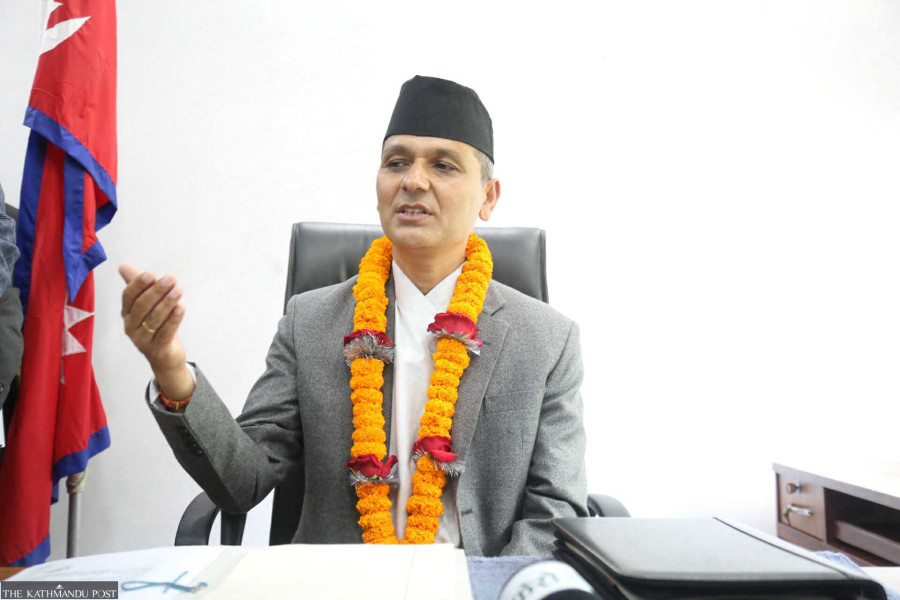
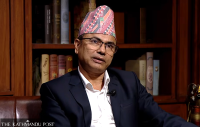
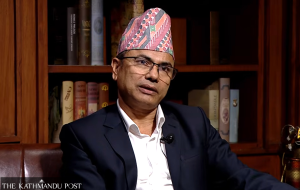
The former home minister discusses the legacy of last year’s September uprising, the interim government’s efforts to restore constitutional rule, the search for accountability and why he says fear and revenge cannot be the basis of government. Former Home Minister Om Prakash Aryal Post Photo
The Gen Z uprising of September last year overturned Nepal’s political order and forced the formation of an interim government. Om Prakash Aryal served as home minister in the government that followed. He spoke to Kantipur Television’s Rupesh Shrestha about his time in office, the experience of overseeing an election, and the government’s response to the demands of the Gen Z movement.
How do you personally look back on the year since September 8?
At heart, we are citizens first. I’m a lawyer by profession. Whatever role I take on, I see myself as a co-worker, not as someone in a position of authority. From the very formation of the government, I was involved in efforts to contain the conflict and violence, protect lives and property, and safeguard the country and the Constitution. I later took on the responsibility of the home minister because the bloodshed had to stop and the country had to be protected.
I also saw my role as helping facilitate a response to the demands of the Gen Z movement. I worked with the prime minister and my Cabinet colleagues in the same spirit of cooperation.
Were you a ruler or a facilitator in government?
A facilitator. The very idea of a “ruler” belongs to an outdated political culture. We are all equal citizens. When the government works through facilitation and cooperation, it respects people’s dignity and creativity. The results follow naturally.
You went from criticising those in power to being in power yourself, and then to keeping quiet. Which of those periods was the most difficult?
All of them were manageable. This is an age of dignity. If you do not attack people’s dignity, you create an environment in which problems can actually be solved. When someone comes to you angry or abusive, simply listening to them can defuse the situation. It costs nothing. You just have to change your own approach.
The same Gen Z leaders who helped bring you into government later questioned you. How do you respond?
A nation rests on the unity of all sides. You cannot govern by recognising only one side. Many of the initial grievances were eventually addressed. Government has to operate within the rule of law, not through anarchy.
Good governance means more than fighting corruption. It also means respecting human rights, ending impunity and ensuring inclusion. If you fulfil one group’s demands in their entirety, you can end up restricting the rights of another.
Gen Z leaders have complained that they could not get access to your ministry.
That is simply not true. Gen Z representatives had greater access to both the home minister and the prime minister than almost anyone else. Most of their issues originated in the home ministry and were then sent to the Cabinet or other relevant agencies.
Can you say Nepal is now back on a constitutional and legal track?
Yes. The government that followed the elections came to power with a popular mandate. The gaps created by the absence of elected institutions have now been filled in accordance with the Constitution.
In that sense, the country is constitutionally back on track.
The interim government itself was formed outside the constitutional framework. But it existed to protect the Constitution and restore constitutional government. It therefore had to hold elections within six months to establish its legitimacy.
Had it failed to do so, the government would have faced a serious crisis of legitimacy.
Om Prakash Aryal, after taking an oath of office and secrecy as home minister, after the Gen Z movement of September 8-9, 2025. File Photo
What has changed between September 8-9 last year and today?
A major paradigm shift has taken place.
The biggest achievement is that a younger generation has been brought into the political mainstream. Our government formally recognised the Gen Z movement as a people’s movement.
We also made progress in governance and public service delivery. Decisions taken for injured Gen Z protesters and the families of those killed are still being implemented, and the current government has made few changes to them.
What is happening to those responsible for the crackdown on protesters on September 8 and the violence the following day?
The process is underway, but we still do not know what the outcome has been.
The arrests began on the day the government was formed. Former prime minister KP Sharma Oli and former home minister Ramesh Lekhak were arrested and held in custody for a period, but no case has been filed against them to this day.
The media has also done little follow-up on the issue. I do not see where the government has demonstrated accountability.
Investigators have the right to pursue whatever the facts establish. But fabricating facts where none exist is not the rule of law. Once the state starts doing that, anyone can become a victim. The rule of law is not a tool for settling scores. It is meant to protect everyone. Human dignity and fundamental rights must be protected regardless of who is in power.
What is the path to justice for those killed or injured in the crackdown?
There are two parts.
The first is compensation, relief and recognition of those killed as martyrs. The second is holding those responsible accountable and giving victims a genuine sense that justice has been served. Without accountability, the international community will keep asking questions, and the issue could become even harder to resolve.
Why was the Gen Z council never formed?
We had issued an order to establish it, but the process was halted after the Election Commission withheld its consent. It should still be established. The council would give Gen Z a formal place in the political mainstream and recognise them as a constituency. The agreement explicitly provides for it, so the government has an obligation to implement it.
What was your experience of overseeing the elections?
It was mixed. You needed patience to understand the concerns of people who had come out of a revolt. At first, some people insisted, saying they didn’t protest for an election. In the end, that argument proved wrong.
How would you describe Sushila Karki’s leadership?
She acted more like a mother and guardian. Despite her age and the personal challenges she faced, her judicial and political background helped her navigate an extraordinarily difficult situation.
Who was behind the violence on September 9?
The inquiry commission has given some indications, but further investigation is still needed. The Gen Z protests were supposed to be peaceful. The so-called bikers helped inflame the situation. Breaking into prisons, looting weapons and burning police posts went beyond what the protesters themselves were doing.
Where did the security agencies fail in an operation that appeared so organised?
Once a political protest reaches that scale, the political leadership has to become directly involved.
The Central Security Committee, chaired by the home minister, the National Security Council and the Cabinet should all have met immediately. The crisis should not have been left at the level of chief district officers.
There had already been a small warning on August 31. The security agencies had raised concerns. The state should have acted at the preventive stage.
If the government had opened talks early on September 8, strengthened security that evening and addressed the protesters’ grievances, the events of September 9 might never have taken the shape they did.
This was not merely an attack on the life of the state. It was an attack on the life of the nation itself.
Had the violence continued into September 10 or 11, Nepal could have faced the risk of foreign intervention or even civil war. The episode must be investigated.
After the devastating floods of August 26, how do you assess the government’s response?
The government should have coordinated all three tiers of government with the private sector and civil society. Instead, it initially tried to operate too much on its own. Relief efforts work better when victims and experts are brought directly into the response. The government should create space for voluntary, community-led efforts and seek international assistance where necessary.
As a former home minister, what is your advice to the prime minister, the home minister and the leaders of the ruling party?
Respect the rule of law and, above all, respect human dignity.
We are seeing people’s dignity attacked from all sides. The power of the state and the power of social media are being used together to destroy reputations and humiliate people. That must stop immediately.
You cannot govern through fear. Fear only breeds hostility. As that hostility grows, it can eventually consume your own party, your own institutions and ultimately yourselves. Stop creating enemies. Stop seeking revenge. Stop humiliating people. Stop governing through intimidation. That is the exact opposite of the rule of law. It is fascism, and this emerging fascism must be stopped. The first victims of fascism are usually others. The final and greatest victims are those who hold power themselves.




 15.68°C Kathmandu