Six JE deaths in 10 cases put Jhapa at centre of vaccination push
Experts urge nationwide vaccination to protect vulnerable populations as the outbreak has gripped all provinces. Nepal is currently in the midst of a major JE outbreak that has killed at least 21 people and infected over sixty others in less than two months. Post File Photo
Japanese encephalitis has killed six of the 10 people infected in Jhapa since the current outbreak began in the second week of July. The 60 percent case-fatility rate, the highest in the country, has led health officials to consider an emergency vaccination drive for adults in the district.
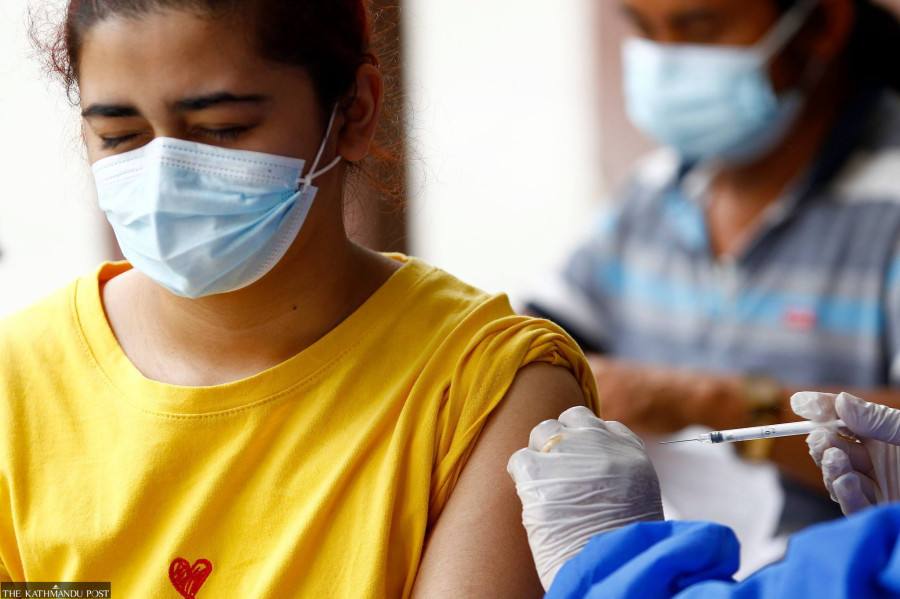
Officials say vaccines purchased for childhood vaccination programmes could be administered to people over 30 in the first phase.
“The death rate of 60 percent is alarming,” said Dr Manohar Pradhan, expert advisor to Health Minister Nisha Mehta. “We are preparing to start vaccination from Jhapa district for people above 30 years of age.”
Nepal is currently in the midst of a major JE outbreak that has killed at least 21 people and infected over sixty others in less than two months. The outbreak has spread to all seven provinces.
Japanese encephalitis (JE) is a viral brain infection that kills about one-third of those who develop severe illness, while up to half of survivors are left with severe, lifelong disabilities, according to the World Health Organisation.
The government currently provides the JE vaccine free of charge to under-24-month-olds as part of its routine immunisation programme. But the programme does not cover adults, even though it has been killing many adults in recent years.
Data from the current outbreak show 89 percent were unvaccinated. Among those who died, 81 percent were above 50 and were all unvaccinated.
Officials say vaccines purchased for the childhood immunisation programme will be used in the campaign and replenished once additional doses are procured.
“We will also explore the possibility of procuring vaccine through a G-to-G [government-to-government] procurement deal with China,” said Pradhan. “Even if that is not possible, we will try to procure the vaccine, which is an effective way to stop the infection.”
Officials say that they are planning to procure 3.5 million doses of JE vaccine for nine high-risk districts, where infection rates and deaths are high.
“The date of the rollout has not yet been finalised, but we will start immunisation within the next three weeks,” said Dr Abhiyan Gautam, chief of the Immunisation Section at the Family Welfare Division under the Department of Health Services. “We hope that immunisation will lessen the severity of the infection and reduce deaths.”
Public health experts say immunity from the live vaccine develops within 15 days to one month.
“Administration of JE vaccine will lessen the risk of future infection as well,” said Dr Shyam Raj Upreti, former director general of the Department of Health Services. “The government must explore ways to bring in the vaccine at the earliest.”
Upreti, also an immunisation expert and former director of the Child Health Division, said the government took a loan from the World Bank in 2006 to administer the JE vaccine to vulnerable populations.
Nepal started administering the JE vaccine in 2006, eight years before the WHO officially issued prequalification certification, due to high rates of infection and deaths. As the UN health body had not approved the vaccine, aid agencies did not provide help to the government.
Health Ministry officials, however, said that they do not have the resources or a plan to administer the vaccine to the entire vulnerable population.
Currently, JE infections have been reported in all seven provinces. According to the Ministry of Health and Food Safety, Koshi province has recorded 24 cases, including 10 deaths. Jhapa accounts for 10 of those cases and six of the deaths, while Morang has reported seven cases and one death, and Sunsari five cases and two deaths. Madhesh has reported 19 cases and six deaths, Lumbini seven cases and two deaths, Sudurpaschim 13 cases and two deaths, and Bagmati reported 10 cases and one death. Gandaki saw five cases, while Karnali recorded one case.
Kailali reported seven cases and two deaths; Saptari, six cases and two deaths; Dang, three cases and one death; and Dhanusha, three cases and one death.
Parsa, Nawalparasi and Ilam districts have each recorded a case fatality rate of 50 percent. Parsa has reported four cases, including two deaths. Nawalparasi and Ilam each reported two cases, including two deaths.
The overall case fatality rate is around 25 percent. Data show that 80 percent of JE cases have been reported from 59 local units in 25 districts.
Last year, 41 people died, and 141 others were infected with JE, which had spread to over 117 local units in 45 districts. The case fatality rate was around 23 percent. In 2024, 23 people, including one person in Kathmandu Valley, died of JE, while at least 80 were infected.
Public health experts also question Nepal’s ongoing outbreak response, noting that such high case fatality rates were more common two decades ago, when the country’s health system was still in a rudimentary state.
“At present our health system has improved significantly,” said Upreti. “Despite having intensive care and advanced diagnostic services, we still have a high case fatality rate, which should be a serious concern.
Along with vaccination, health officials say awareness drives, improved sanitation and hygiene, and behavioural changes are crucial in reducing transmission.
JE has long been a major public health problem in Nepal. The virus killed nearly 2,000 people in Nepal in 2005, mostly children in the Tarai districts.
An estimated 12.5 million people in Nepal are at high risk of JE infection.
Arjun Poudel is a health reporter for The Kathmandu Post. Before joining the Post, he worked for Sagarmatha Television, Naya Patrika, Republica and The Himalayan Times.




 17.63°C Kathmandu