A single shot can prevent JE, but Nepal’s vaccination programme leaves adults out
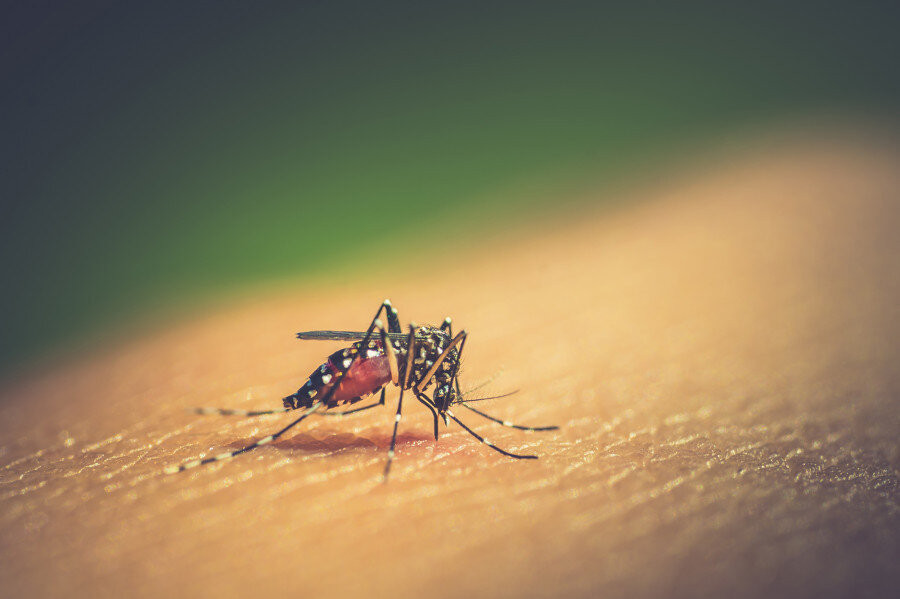
Sayal Rai has spent more than two years on a ventilator after JE left him severely disabled. The disease has killed at least 21 people across Nepal over the past six weeks. Japanese encephalitis is a viral brain infection that kills about one-third of those who develop severe illness, while up to half of survivors are left with severe, lifelong disabilities Shutterstock
Sayal Rai was just 12 years old when he contracted Japanese encephalitis. Now 14, he remains in a permanent vegetative state and has been on ventilator support ever since, first at Birat Medical College and Teaching Hospital in Biratnagar and later at BP Koirala Institute of Health Sciences, Dharan.
“It's already been more than two years since the infection, and my son is still on a ventilator,” Nirmala, Sayal’s mother, a resident of Belaka Municipality in Udayapur district, told the Post over the phone from Dharan. “He cannot breathe on his own or speak, and has developed wounds on his back from lying in the same position.”
Japanese encephalitis (JE) is a viral brain infection that kills about one-third of those who develop severe illness, while up to half of survivors are left with severe, lifelong disabilities, according to the World Health Organisation.
Nepal is currently in the midst of a major JE outbreak that has killed at least 21 people and infected 59 others in the past six weeks.
Sayal is among scores of survivors whose lives have been permanently altered by the disease.
Nepal’s routine JE vaccination programme covers children but leaves adults out, even though they account for most infections and deaths. Officials are now considering expanding the vaccine to adults, but say funding remains a big obstacle.
“He sheds tears when secretions lodge in his throat and trigger coughing, or when he experiences severe pain,” said Nirmala. “It is deeply distressing to watch him suffer. He is our only child, and we had pinned all our hopes for our bright future on him.”
Sayal was in the sixth grade when he contracted the virus. His parents had enrolled him in a private school at the district headquarters and arranged for him to stay in a rented room with his cousin sister.
When he developed a 104-degree fever, they rushed him to Birat Teaching Hospital in Biratnagar. Doctors admitted him to the intensive care unit after his condition deteriorated.
His parents spent around Rs800,000 on his treatment, but he showed no signs of recovery. They eventually transferred him to BP Koirala Institute of Health Sciences after they could no longer afford the mounting bills.
“We owe around Rs4 million to the hospital, and the hospital administration has since moved him to a free bed because we could no longer afford his treatment.”
As Sayal’s stay in the hospital stretched from weeks into months and then years, much of his care fell to his family. He depends on continuous oxygen support and has a tube inserted through his neck for feeding. He also needs assistance with excretion and almost every other basic bodily function.
Nirmala, once a housewife who also worked on her family’s farm in the village, has become his full-time caregiver. She has learned to perform many tasks normally carried out by nurses, including monitoring his condition, managing his feeding tube, tending to his wounds and caring for him round the clock.
She has rented a small room near the hospital for Rs2,000 a month where she prepares gruel from rice or flour, along with milk and eggs, and feeds him through the tube. Initially, relatives visited and provided some financial assistance, but their visits and support gradually dwindled.
Nirmala has borrowed money from relatives but does not know how she will repay the loans. Her husband, who once shared the burden of caring for their son, now carries sand near the India border to make ends meet. He is often unreachable because of a poor phone network.
“We can’t say anything about Sayal’s full recovery,” said Dr Basanta Rai, assistant professor and consultant paediatrician at the BP Koirala Institute of Health Sciences. “But his mother has not given up hope and has invested everything she has in her son.”
Dr Rai said Sayal’s mother has been paying for medicines, diapers, wound ointments, and other items that are not covered by the hospital’s free services.
“JE is not like other diseases. Those who suffer know the real consequences,” said Dr Rai. “It can leave survivors with devastating, lifelong disabilities and have a huge impact on their families.”
JE is transmitted to humans through the bite of infected Culex mosquitoes.
Since the JE outbreak began, 21 people have died, and 59 others have been infected. Nepal’s current case fatality rate is around 25 percent. Eighty percent of JE infection cases have been reported from 59 local units in 25 districts. Of those infected, 89 percent were unvaccinated. Among those who died, 81 percent were above 50, and were all unvaccinated, government data show.
According to the Ministry of Health and Food Safety, Koshi province has recorded 24 cases, including 10 deaths. Madhesh has reported 19 cases and six deaths, Lumbini seven cases and two deaths, Sudurpaschim 13 cases and two deaths, and Bagmati reported 10 cases and one death. Gandaki saw five cases, while Karnali recorded one case.
Jhapa district in Koshi province recorded 10 cases, six of which were fatal. Its case fatality rate of 60 percent is the highest in the country. Parsa, Nawalparasi and Ilam districts have each recorded a case fatality rate of 50 percent. Parsa has reported four cases, including two deaths. Nawalparasi and Ilam each reported two cases, including two deaths.
Kailali has reported seven cases and two deaths; Morang seven cases and one death; Saptari six cases and two deaths; Sunsari five cases and two deaths; Dang three cases and one death; and Dhanusha three cases and one death.
Last year, 41 people died, and 141 others were infected with JE, which had spread to over 117 local units in 45 districts. The case fatality rate was around 23 percent. In 2024, 23 people, including one person in Kathmandu Valley, died of JE, while at least 80 were infected.
Health officials say most of those infected or killed by JE were unvaccinated. Many were adults not covered by Nepal’s routine childhood immunisation programme. Such people are at serious risk of severe illness and death. JE can cause permanent damage to the brain and nervous system, and there is no specific treatment. Care focuses on managing symptoms and complications.
Last year’s data show that 76 percent of those who died from JE were over 40, while around 70 percent of those infected were older than 15. The figures indicate that the disease also affects many people outside the age group covered by routine childhood vaccination.
JE has long been a major public health problem in Nepal. The virus killed nearly 2,000 people in Nepal in 2005, mostly children in the Tarai districts.
Nepal started administering the JE vaccine in 2006, eight years before the WHO officially issued prequalification certification, due to high rates of infection and deaths. The programme was later expanded with support from donors and global health partners.
Nepal now includes the JE vaccine in its routine immunisation programme and provides it free of cost to children at state-run health facilities. But the programme does not cover adults, even though it has been killing many adults in recent years.
“We can prevent death and disability from JE infection by administering a single dose of vaccine,” said Dr Abhiyan Gautam, chief of the Immunisation Section at the Family Welfare Division under the Department of Health Services. “But the problem is we don’t have a vaccination programme for adults.”
Experts say the government should launch vaccination for all age groups, especially in high-risk areas.
“The government’s prime responsibility is saving lives,” said Dr Yasho Vardan Pradhan, former director general at the Department of Health Services. “JE infection is so deadly that even if patients survive, the virus leaves some lifelong effects.”
Along with vaccination, health officials say awareness drives, improved sanitation and hygiene, and behavioural changes are crucial in reducing transmission. Pigs and ducks are natural reservoirs of the virus. Pig farmers and those residing near the paddy fields are at particularly high risk of infection.
An estimated 12.5 million people in Nepal are thought to be at high risk of JE infection.
Officials at the Ministry of Health and Food Safety say they are exploring the possibility of administering a single dose of the JE vaccine to the entire adult population, but add that funding the programme would be difficult.
“We will hold discussions with relevant officials and explore possibilities,” said Dr Manohar Pradhan, Health Minister Neesha Mehta’s expert advisor. “We have discussed starting the vaccination from Koshi province, where the death rate is extremely high.”
Arjun Poudel is a health reporter for The Kathmandu Post. Before joining the Post, he worked for Sagarmatha Television, Naya Patrika, Republica and The Himalayan Times.




 17.29°C Kathmandu