Deadly microbes, including E. coli, have been found in over 60 percent of drinking water samples collected from households throughout the country, according to the Nepal Multiple Indicator Survey (MICS) 2024-25 unveiled on Monday.
The presence of microbes, which are generally found in human faeces, make the water unsafe to drink, doctors say.
“Presence of hazardous microbes such as E.coli and coliform in drinking water is not new in Nepal, but the fact that over 60 percent of the population is drinking contaminated water is alarming,” said Dr Sher Bahadur Pun, chief of Clinical Research Unit at the Sukraraj Tropical and Infectious Disease Hospital. “The report is an indication of sewage contamination in drinking water being used by the majority of the population.”
E. coli is a microscopic organism that lives in the intestines of warm-blooded animals or their faeces. Its presence indicates that the water used by the majority of the population is contaminated with sewage.
Every year, thousands of people from across the country, especially during the monsoon season, get infected with water-borne diseases—dysentery, typhoid, hepatitis A and E, and cholera. Most drinking water sources are contaminated with rainwater. Even bottled water, which is considered safe for drinking, has in the past been found to be contaminated with pathogenic microbes.
The report shows that 98.2 percent of the population use an improved source of drinking water.
“The report shows almost everyone drinks water from an improved source, yet over 60 percent of drinking water samples were contaminated with deadly microbes. This means, the so-called improved sources have yet to be improved,” said an official at the Epidemiology and Disease Control Division, asking not to be named, as he is not authorised to speak to the media. “Agencies concerned should work to improve drinking water sources.”
Among household members in the country, 92.4 percent were found to be using improved sanitation facilities. Of these, 79.9 percent of household members were using improved toilets exclusively.
Likewise, 86.4 percent of households were found to have a designated handwashing place equipped with water and soap or other cleansing agents.
The study examined multiple issues, including child mortality, nutrition, adolescent fertility, family planning, teenage pregnancy, smoking, education, maternal and neonatal health, drinking water and sanitation, protection and discrimination, mental health, mobile phone use, access to electricity, and other social sector concerns.
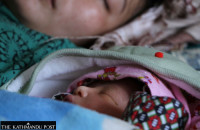
According to the report, seventeen newborns in every 1,000 die before reaching one month, 27 before reaching one year of age, and 31 die before reaching five years of age.
The national-level study was conducted by the National Statistics Office (NSO) in partnership with the United Nations Children’s Fund (UNICEF), as part of the Global MICS Programme. Technical and financial support for the survey was provided by UNICEF, with additional funding from the government.
Data were collected across the country by selecting 540 clusters—304 from urban areas, and 236 from rural areas. Information was collected from 12,960 households, according to the report.
MICS surveys measure key indicators that enable countries to generate data for use in policies, programmes, and national development plans, and to monitor progress towards the Sustainable Development Goals (SDGs) and other internationally agreed-upon commitments.
Arjun Poudel is a health reporter for The Kathmandu Post. Before joining the Post, he worked for Sagarmatha Television, Naya Patrika, Republica and The Himalayan Times.




 14.69°C Kathmandu