This Nepali film won at Cannes. Here’s what makes it stand out
Abinash Bikram Shah’s Elephants in the Fog—'Tiniharu' in Nepali—puts a Kinnar family at the centre of a story about belonging, othering and the fragile boundaries of acceptance. Writer-director Abinash Bikram Shah (right) with some of his cast members on the set of ‘Tiniharu’. Courtesy of Tiniharu Team
Pirati lives with her family at the edge of the small village of Thori. On most nights, she joins the community patrol in the nearby jungle, warding off wild elephants from entering the settlement. They march through the forest with blazing torches, screaming chants, warning the big animals never to breach the ‘unbreakable boundary’, or they shall be crushed.
After bagging accolades in film festivals across the globe, including the prestigious Jury Prize for the ‘Un Certain Regard’ section at the 2026 Cannes Film Festival, ‘Tiniharu’is celebrating its homecoming as the movie was released on September 4.
The film turned its Nepal premiere show into a special charity screening on Wednesday, acknowledging the devastating flood that has engulfed the entire country in grief. “If this screening can, even in a small way…contribute something towards relief, I will consider it a success,” director Shah said before the screening.
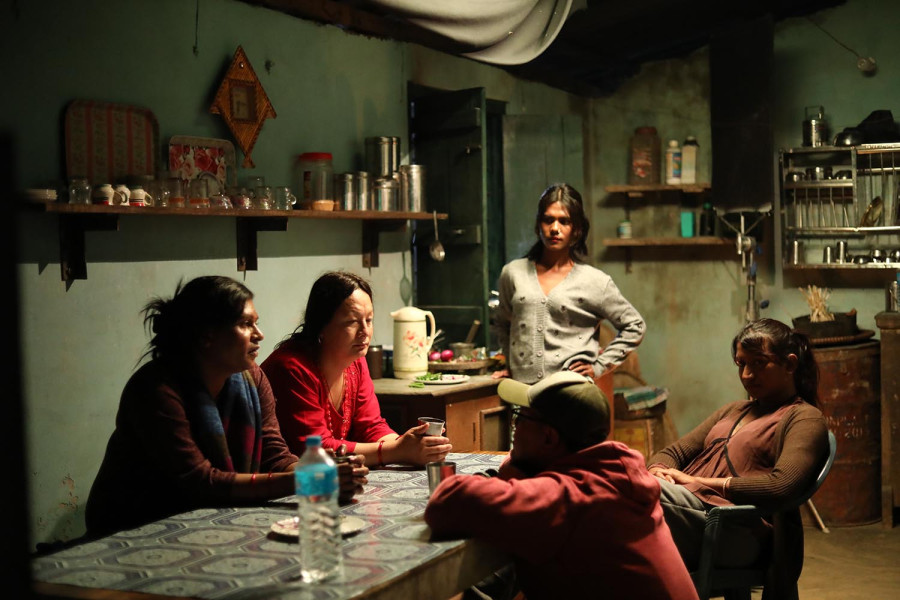
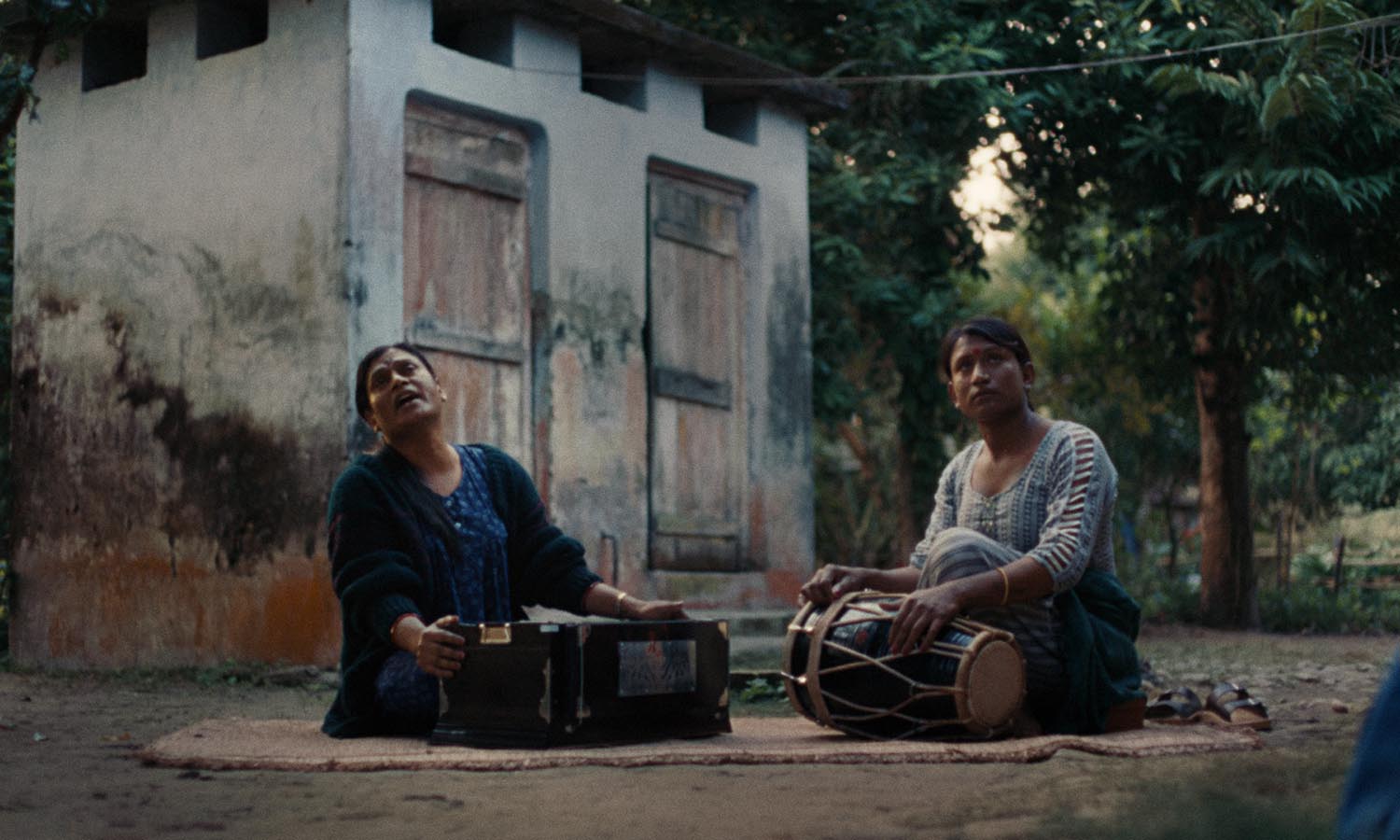
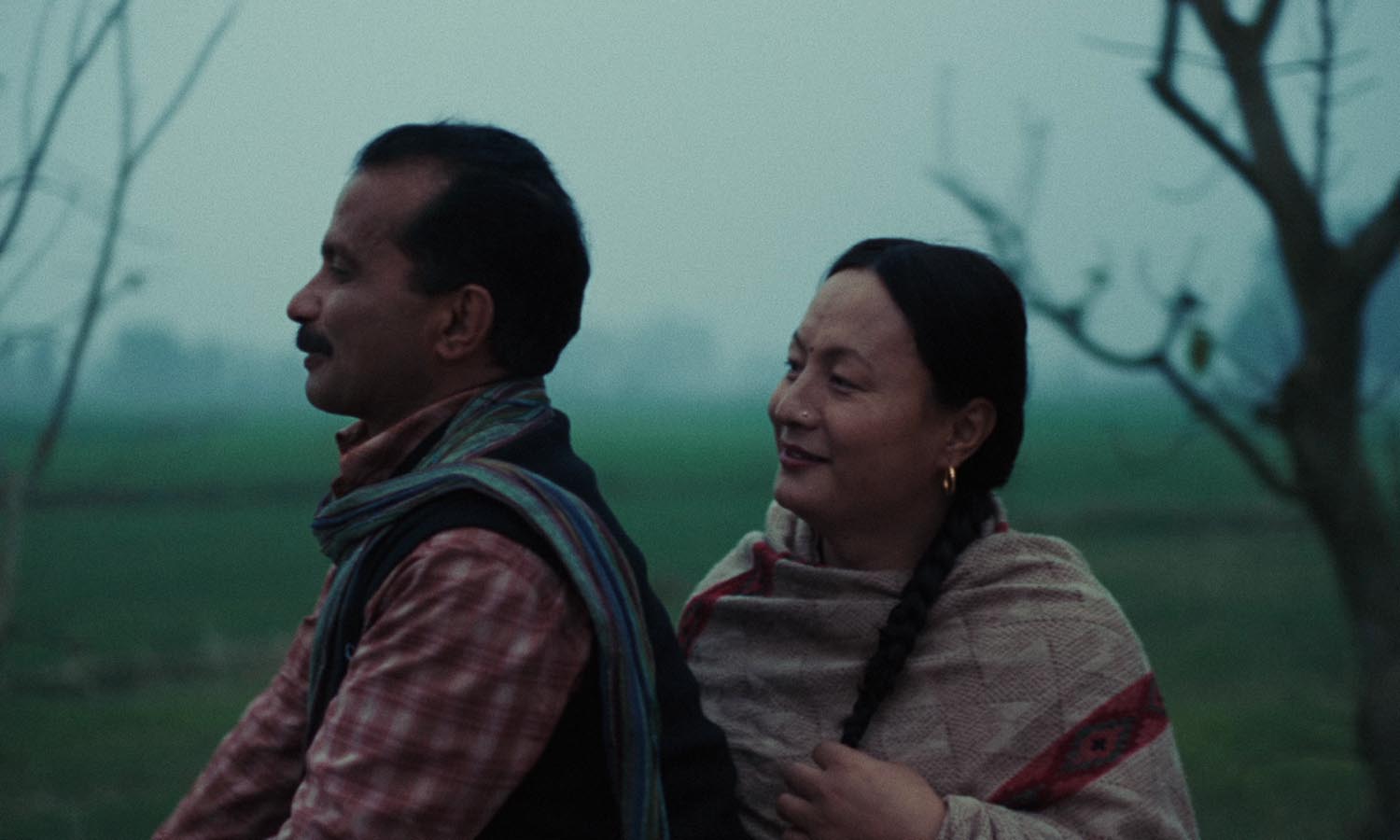
‘Tiniharu’ tests the strings holding Pirati’s world together. A trans woman, she heads her Kinnar family of four, maintains an amicable relationship with her neighbours, holds a respectable position in her community as a matriarch, and is in love with a local percussionist.
The movie features debutant actors, yet they anchor the film with admirable ease.
But not for long.
This harmony is turned upside down when one of her daughters, Apsara, goes missing, possibly during the nightly patrols, after an altercation with Pirati. What follows is a desperate search for empathy, filled with guilt, othering—even by the othered—and the precipice at which the Hijra identity stands.
As bleak as the story gets, it is also balanced by a fair number of playful jabs between characters, eliciting natural gags.
The movieunfolds at the threshold of the space Kinnars occupy in society. The same neighbourhood that welcomes the community for Badhai (folk performance involving blessings)retreats into an ‘us and them’ divide the moment their status quo is questioned.
The village expects the Kinnars to be grateful that their presence is accepted in society—to accept their fate. A scene featuring Chameli, another of Pirati's daughters, talking on the phone mirrors the degree to which they have, indeed, made peace with their fate. Shah brings this frayed relationship, insecurity, and hypocrisy to the silver screen.
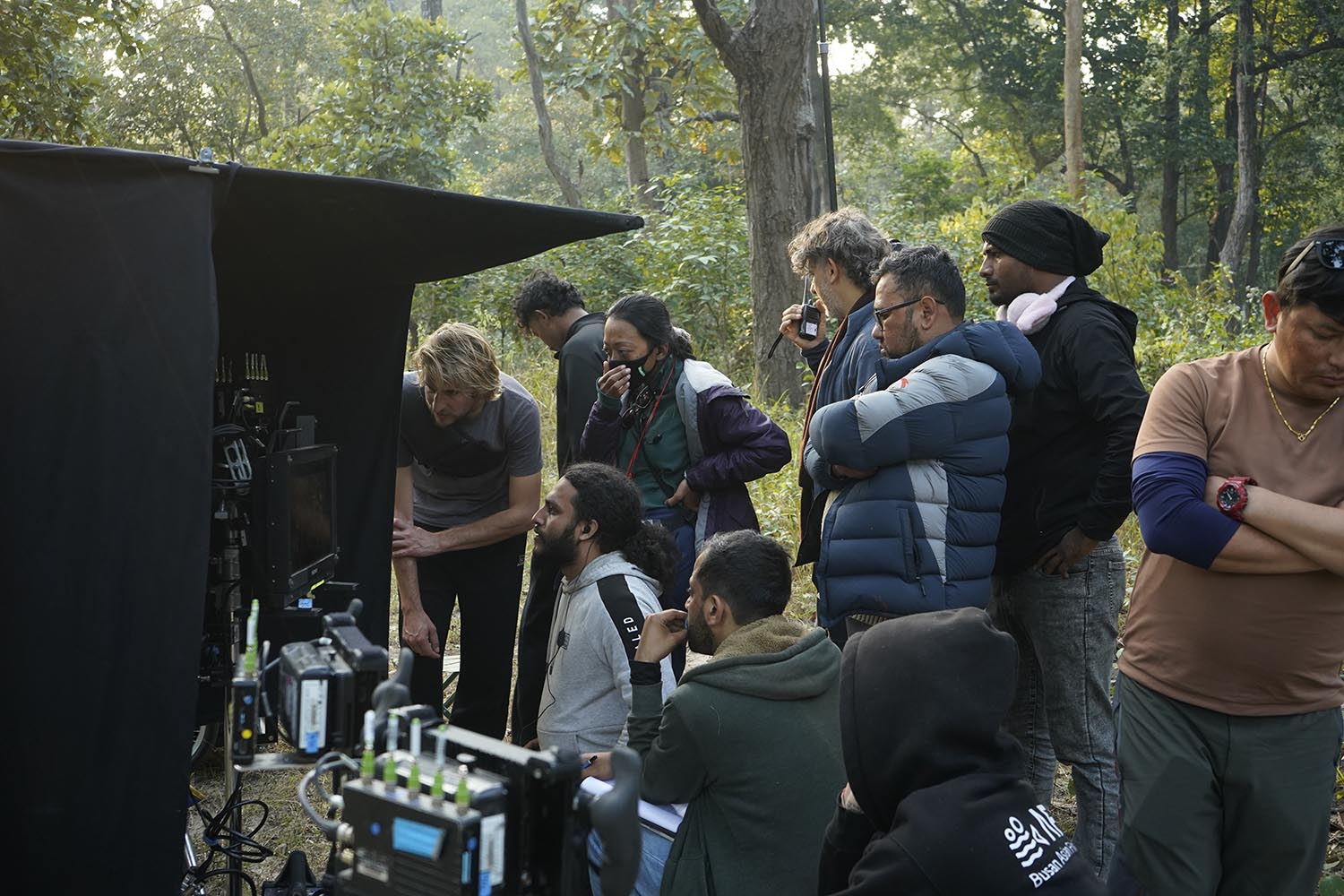
The crew of ‘Tiniharu’ during its production days in the village of Thori.
Needless to say, ‘Tiniharu’ draws a lot of comparisons between the Hijracommunity and wild elephants. Both are pushed to the margins of the village—literally and figuratively—with some overreaching attempts to shove them over.
In a scene where the villagers search for Apsara in the forest, they seem to call out her name the same way they call out the elephants. Apart from these obvious ones, one might also discover more concealed nuances: for instance, when Pirati scours for her daughter in utter fury, a public display board nearby warns of wild elephants.
Details such as these loom constantly so as to evoke the bond shared by those at the margins. An interesting detail to note is that the elephants in the film are treated almost like what the American film director Alfred Hitchcock popularly refers to as MacGuffins (plot devices that act as catalysts)—that is, until they’re not.
Most actors in the film are first-timers—a detail that would most certainly be overlooked by eyes unacquainted with the Nepali film scene. It is equally amusing and refreshing to watch debut talents deliver. Pushpa Thing Lama in Pirati’s skin is a convincing embodiment. She carries Pirati’s sternness and vulnerability in the right volumes. The complex, troubled Pirati finds herself caught between desire and duty: she wants to elope to Delhi with her paramour, yet is pulled back by a maternal urge to track down her claimed daughter.
Similarly, the frisky and pampered Apsara, played by Aliz Ghimire; the ever-whining Chameli, portrayed by Jasmine Bishwokarma; and the more mature of the lot, Joon, performed by Deepika Yadav—breathe life into their characters with admirable ease.
Professional actors including Aashant Sharma, Akanchha Karki, Maotse Gurung, and Gauri Malla also star in the film. Except for a couple of characters with negligible screen time who deliver their lines in a rather mechanical, rehearsed manner, every actor seems natural in their garb.
In its technical aspects, the film goes above and beyond.
Noé Bach’s smooth cinematography effortlessly captures the gritty atmosphere. His cinematic craft could easily go unnoticed, for it is so meticulously executed. Frédéric Alvarez composes an equally tense and unsettling background score that culminates in the final scene.
However, the pacing could have been more relaxed in the opening minutes as the film rushes into the second act.
Nonetheless, ‘Tiniharu’ sets a high bar for Nepali filmmakers. In a tradition of Nepali cinema that has long viewed the LGBTQIA+ community as either the butt of the joke, a spectacle, or simply ‘tiniharu’, Shah not only treats his characters respectfully but positions them as the anchors of the story. He breaks away from concealing them in a bleak fog of black and white, and instead uses a rainbow of colours to build their world. _________________________________




 20.17°C Kathmandu