Theatre review: ‘Summer Love’ has the nostalgia, but not quite the magic
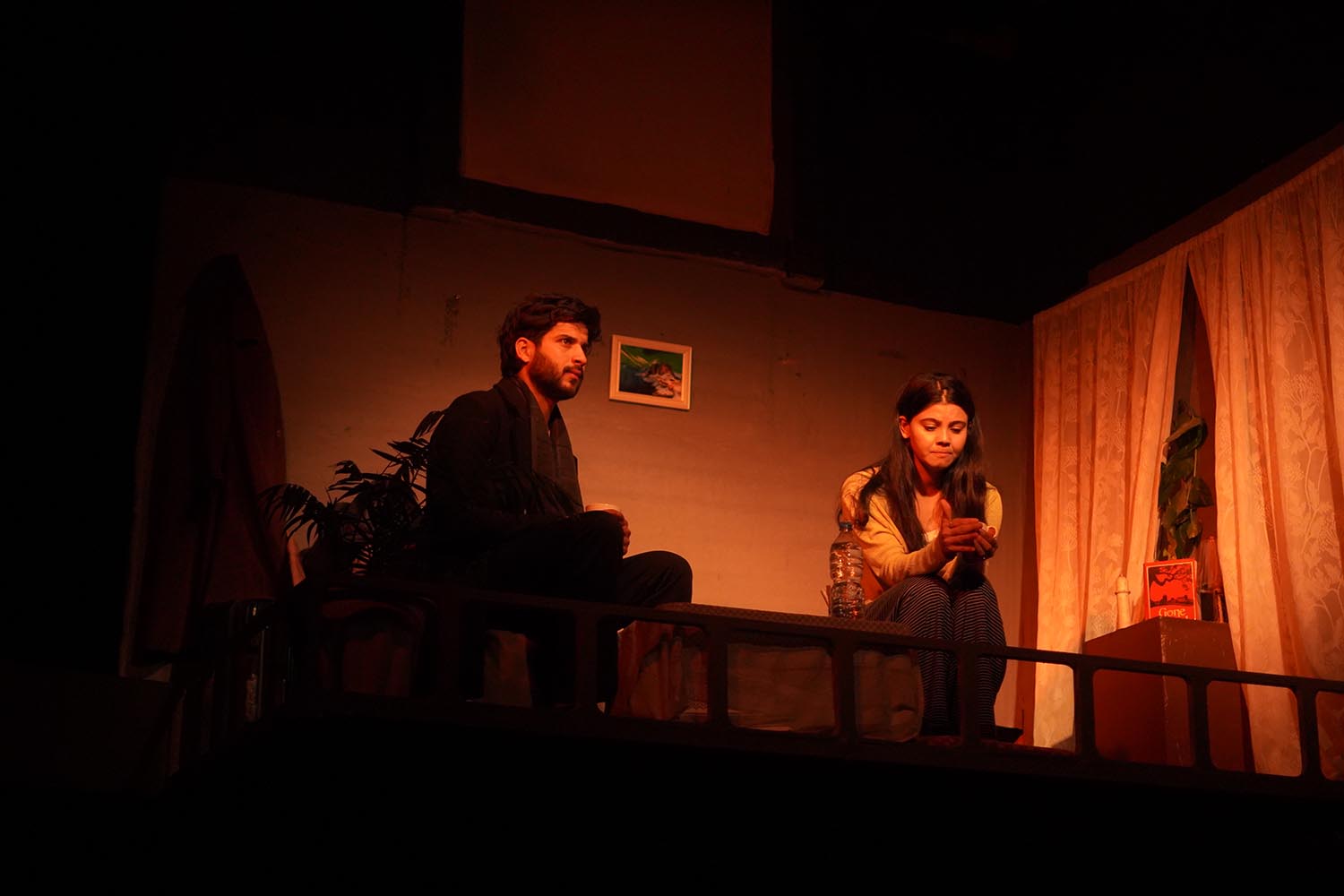
Subin Bhattarai’s novel captures nostalgia and the chemistry between Atit and Saya, but heavy-handed music, dance and performances often overshadow its emotional core. Courtesy of Kantipur Theatre
The opening scene of ‘Summer Love’ is a masterclass of nostalgia. For a few minutes, the stage feels like a memory.
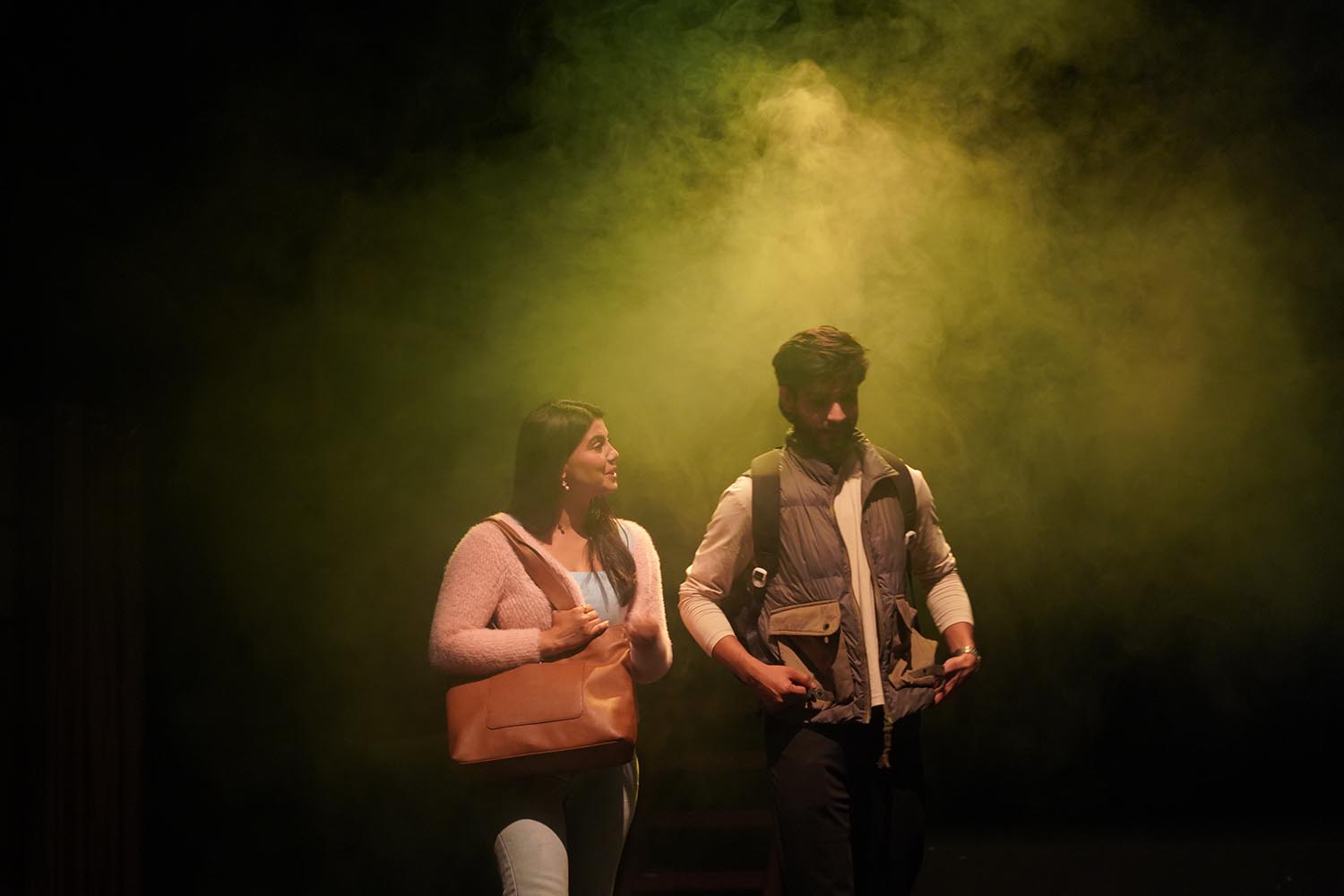
A cruise to Norway unfolds through smoke and a soft harmonica, and for anyone who has read Subin Bhattarai’s ‘Summer Love’, the familiarity arrives immediately. The opening is immersive in a way that feels intimate. The harmonica carries the atmosphere, giving the story the hazy quality of reminiscence.
The production, directed by Samrat Bhujel, remains faithful to Bhattarai’s novel. Lines have been lifted with such precision that readers will sometimes find themselves anticipating the dialogue. Atit’s monologues, in particular, benefit from remaining close to the novel. There is something satisfying about hearing lines one once read privately now being spoken aloud.
It also makes sensible choices about what to leave behind. A novel can afford to wander. A two-hour play cannot. The production picks the major beats of Atit and Saya’s relationship rather than attempting to reproduce every subplot.
The trouble is that the production seems to know when to cut the novel, but not when to leave it alone.
Atit and Saya are most convincing when they are simply together. Their scenes of hanging out, teasing each other and gradually becoming attached have a warmth that the rest of the play struggles to recreate. They are slightly over-delivered at times, but there is an unmistakable sweetness to them.
Bashana Timalsina, as Saya, is particularly effective in these moments. She feels effortless in a way several of the other performances do not. Saya is supposed to be elusive and avoidant, and Bashana’s relative restraint works in her favour. She brings a much-needed sense of life to the play.
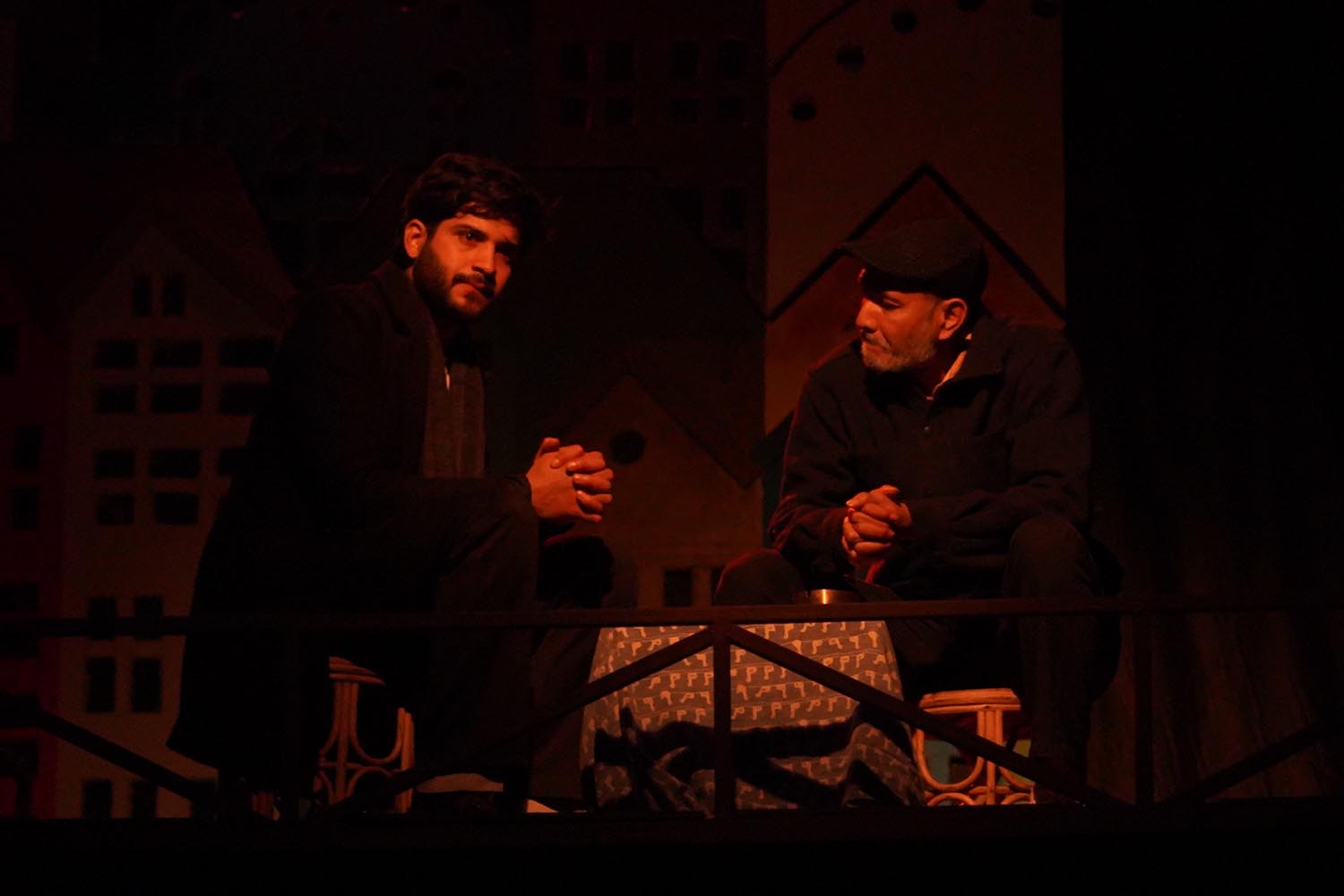
Sagar Khanal, on the other hand, often seems to be performing for us rather than being Atit.
He does not so much inhabit the character as announce him. His anger is pushed until it becomes aggression, his sadness until it becomes performance. There is a difference between an actor showing us that a character is emotional and making us believe that the character is emotional. Khanal too often falls into the former.
His scenes with Saya are an exception. Something about their interaction makes both performances more natural. Their chemistry is most convincing when they are doing very little—talking, teasing, simply occupying the same space. Elsewhere, Khanal can seem as though he is waiting for the audience to register his emotion.
The supporting cast suffers from a similar problem. Kiran and Pratikshya have the outlines of a lively friend group, but the production never gives us enough of their friendship to make us care about it. They pass through the story more like stock characters than people whose absence would actually alter it. Pratikshya, in particular, is so loud that her character begins to feel like a volume setting rather than a person.
Perhaps that is another consequence of adaptation. Perhaps the production simply did not have the time. But the result is still noticeable.
And then there is the music. This cannot be stressed enough: the music is bad. Not the harmonica, which beautifully carries the opening, but almost everything that follows.
The score repeatedly tells us what to feel. Romantic scene, romantic music; Norway, Norwegian music; sex scene, lyrics describing the sex. At one point, an abrupt transition even had the audience laughing.
The problem is not that music has no place in theatre. Good music can deepen a scene without announcing itself. Here, it often feels like an instruction manual. The Norwegian music is a particularly strange choice. Yes, Saya is in Oslo. We know. But the music seems more interested in telling us where she is than in responding to how she feels.
The dance sequences suffer from the same problem: clearly intended to externalise emotion, they instead feel detached and oddly busy. Even the smoke machine, so effective in the opening, later becomes distracting, pulling us out of scenes just as they begin to settle.
The lighting occasionally works, particularly during the conflicts, but the technical glitches and underuse of it add to the production's larger problem: it keeps explaining emotions that the audience should be allowed to discover for themselves.
The production seems to have forgotten a fairly fundamental distinction: representing an emotion is not the same as producing a sensation.
There is also an interesting complication in the way the play portrays Atit. Bhattarai's novel works hard to convince us that Atit is the “good” choice. The stage version is less flattering.
His anger is harder to ignore. His possessiveness is harder to romanticise. His refusal to let Saya go begins to look less like the enduring devotion the novel wants us to see and more like obsession.
That is one of the few places where the adaptation unintentionally complicates its source material.
Unfortunately, the play begins to lose its grip somewhere around the middle. The initial nostalgia can carry a surprisingly long way—perhaps farther than the acting deserves—but eventually even that begins to wear thin. The audience's attention visibly drifts.
This is especially unfortunate because ‘Summer Love’ has everything it needs to be affecting. It has first love, distance, jealousy, youthful stupidity, longing and heartbreak. It has Bhattarai's writing, which has already made thousands of readers feel these things.
It just seems terrified of leaving them alone.
Bhattarai himself, portrayed on stage by Arpan Thapa, is one of the most natural presences in the production. His performance has an ease that makes some of the more mannered performances around him stand out even more.
Still, there is something strangely compelling about watching ‘Summer Love’ on stage precisely because it reveals what the novel could get away with. Bhattarai’s prose can smooth over an awkward character, carry a weak plot or make an immature relationship feel more romantic than it perhaps is. On stage, stripped of the narrator's protection, the weaknesses are harder to hide.
The final dialogue, drawn from the opening pages of Saya, is a particularly clever choice. It gives the play a sense of continuity while making the ending feel like the beginning of another story. After a production that often reaches for effects, this moment lands because it is simple. The words do the work.
Which makes the rest of the production all the more frustrating. Because the writing is not the problem. The actors are.
It is difficult to become emotionally invested in a love story when you can constantly see the actors trying to make you believe they are in love.
And that is the real tragedy of this ‘Summer Love’. The production has been handed material that already carries its own emotional shorthand. The audience already knows Atit and Saya. Some of us have known them for more than a decade. We know the jokes, the heartbreak, the longing. The first scene proves how easily the play can tap into that collective memory.
Instead of trusting it, the production keeps interrupting it.
The music tells us what to feel. The dance numbers tell us what the characters feel. The smoke tells us when something is supposed to feel atmospheric. The acting repeatedly, and sometimes loudly, tells us that these characters are emotional.
We know. We just don't believe you.
Atit and Saya's story was always going to be difficult to translate. But the production spends too much time trying to convince us it is theatre.
It should have trusted the story.
And, more importantly, it should have trusted the audience.
Summer Love
When: Until September 5
Where: Kantipur Theatre, Gairidhara
Time: 1:15 PM and 5:15 pm daily, except Wednesdays




 17.46°C Kathmandu