



 21.12°C Kathmandu
1.jpg)
Wed, Sep 2, 2026
Visual Stories
Batuli Pokhari turns into a nesting haven for Asian openbills
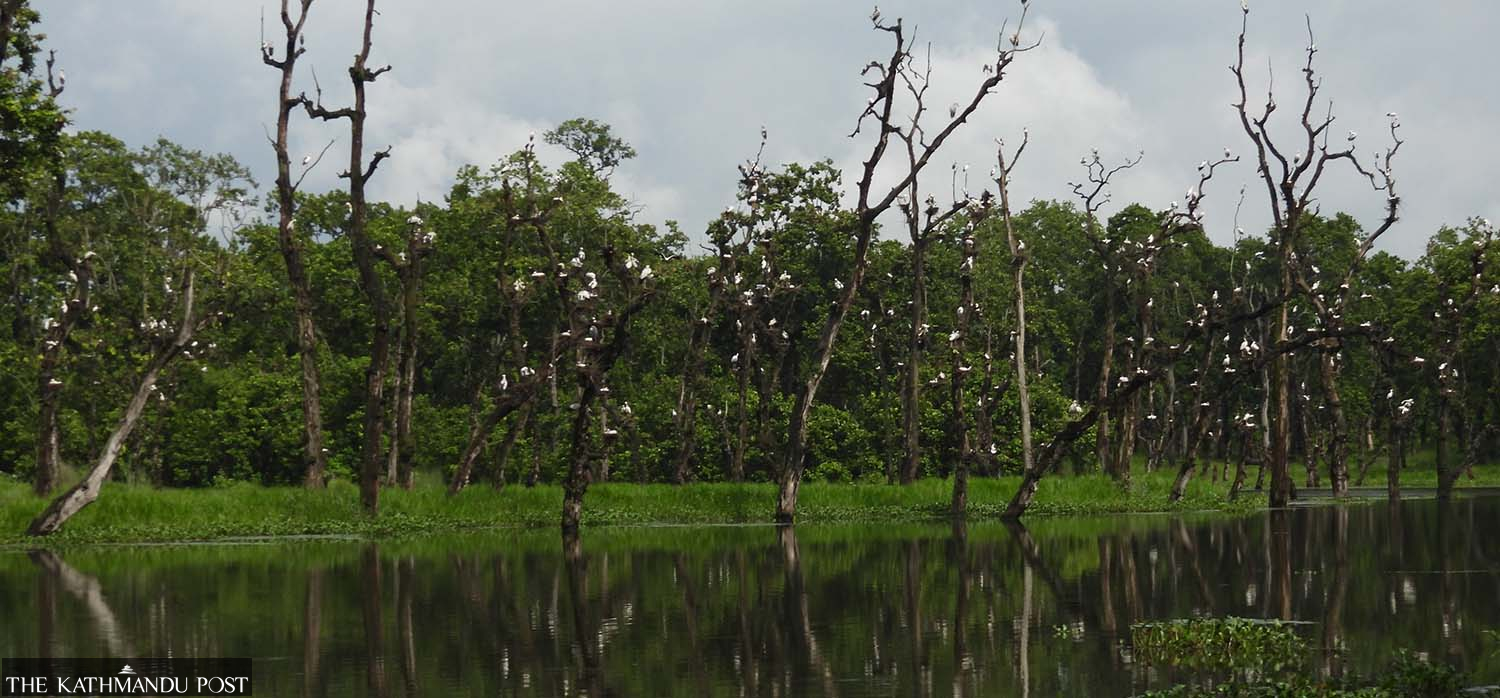
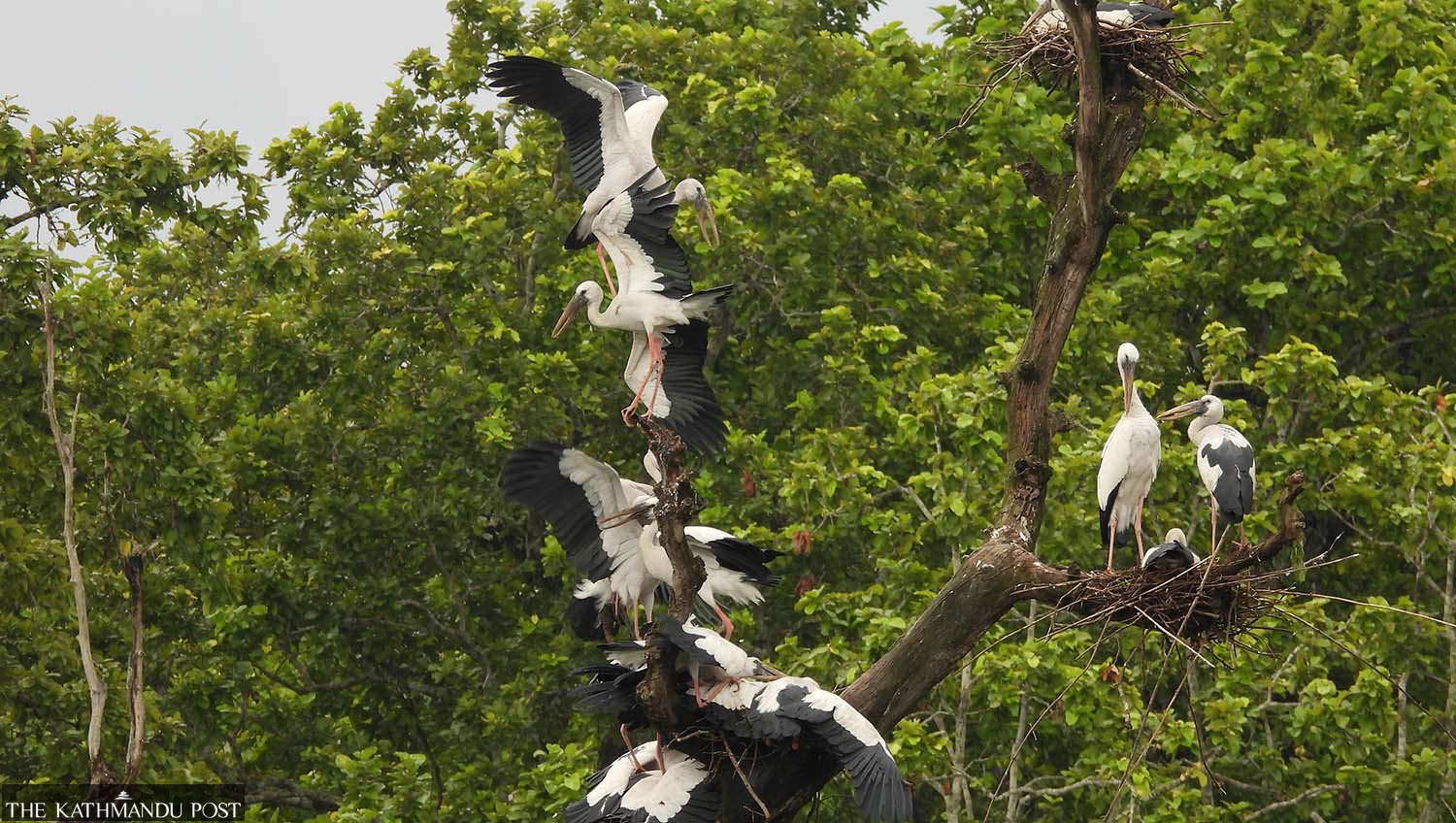
Hundreds of Asian openbills have transformed a quiet wetland in Chitwan into a seasonal breeding ground, with dried trees rising from the water now serving as nesting sites.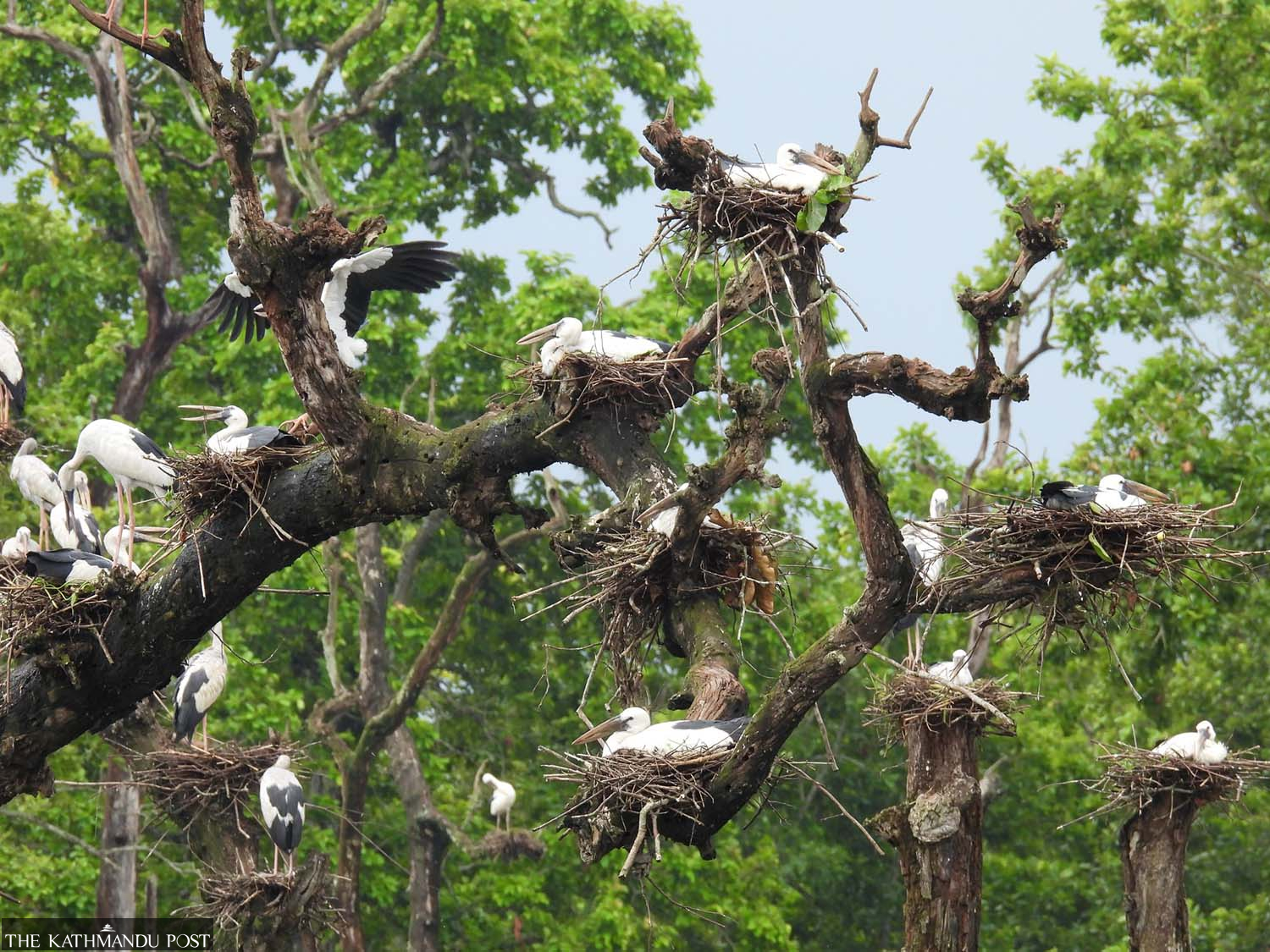
Ramesh Kumar Paudel
Published at : July 21, 2026
Updated at : July 21, 2026 12:01
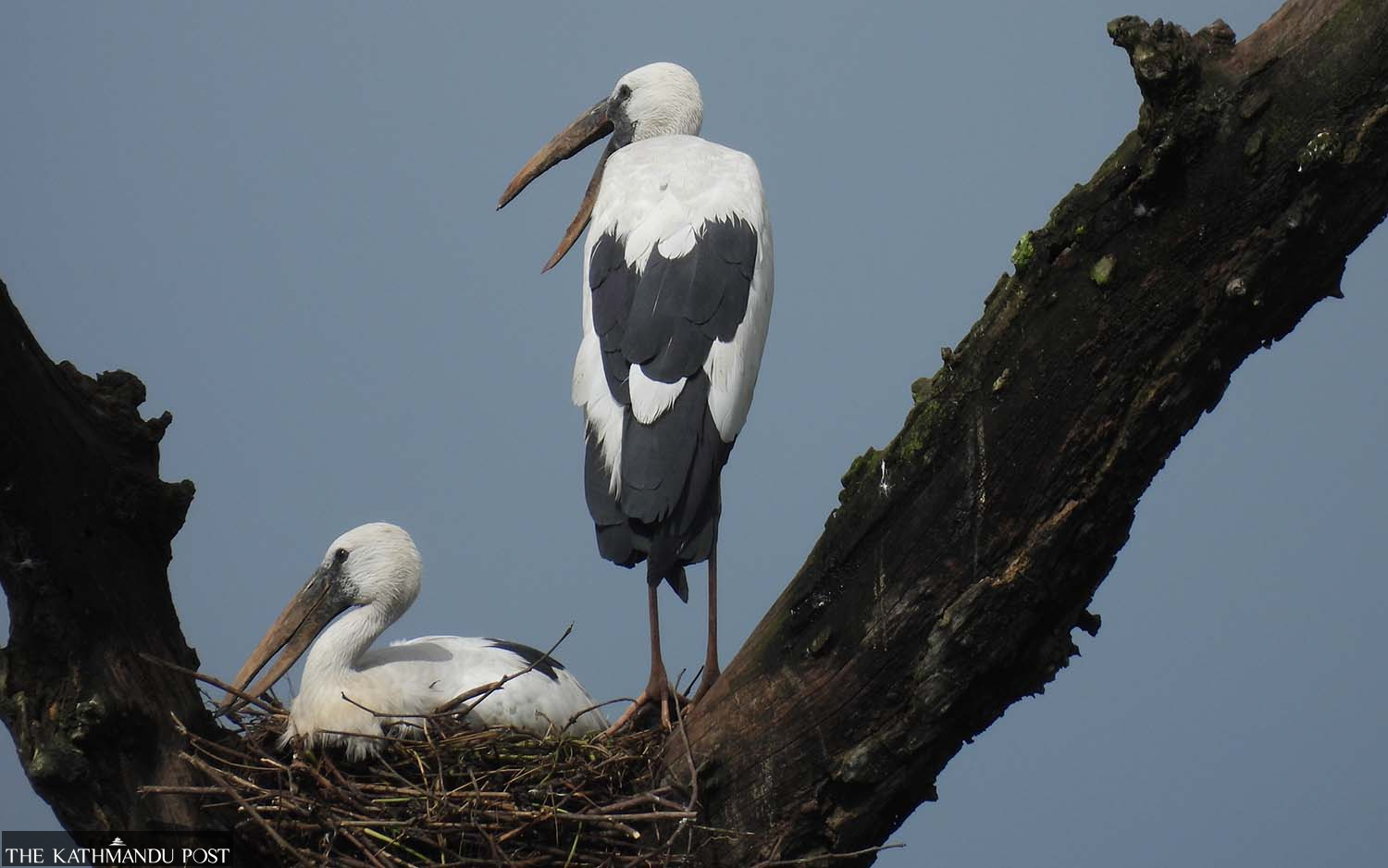
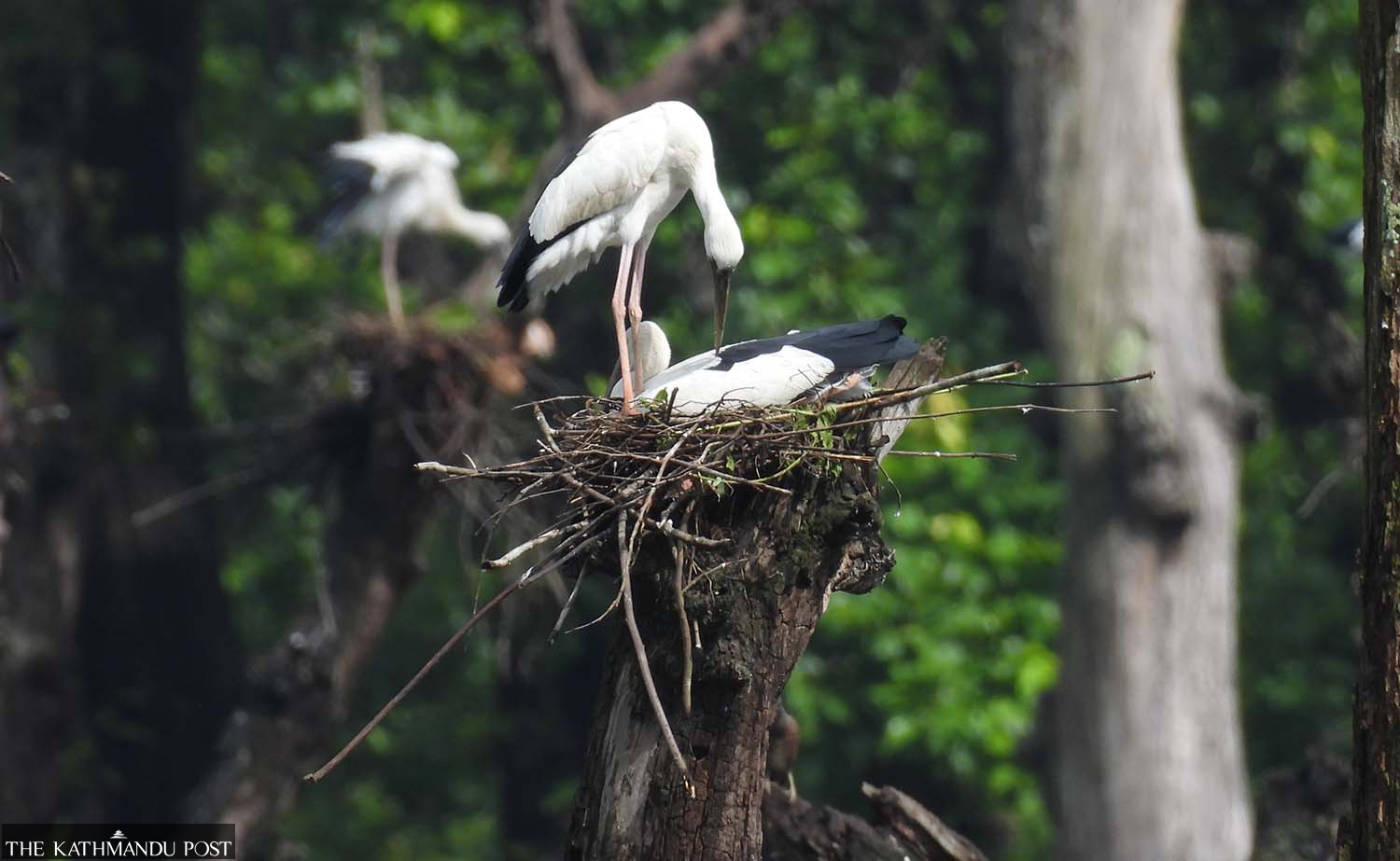
Batuli Pokhari inside the Barandabhar forest has turned into a striking bird sanctuary this monsoon. Hundreds of Asian openbills have built nests on branches rising above the water, transforming the quiet wetland into a bustling breeding ground far from the noise of the city.
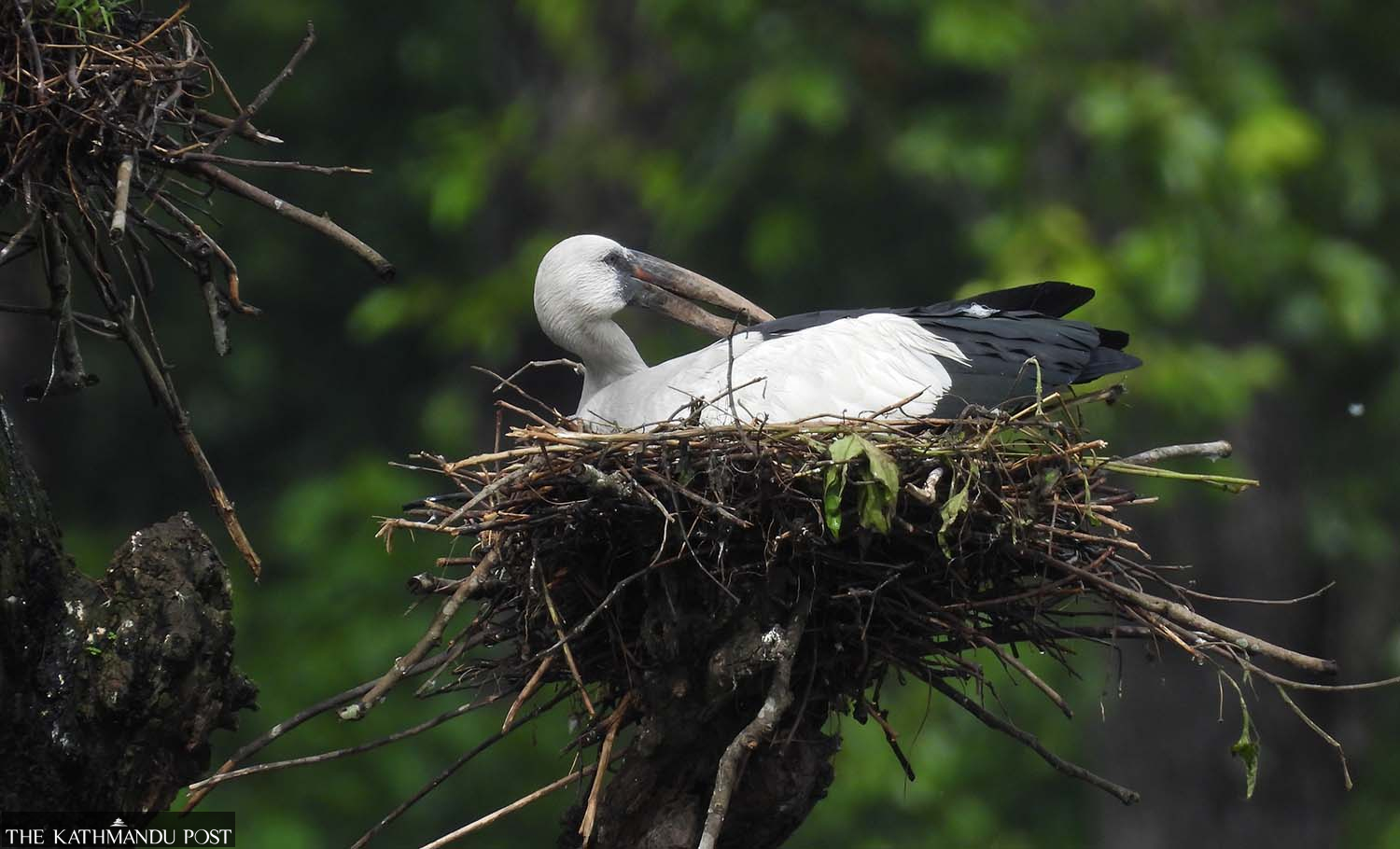
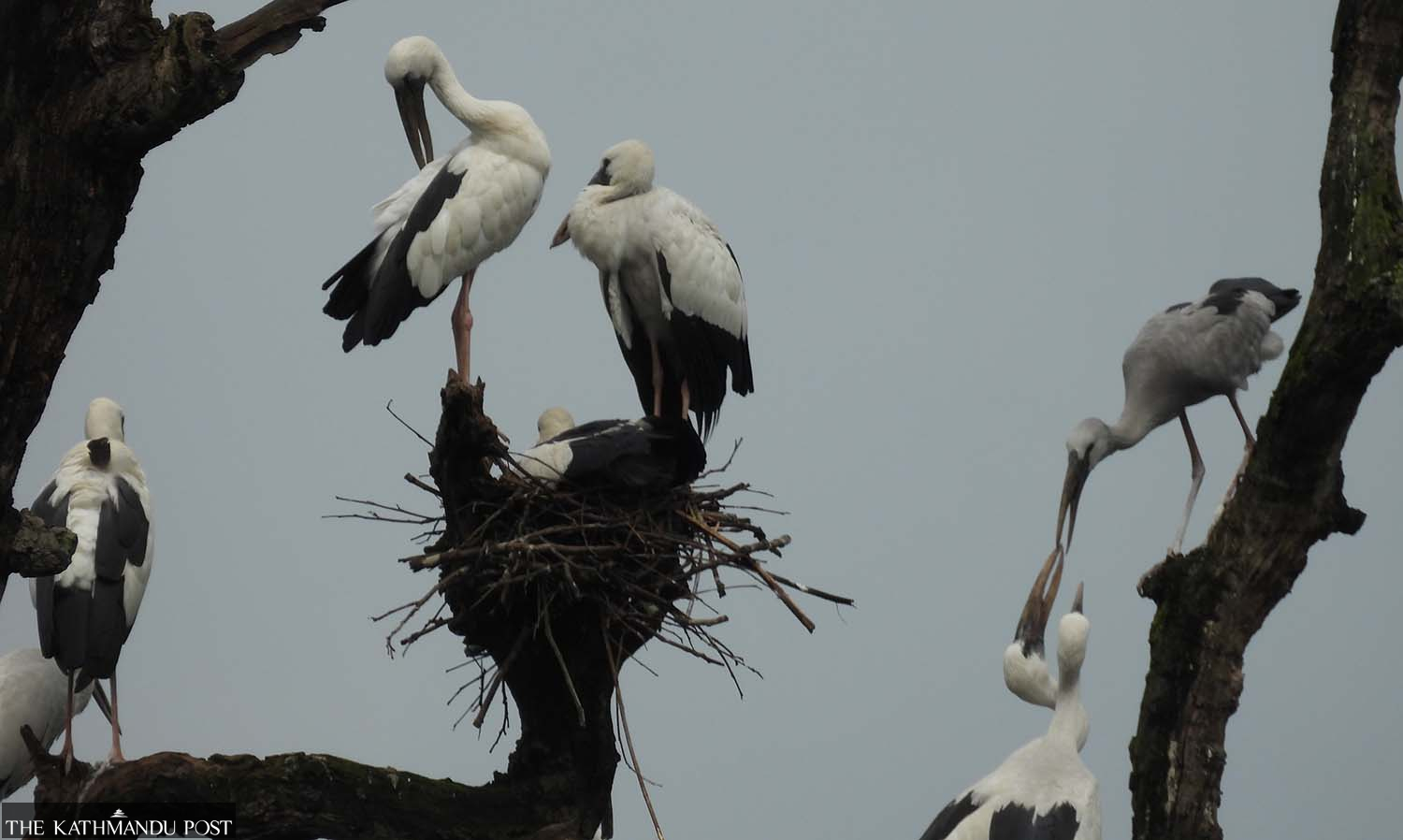
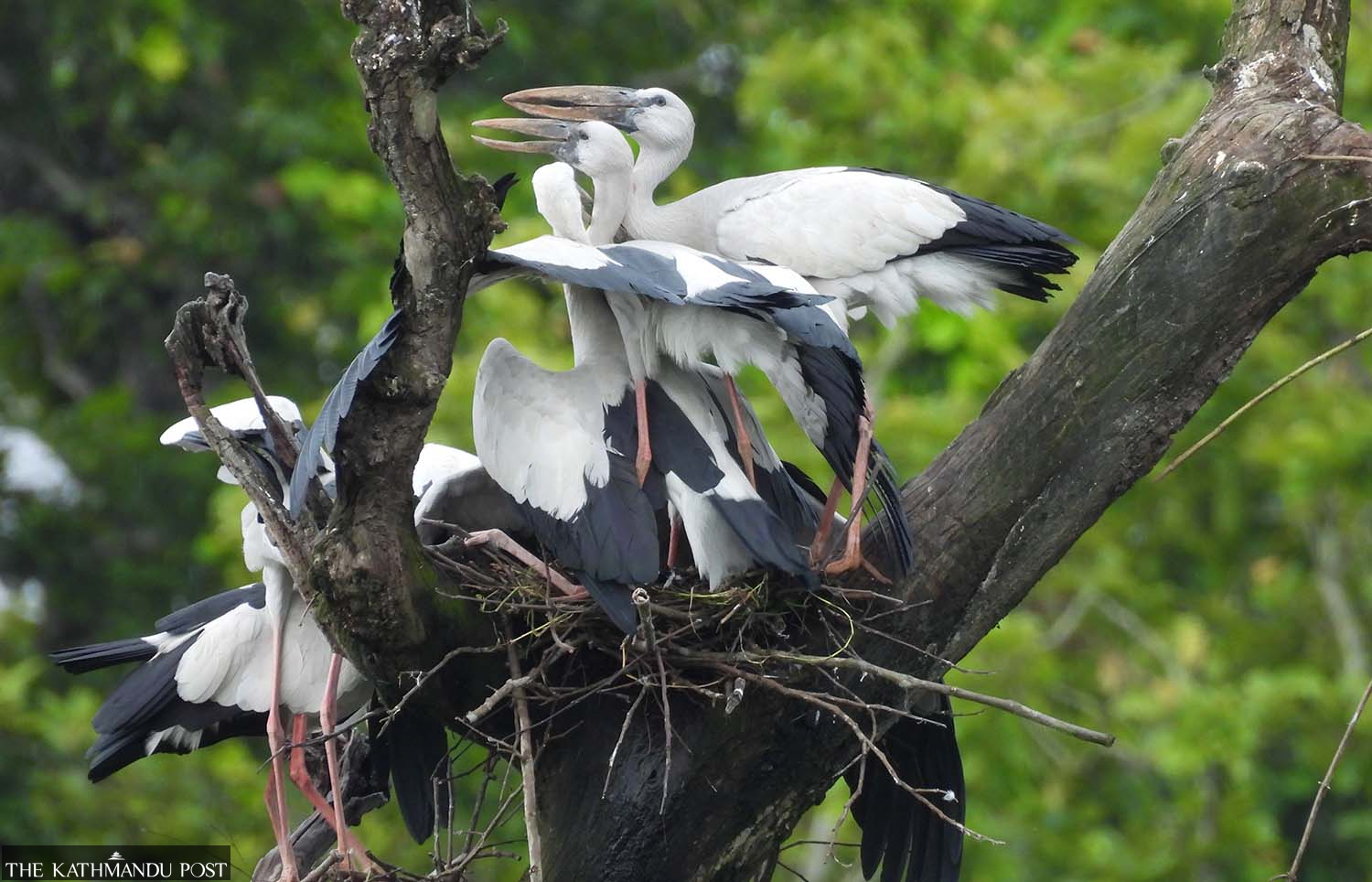
The dried trees standing in the middle of the lake have lost their green foliage, but they are now supporting new life. Pairs of Asian openbills are using the weathered branches to raise their young as the annual nesting season begins with the arrival of the rains.
Gajendra Pokharel, a member of the Bird Education Society, visited the Batuli Pokhari area on Monday. He has been monitoring the nests of these birds for several years.
“There were 410 nests two years ago. The number rose to 478 last year. We have not counted them this year yet because nest-building is continuing,” Pokharel said. Some nests have already started showing signs of chicks.
The bird primarily feeds on snails found in farmland, marshes, streams and wetlands. That is why the birds are also frequently seen in fields around Devnagar, Ujelinagar, Champanagar and Patihani villages surrounding Batuli Pokhari.
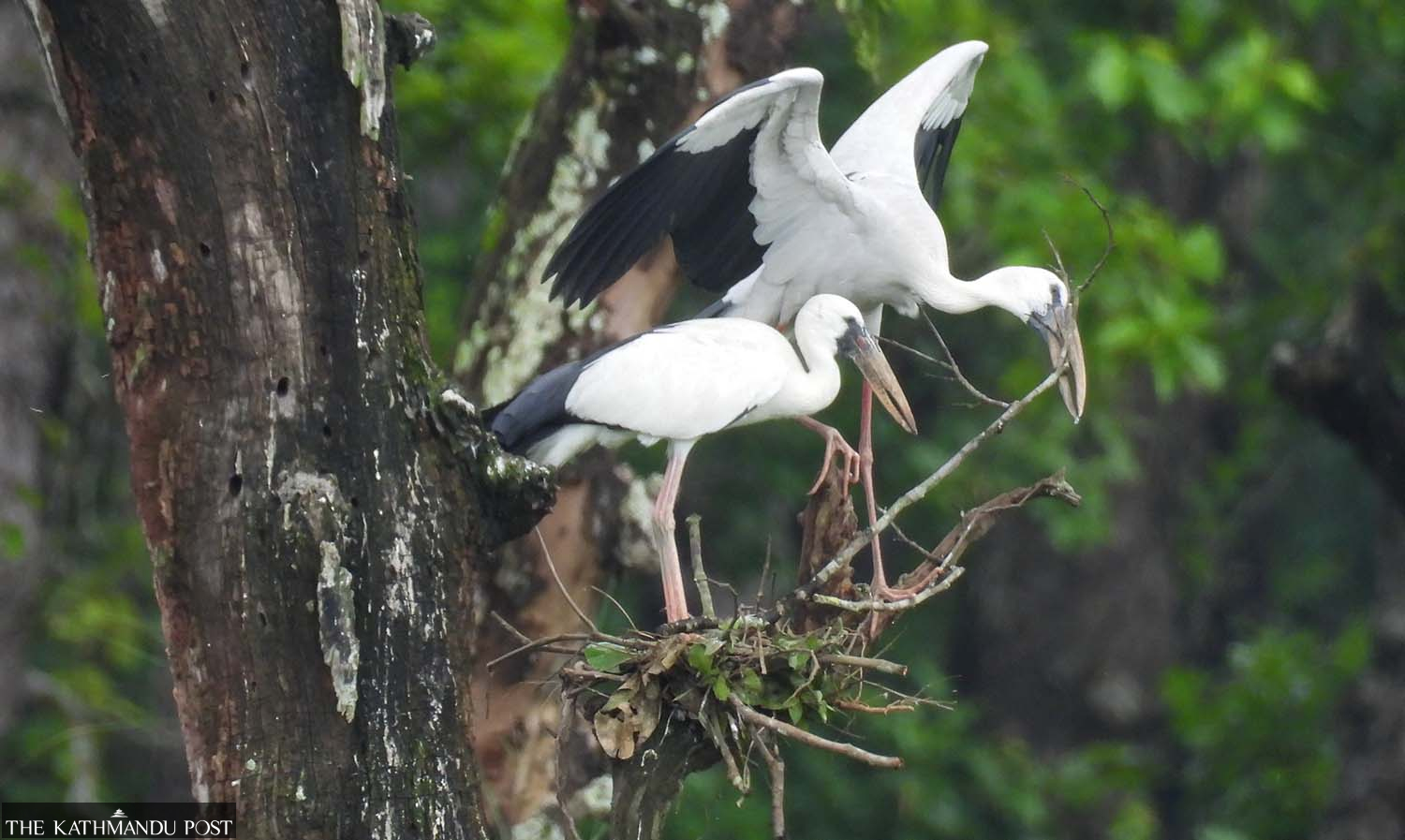
The birds also feed on small snakes, frogs, fish and other insects. Conservationists describe them as a farmer-friendly species because they help control pests. However, Pokharel warns that the increasing use of chemical fertilisers and pesticides in farmlands is threatening their food sources and health.
“The birds choose areas where food is available, and human disturbance is limited. That is why they have selected Batuli Pokhari, which lies close to agricultural fields,” he said.
According to Apil Ghimire, who has been involved in river and wetland conservation campaigns, local communities began protecting a small water channel inside the Batuli Pokhari Buffer Zone Community Forest to improve irrigation facilities for farmland.
The water collected there is used by residents of nearby Ganganagar village for irrigation. The artificially preserved water body has since developed into an ideal habitat for birds.
Residents say the trees died after water accumulated in the area. About five to six years ago, Asian openbills began arriving and building nests on the dead trees.
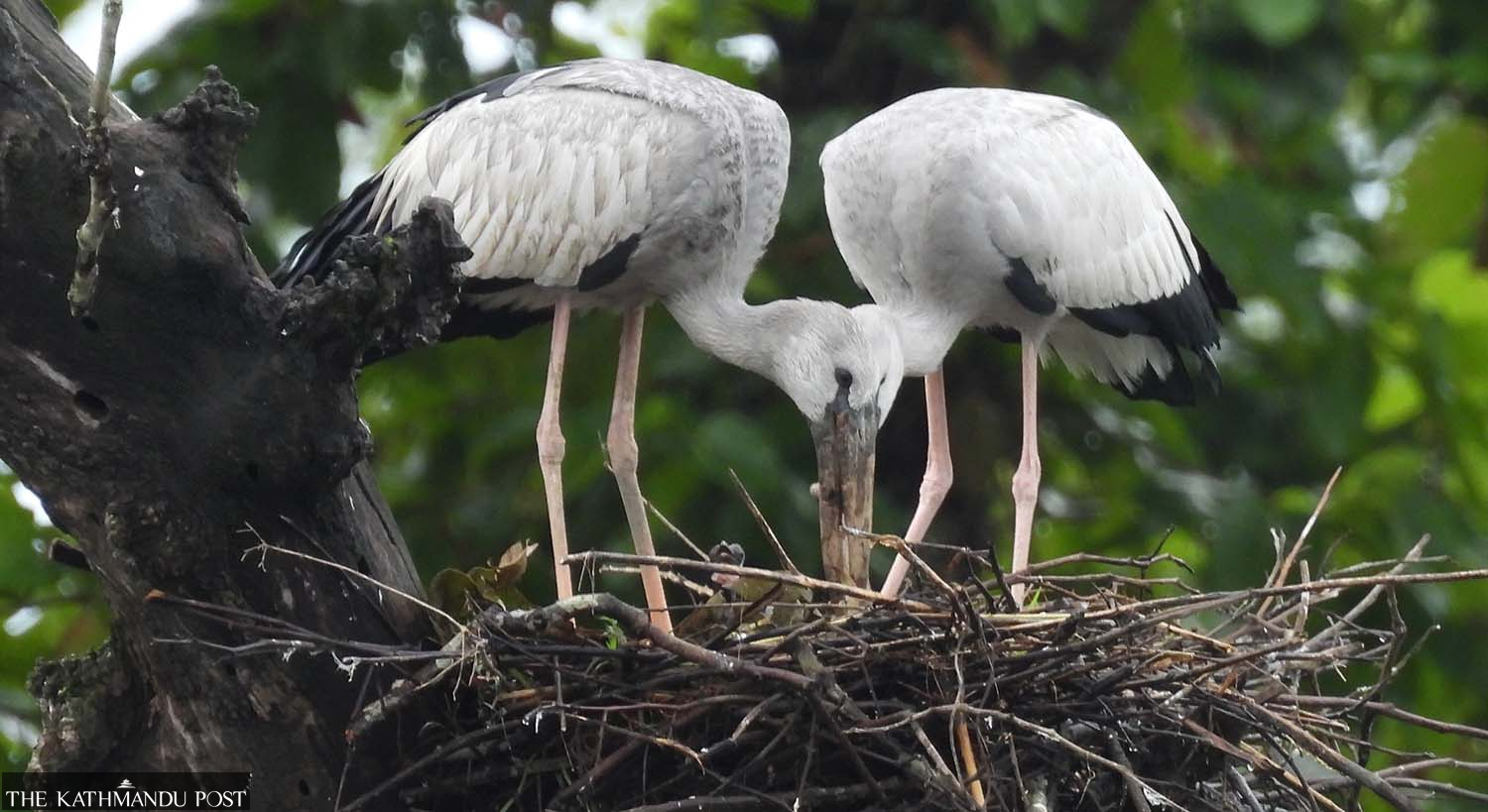
Pokharel said nesting on trees surrounded by water helps protect eggs and chicks from predators such as snakes and monitor lizards. The birds collect small and large twigs from dried branches to build their nests and continue adding materials until their chicks become independent.
Conservationist Tika Giri said Asian openbills once built large colonies in the Lamital area inside Chitwan National Park. Later, they were also found nesting around several wetlands near Tikauli. However, their nesting sites have gradually become concentrated in Batuli Pokhari.
Male and female birds work together to build nests and search for food. While the female incubates the eggs, the male helps with protection and feeding. Both parents raise the chicks.
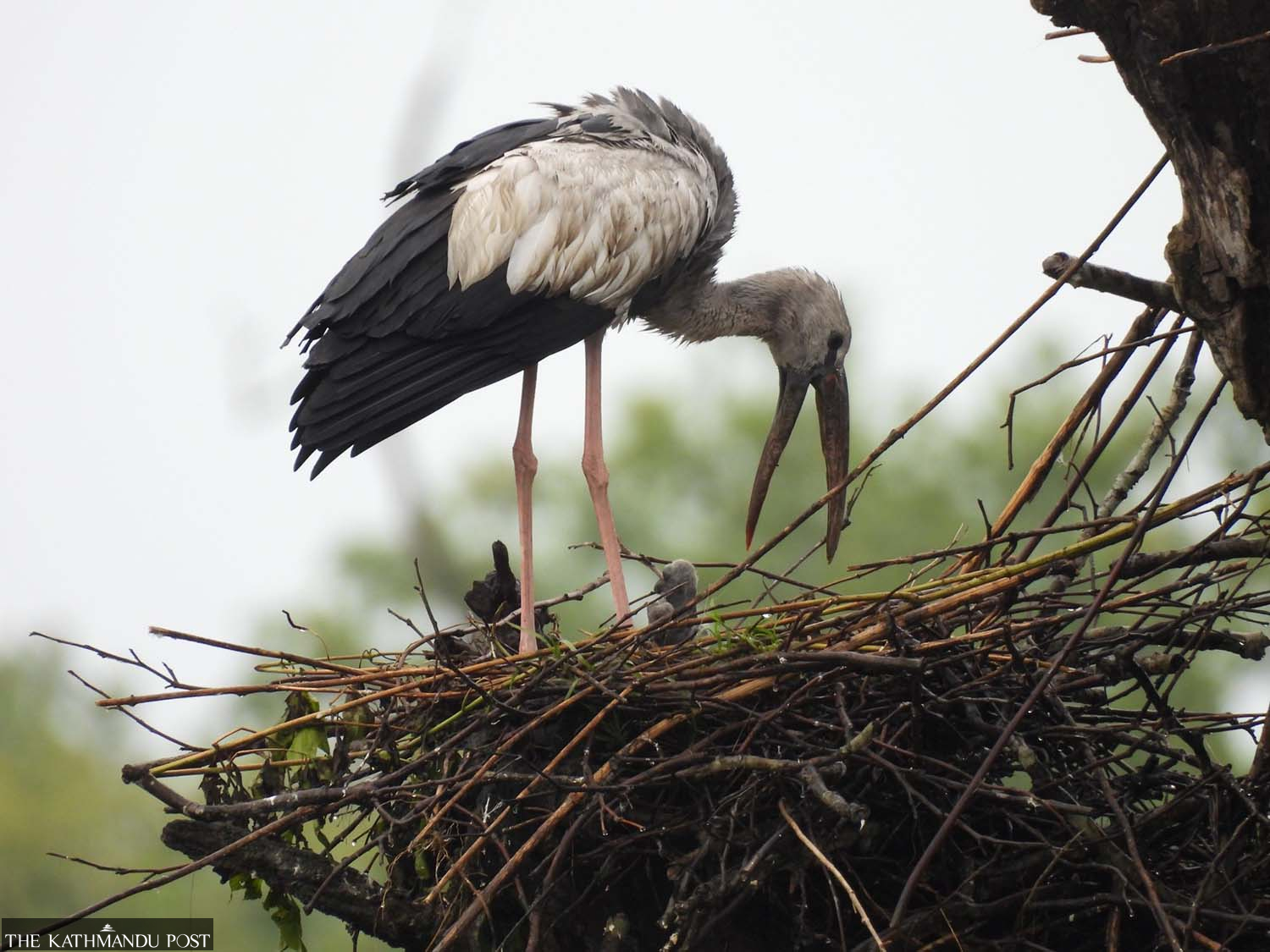
Pokhrel said the birds usually complete breeding and the young birds begin flying by September or the first week of October, around mid-Asoj in the Nepali calendar.
“For bird enthusiasts, Batuli Pokhari has become a peaceful destination,” he said.
Located about 12 kilometres south of Bharatpur, the district headquarters of Chitwan, Batuli Pokhari now offers visitors a rare glimpse of a thriving wetland ecosystem where hundreds of birds return each year to create new generations.
Ramesh Kumar Paudel
Ramesh Kumar Paudel is the Chitwan correspondent for Kantipur Publications.
Related News

×