Children in Madhesh are falling victim to abduction, sexual violence and killings
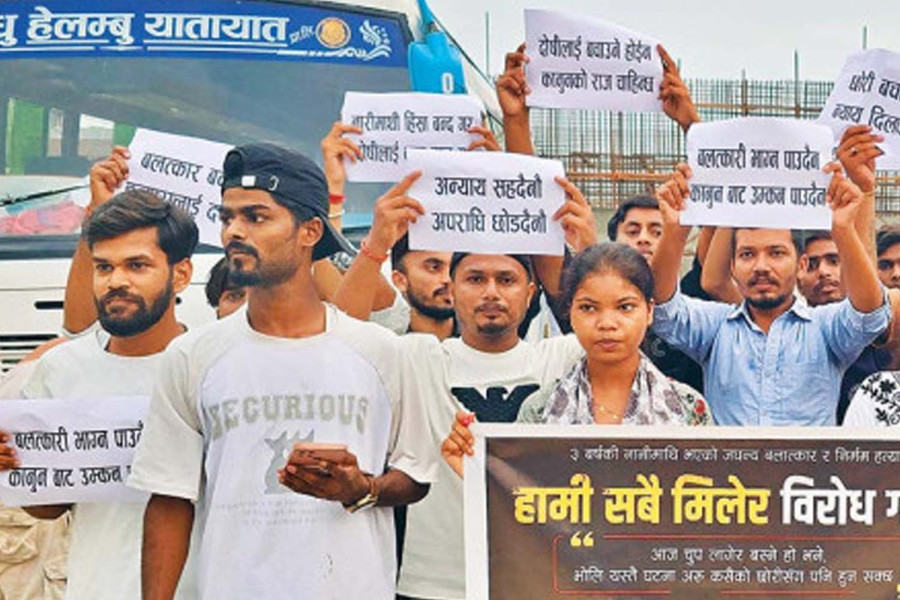
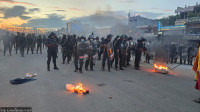
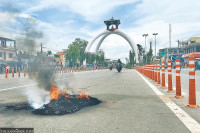
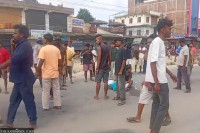
Recent cases in Dhanusha, Saptari and Bara have raised fresh concerns about gaps in child protection. Police and rights advocates call for stronger safeguards at home and in communities. A demonstration in Golbazar, Siraha, demanding justice for the toddler’s rape and murder in Bara. Nepal Photo Library
Children in Madhesh Province are facing serious risks of abduction, sexual violence and murder, with a series of recent cases showing how unsafe some children are in their own neighbourhoods.
A 15-month-old boy disappeared while playing outside his house in ward 6 of Bideha Municipality in Dhanusha on September 3. Police rescued him 11 days later, about 300 metres from his home. A 41-year-old woman from ward 9 of Kamala Municipality was detained on suspicion of kidnapping the toddler.
The child’s disappearance from right outside his home left his family and the entire neighbourhood in fear. A search involving around 60 police personnel and a trained sniffer dog was launched.
According to investigating officers, the suspect moved the child between locations in Nepal and India before abandoning him by the roadside as security checks along the border intensified. She was arrested near the Nepal-India border in ward 1 of Bideha Municipality while allegedly attempting to cross into India. Police said she told investigators that she had kidnapped the boy because she did not have a son and wanted to raise him herself.
The case came shortly after the death of a two-year-old girl in ward 3 of Shambhunath Municipality in Saptari. The girl disappeared at about 9:45am on August 18 while playing outside her home near the East-West Highway. Her body was found later that same day in a bush behind the house.
According to the District Police Office in Saptari, security personnel detained the victim’s stepmother, who later admitted to killing the child. Police said she had been involved in a dispute with the girl’s biological mother over land.
In Bara, the rape and subsequent murder of a three-year-old girl in Jeetpur-Simara Sub-metropolitan City in August prompted protests, a highway blockade and scrutiny of the police response. The child went missing on August 16 after leaving her home to play. Her body was found three days later in an abandoned house about 200 metres away from her home.
Police said she had been lured with chocolate, raped and killed. Four suspects were arrested. The case also drew criticism of the police after the family and residents alleged that authorities had not responded with sufficient urgency after the child was reported missing.
Protests were held in Bara and several other parts of the country. Later, after Garima’s parents travelled to the capital and held talks with Home Minister Sudan Gurung, they collected their daughter’s body and performed her death rites. Nepal Police recalled two officers from the Simara police office amid the criticism.
The government later reached a three-point agreement with the girl’s parents.
Under the agreement, the government will review existing legal provisions on offences and punishments for serious crimes and submit a report within seven days with recommendations for possible amendments. The Ministry of Law, Justice and Parliamentary Affairs will form a seven-member committee to carry out the review. Such incidents involving children, whether inside their homes, while playing in their courtyards or on their way to school, have raised serious questions about child safety in Madhesh.
Raju Paswan, chief of the Informal Sector Service Centre (Insec) in Madhesh, said that perpetrators should face legal action without political or other forms of pressure. “There is no room for anyone to remain silent now if we are to protect children’s right to life and secure their future,” he said. He also stressed the need for parents to remain alert, while pointing to substance abuse and social media use as factors that can expose children to further risks.
According to rights activists, family conflict and retaliation could also place children in danger. “Parents who once dreamed of educating their children and watching them grow now have to worry simply about keeping them alive,” said Debaki Nepal, a women’s rights activist.
The targeting of children over stepfamily relationships and domestic disputes is becoming increasingly common in several Tarai districts.
Legal practitioners argue that weak vigilance and poor implementation of laws could allow offenders to target children. “Because of busy lifestyles and a lack of awareness, families themselves have not been able to pay enough attention to their children’s safety. Parents, local governments, schools and communities must all take child safety seriously,” said advocate Dilip Koirala.
Available figures suggest that sexual violence against children remains a major concern in the province. According to data cited by Insec Madhesh, 145 incidents of sexual violence were recorded in 2025, most involving girls, while 89 were recorded from January and June 2026.
Similarly, as per the data at Madhesh Provincial Police Office, a total of 189 rape cases involving girls and children under 17 were recorded in the last fiscal year of 2025-26, along with 21 attempted rape cases, 29 cases of child sexual abuse and four cases involving abduction and rape.
According to the Madhesh Province Police, 19 rape cases were registered in fiscal year 2022-23, compared with 91 in 2023-24 and 97 in 2024-25.
Madhesh Provincial Police’s spokesperson Prabhu Prasad Dhakal said parental awareness remained important to minimise violence against children. “Parents, relatives and family members must be alert as well as responsible,” he said. “They need to know where their children go and what they do.” He said campaigns alone were not enough and called for greater responsibility from families, communities and ward offices.
Provincial Minister for Sports and Social Welfare Lakhan Das Tatma said the three levels of government must work together to curb crimes against children. “Incidents of rape, murder and abduction of children have become a major challenge in Madhesh,” he said.
Protecting children cannot be left to the police alone. Families need to know whom to contact when a child goes missing, schools need clear safeguarding procedures, local governments need functioning child-protection mechanisms, and communities need to respond quickly to warning signs, according to experts.
Civil society leader Jagannath Keshari called for psychosocial counselling and awareness programmes at the local level. He said women’s and child-protection committees should keep an eye on suspicious activities in their communities, and that ward-level child welfare and protection committees should identify children at risk and ensure that they receive follow-up and support.




 24.85°C Kathmandu