Two UML leaders in race for Bagmati chief minister
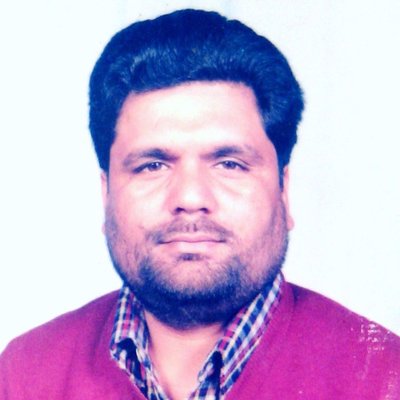
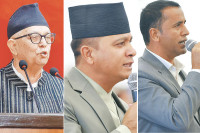
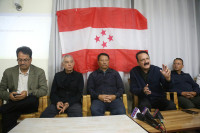
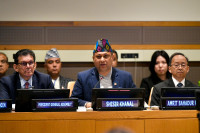
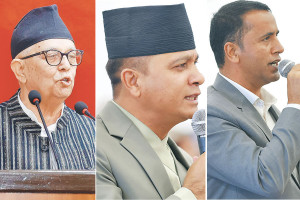
Jagannath Thapaliya and Kiran Thapa are competing for the chief minister’s post as the party works to stitch together a majority in the hung assembly. Jagannath Thapaliya (left) and Kiran Thapa
The CPN-UML has secured the leadership of the Bagmati provincial government under a power-sharing agreement reached between the UML and the Nepali Communist Party (NCP). Two UML leaders have emerged as contenders for the chief minister’s post, stepping up their internal lobbying after the party was chosen to lead the next provincial government.
A written agreement reached on Saturday between UML chair KP Sharma Oli and NCP coordinator Pushpa Kamal Dahal states that the UML will lead the provincial governments in Koshi, Bagmati and Lumbini, while the NCP will head governments in Karnali and Sudurpaschim.
Following the central-level agreement, UML and NCP leaders in Bagmati have begun preparations for forming a new provincial government.
From the UML, Jagannath Thapaliya, the parliamentary party leader, and former health minister Kiran Thapa have emerged as the leading contenders for chief minister.
Both leaders have stepped up internal lobbying in Kathmandu, where they have stayed for nearly two weeks to seek support from the party leadership.
The UML has not yet made a formal decision on its candidate. Both leaders are now waiting for the party’s final call.
“Parliamentary party leader Thapaliya is naturally a strong contender for the chief minister’s position. Kiran Thapa has also claimed the post, citing his performance as provincial health minister,” a UML central committee office bearer said. “Both leaders are legitimate contenders, and the party will decide soon.”
Thapaliya, who previously served as finance minister of Bagmati, had long been considered the likely chief minister under an agreement reached when the UML and Nepali Congress formed a coalition government on July 25, 2023. The agreement between Thapaliya and then Congress parliamentary party leader and chief minister Bahadur Singh Lama was based on sharing the government leadership for half of the term each.
Thapa, meanwhile, has emerged as another strong contender because of his influence within the UML. Seen as close to party chair Oli and UML secretary Mahesh Basnet, Thapa has served twice as health minister in the province.
Thapaliya is also considered close to Oli. Both leaders have publicly confirmed their interest in becoming chief minister.
Under the current arrangement, where the leader of the parliamentary party usually becomes chief minister, Thapaliya has a natural advantage. For Thapa to take the post, the UML would first need to elect him as its parliamentary party leader.
The UML currently has 25 provincial lawmakers, although it originally had 27. Former ministers Prakash Shrestha and Aman Kumar Maskey resigned from the provincial assembly after contesting the recent federal election, reducing the party’s strength.
The process of forming a new government began after the Congress-led Bagmati government was pushed into a minority. Leaders say the UML is working to secure support from the NCP and other parties.
The UML and NCP have also opened discussions with the Rastriya Prajatantra Party (RPP) to secure the numbers needed to form the government.
Bagmati Provincial Assembly currently has 104 members after six lawmakers resigned to contest the federal election. A government needs the support of 53 lawmakers to secure a majority.
The Nepali Congress is the largest party in the assembly with 36 seats. The NCP has 26 seats, while the UML has 25 seats, including the deputy speaker. The RPP has 12 seats, the Nepal Majdoor Kisan Party has three, and Hamro Nepali Party has two.
Together, the UML and NCP control 51 seats, two short of a majority. Since UML lawmaker Apsara Chapagain is serving as deputy speaker, support from fringe parties is a must. The RPP is expected to play the decisive role.
RPP parliamentary party leader Uddhav Thapa said the party would decide soon how it would approach the provincial government formation process.
Six chief ministers and 95 ministers in eight years
Bagmati’s provincial government was formed in February 2018 with seven ministries. At one point, the number expanded to 14 before being reduced to eight. Over eight years, the province has had six chief ministers.
A total of 83 individuals have served as chief minister, minister or minister for state, while the number of ministerial appointments, including repeat appointments, has reached 95.
After the first provincial elections, UML’s Dormani Poudel became Bagmati’s first chief minister on February 11, 2018, when the province was yet to name itself.
The UML had a single-party majority, and its alliance with then CPN (Maoist Centre) made the government even stronger.
Poudel ran the government with seven ministries, including the Office of the Chief Minister and Council of Ministers. The number of ministries remained unchanged during his tenure, although ministers changed. Keshav Sthapit was sacked, Rameshwor Phuyal was later appointed minister, and the cabinet was reshuffled after disputes within then Nepal Communist Party intensified.
Poudel served for nearly 43 months, making him the longest-serving chief minister in Bagmati so far. Internal disputes within then NCP, the split between the UML and Maoist Centre, and power struggles within the UML eventually forced him to step down.
On August 18, 2021, UML leader Astalaxmi Shakya became chief minister, becoming Nepal’s first woman chief minister.
During her brief tenure, Shakya separated the health sector from the social development ministry and created a separate health ministry. This increased the number of ministries in Bagmati from seven to eight.
The decision marked the beginning of a trend of expanding ministries in the province.
After Shakya, then CPN (Unified Socialist) leader Rajendra Prasad Pandey became chief minister on October 28, 2021, with support from the Congress, then Maoist Centre and then Unified Socialist.
With several coalition partners and many lawmakers seeking ministerial positions, Pandey expanded the cabinet to accommodate them. The number of ministries increased from eight to 14, creating an 18-member cabinet including ministers and state ministers.
After the second provincial election, then Maoist Centre leader Shalikram Jamkattel became chief minister on January 9, 2023, with support from the UML, then Maoist Centre, RPP, then Unified Socialist and Hamro Nepali Party.
His government concluded that Pandey’s 14 ministries were excessive. A task force led by the chief secretary recommended reducing the number to nine or 11 ministries, and Jamkattel’s government cut the number to 11.
However, the reduction did not last long.
After the coalition changed at the federal level, the UML and RPP left the provincial government while Congress and Unified Socialist joined. Although there were already 11 ministries, 12 ministers were appointed.
Congress leader Ram Krishna Chitrakar remained without a portfolio for nearly three months because no ministry was available for him. To accommodate him, the tourism, industry and cooperatives ministry was split, creating a new industry, commerce, land and administration ministry. The number of ministries rose again to 12.
During Jamkattel’s roughly 18-month tenure, the coalition changed three times.
Jamkattel sought a vote of confidence three times and appointed 21 people as ministers during different stages of his government.
On July 23, 2024, Bahadur Singh Lama became chief minister through a Congress-UML coalition. At the time, Bagmati had 13 ministries.
Although Congress and UML had agreed on ministerial allocation, internal faction management within Congress resulted in more ministers than available portfolios.
Congress leader Madhu Kumar Shrestha remained without a portfolio for 112 days. To assign him a ministry, the culture, tourism and cooperatives ministry was split, creating a separate cooperatives and poverty alleviation ministry. The number of ministries once again reached 14.
Lama appointed 18 ministers, including himself, during his tenure.
However, his government did not fall because of opposition pressure. Lama was removed as Congress parliamentary party leader after the Indra Bahadur Baniya faction secured a majority within the party. The Congress-UML coalition remained intact, but the chief minister changed.
On August 5, 2025, Baniya became Bagmati’s sixth chief minister, following Poudel, Shakya, Pandey, Jamkattel and Lama.
Baniya formed a 14-member cabinet. In April 2026, his government decided to reduce the number of ministries, merging 14 ministries into eight from the first day of the new fiscal year.
Six UML ministers resigned on July 22. After the UML’s withdrawal, Baniya’s Congress-led government, supported by only 36 lawmakers, fell into minority.
Over eight years, Bagmati has witnessed eight changes in government coalitions.
“The main reasons behind changes in provincial governments have not been policies, programmes or public demands. They have been federal coalition changes, party splits, factional disputes within parliamentary parties, ministerial bargaining and the desire for power,” said political observer Madan Dahal, who is an advocate by profession. “Alliances are not formed for people or principles. They keep changing because of the pursuit of power.”




 23.7°C Kathmandu