Australia tightens student visa rules, rejects 64 percent of Nepali applications
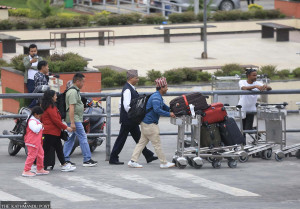
Stricter screening measures and higher non-refundable visa fees have led to a sharp decline in applications from Nepal. Photo: Courtesy of australiansky.co.uk
Australia has rejected around 64 percent of offshore student visa applications from Nepal, marking the highest rejection rate recorded for Nepali applicants, according to official data.
The surge in visa refusals comes after the Australian government tightened its screening process for international students amid concerns over migration levels, housing pressures and the integrity of the education system.
Australia categorises countries under an “Evidence Level” risk framework to determine the level of scrutiny applied during visa processing. Education sector insiders say Nepal was recently moved to “Level 3”, the highest-risk category, from “Level 2” following a government review conducted several months ago.
The impact has been most severe in the vocational education and training (VET) sector, which traditionally attracts students seeking shorter and more affordable courses. Nearly 90 percent of Nepali applications for VET courses have been rejected, with only 56 of 549 applicants receiving visas, according to recent statistics.
Around 60,000 Nepali students are currently enrolled in Australian institutions. Of them, about 56,000 are existing students, while roughly 4,000 are new arrivals.
Data from Australia’s Department of Home Affairs shows a sharp decline in new student arrivals from Nepal. Between January and May this year, only 2,700 of 7,500 offshore applicants from Nepal were granted visas. During the same period last year, 7,167 of 8,028 applicants received approvals.
The uncertainty surrounding visa approvals, combined with rising application costs, has discouraged many prospective students. Applicants currently have to pay an application fee of A$2,500 (approximately Rs260,000), which is non-refundable even if the visa is rejected.
Sanjeev Pandey, a Sydney-based lawyer, said Australia had welcomed a large number of international students after the Covid-19 pandemic, but authorities later became concerned about patterns of students changing courses and extending their stay without completing their original programmes.
“The government may have also tightened student visa rules to address growing employment and housing pressures,” Pandey said.
The stricter visa regime has raised concerns among education consultancies and smaller institutions that rely heavily on international enrolments.
Khagendra Satyal, international business development manager at Central Australian College, said the decline in student arrivals had significantly affected the sector.
“Visas are now granted only after assessing what positive contributions an international student can make to Australia in the long run,” Satyal said. “Students applying from Nepal need to understand this shift.”
The immigration crackdown also comes amid growing political pressure in Australia over migration. Analysts say the rise of politicians with hardline positions on immigration, including Pauline Hanson, has contributed to a broader political push for tighter controls.
Lawyer Pandey said the tougher environment has affected not only prospective students but also those already in Australia. Renewing student visas, switching back to student visas after completing post-study work arrangements, and bringing spouses as dependants have all become more difficult, he said.
Obtaining permanent residency has also become significantly more challenging compared with previous years.
Despite the tightening measures, Nepal remains one of the largest sources of international students in Australia. Government data shows Nepali students account for around nine percent of Australia's international student population, making Nepal the third-largest source country.




 15.67°C Kathmandu