The NPL is on, but fans in Achham can’t get a signal
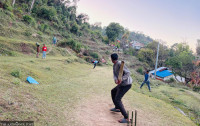
As the tournament unfolds in Kathmandu, supporters in remote villages are travelling to nearby settlements and market centres to watch their teams. Children play cricket on a patch of unused land in ward 5 of Mangalsen Municipality. Post File Photo
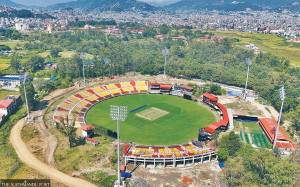
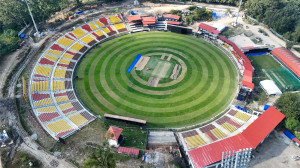
As Sudurpaschim Royals took on Lumbini Lions in the opening match of the third Nepal Premier League on Monday, the action at Kathmandu’s TU International Cricket Ground was also drawing keen interest in the far-flung villages of Sudurpaschim province.
Fans follow every run and wicket, eager to know whether their team is closing in on victory or falling behind. But while supporters in urban areas can follow matches on their phones or watch live broadcasts on television, many in remote villages struggle even to access a reliable mobile signal.
For 18-year-old Nirajan Bhandari of Gyanegaudi in ward 8 of Mangalsen Municipality, Achham, watching this year’s NPL from home during the Dashain-Tihar holidays was something he had looked forward to. Bhandari lives in Kathmandu for his studies and had returned to his village for the break. Eager to follow Sudurpaschim Royals, he soon discovered that staying home would mean missing the action. With poor mobile reception in his village, he had to go to his mother’s family home to watch Monday’s match.
Travelling elsewhere to watch a game has become almost routine for Bhandari, even though his village lies within Mangalsen, the district headquarters. But the inconvenience feels especially frustrating during the NPL, when the team he supports is playing and he cannot watch the match from home.
“The mobile signal barely works in my village, and it is frustrating to miss NPL matches, especially those involving my favourite team,” he said.
Despite his enthusiasm for cricket, the daily struggle to find a place with a working connection has left Bhandari considering cutting short his holiday and returning to Kathmandu before Tihar. He had hoped to spend the festivals with relatives and use his free time to follow the tournament. Instead, poor internet access has made both difficult.
“Rather than struggle every day to watch the NPL, I will return to Kathmandu before Tihar,” he said.
Nirmal Budha of Dhungachalna in ward 7 of Dhakari Rural Municipality, Achham, faces a similar problem. He says interest in cricket has grown among children and young people in the area, but many fans cannot watch matches live without travelling to places where the mobile network works.
On Monday, Budha went from his village to neighbouring Ruja village to watch the match. Nepal Telecom’s mobile data service works there, allowing him to follow the action. Like many others in the area, he must leave his village and look for a connection whenever he wants to watch a game.
“We have to travel from one village to another, often to higher ground, just to find a signal strong enough to watch the games,” he said.
Access to electricity is also limited in many settlements in Dhakari. Some areas around the ward office have basic services, but other communities have little or no access to electricity and the internet. Watching a live match on a mobile phone is therefore far from straightforward.
Fans must first reach a place with a working connection before they can even think about watching games. Budha says the contrast with urban areas is stark, where people can watch matches easily and find public places screening the tournament.
“In towns and cities, the internet works, and people can watch the matches without difficulty. There are even public places where the NPL is screened,” he said. “But no one seems to pay attention to places where people have no facilities. Nobody seems to realise that there are people in villages who also want to watch the NPL.”
Budha says Nepal Telecom towers have been installed in Dhakari, Titauda and other areas but have yet to become operational, leaving residents without the service they were meant to provide.
“The fact that towers have been built but the service still does not work shows how serious the communication problems are in remote settlements,” he said. “For people like me who want to watch the matches, the lack of a network is about more than missing cricket. It shows just how cut off we remain from communication services.”
For Kamal Budha, a volleyball player from ward 4 of Turmakhad Rural Municipality, sport has always meant both playing on the field and following competitions as a spectator. He, too, has noticed growing enthusiasm for cricket in villages across Sudurpaschim. But without internet access where he lives, watching matches live or even checking regular updates is difficult.
On Monday, he travelled to Turmakhad Bazar, the rural municipality’s administrative centre, to watch the NPL. The market has internet access, unlike his village, where even making a phone call can be difficult.
“People back home had to call me to ask about the scores, including how many runs had been scored and wickets taken. It was sad to see things like this,” he said.
For Kamal, the growing appeal of cricket in Sudurpaschim cannot be measured by television audiences or live-streaming figures alone. The connection between local supporters and a team representing their own province matters just as much.
With each province represented by its own team, the NPL gives supporters a shared sense of identity. Fans celebrate when their team performs well and feel disappointed when it loses. Their attachment is about more than the result on the scoreboard; it is also tied to the place they call home.
“People want to be part of every run scored and every wicket taken in the NPL, but geography still stands in their way,” Kamal said.
For cricket fans in remote parts of Achham, following the tournament remains a daily exercise in finding a signal. As the NPL brings teams and supporters together in Kathmandu, the experience of these fans shows how uneven access to basic communication services can keep people far from the action, even when their enthusiasm for the game is strong.




 22.68°C Kathmandu