In Gorkha’s flood-hit villages, even cooking a meal is a struggle
The Budhigandaki flood destroyed homes and disrupted road links, leaving families dependent on limited helicopter deliveries for food and other essentials.
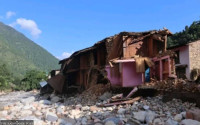
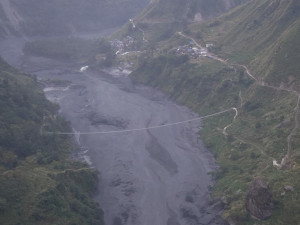
The Budhigandaki flood swept away Mangal Gurung’s house in Paiyu, Chumnubri-3, Gorkha, on October 11, leaving him with little more than the clothes he had on. He now sleeps in a tent pitched on a hillside above the village, alongside a neighbour’s house.
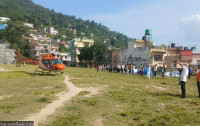
Helicopters brought relief supplies in the days after the disaster. Gurung received some food and clothing, but the assistance has done little to ease one of his most immediate problems: he has nothing to cook with. The flood washed away everything, down to the last spoon. Without pots, pans or other utensils, even the food delivered by relief teams is difficult to prepare.
His predicament is shared by many families in Chumnubri-3 whose homes were swept away by the flood. Ram Kumar Gurung, the ward chair, said cooking utensils were missing from the relief supplies and urged authorities to include them in future deliveries. The first round of helicopter-borne assistance had prioritised households that had lost their homes, he said, but the volume of supplies reaching the area remained far below what was needed.
“The helicopters can carry very little, while the needs here are enormous,” the ward chair said. “There is no trail for mules to use either. Those who still have grain stored at home may manage for a few days, but for people whose houses were swept away, the relief delivered by helicopter will last only two to four days.”
More than 30 households in Chumnubri-3 alone have lost their homes, residents said. Initial relief consignments included rice, cooking oil, beaten rice and lentils, along with tarpaulins and clothing. But getting these essentials to isolated communities has become a major challenge, with the flood damaging the only road connecting the northern settlements to the rest of the district.
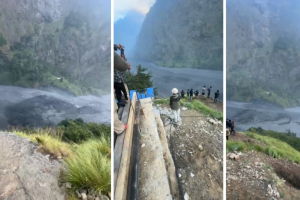
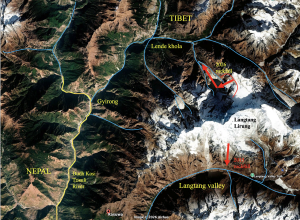
At Khorlabesi, the Budhigandaki river has eroded the road, cutting off access to three wards across Chumnubri and Dharche rural municipalities. Further north, the river has damaged the Larke road—the only route to the region—at more than a dozen locations between Khorlabesi and Salleri. Movement along the route has come to a standstill.
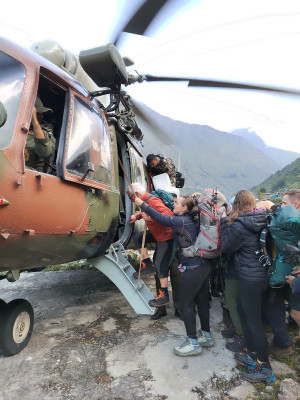
With the road impassable and no mule trail available, helicopters have become the only means of transporting food and other essential supplies to many of the affected settlements, said Narayan Sapkota, chief administrative officer of Chumnubri Rural Municipality.
“We have distributed most of the relief supplies that reached us,” Sapkota said. “But with the road blocked, we have been unable to bring in supplies in the quantities needed.”
In the immediate aftermath of the flood, authorities concentrated on rescuing people stranded in the affected areas, Sapkota said. Locals and tourists trapped in Chumnubri were prioritised for evacuation. As the Dashain holiday began and people headed home to their villages, residents travelling from Arughat to the northern settlements were also flown in by helicopter.
Children returning to their villages after schools closed for the Dashain holiday, along with other residents, were also flown to their destinations, said Ramesh Gurung of Chumnubri-3. But while the helicopter flights have helped people reach their villages, damaged roads continue to hamper the delivery of essential supplies to the isolated settlements.
Netra Prasad Sharma, assistant chief district officer, maintained that adequate relief had been sent to the flood-affected areas. But local representatives say the problems are becoming increasingly acute, even in villages where homes remain standing.
In Dharche Rural Municipality, the blocked roads have prevented residents from bringing in everyday essentials. With most routes to villages in Dharche and Chumnubri disrupted by the flood, stocks of basic commodities are dwindling. Salt and cooking oil, in particular, are becoming scarce in settlements across the northern region, said Laxman Gurung, chair of Dharche Rural Municipality.
“People in Kerauja Besi and Hulchok are growing anxious,” he said. “They may still have grain, but they are now raising the alarm because they have run out of salt and cooking oil.”
The shortages are not confined to families whose homes were destroyed. Those who escaped the flood with their houses intact are also struggling as their supplies run low and replenishment remains impossible.
“There is no trail for mules to travel on, so how are we supposed to get salt and oil to them?” Laxman Gurung said. “The problems keep mounting.”




 24.5°C Kathmandu