Sudurpaschim set to get cable car in its largest private-sector project
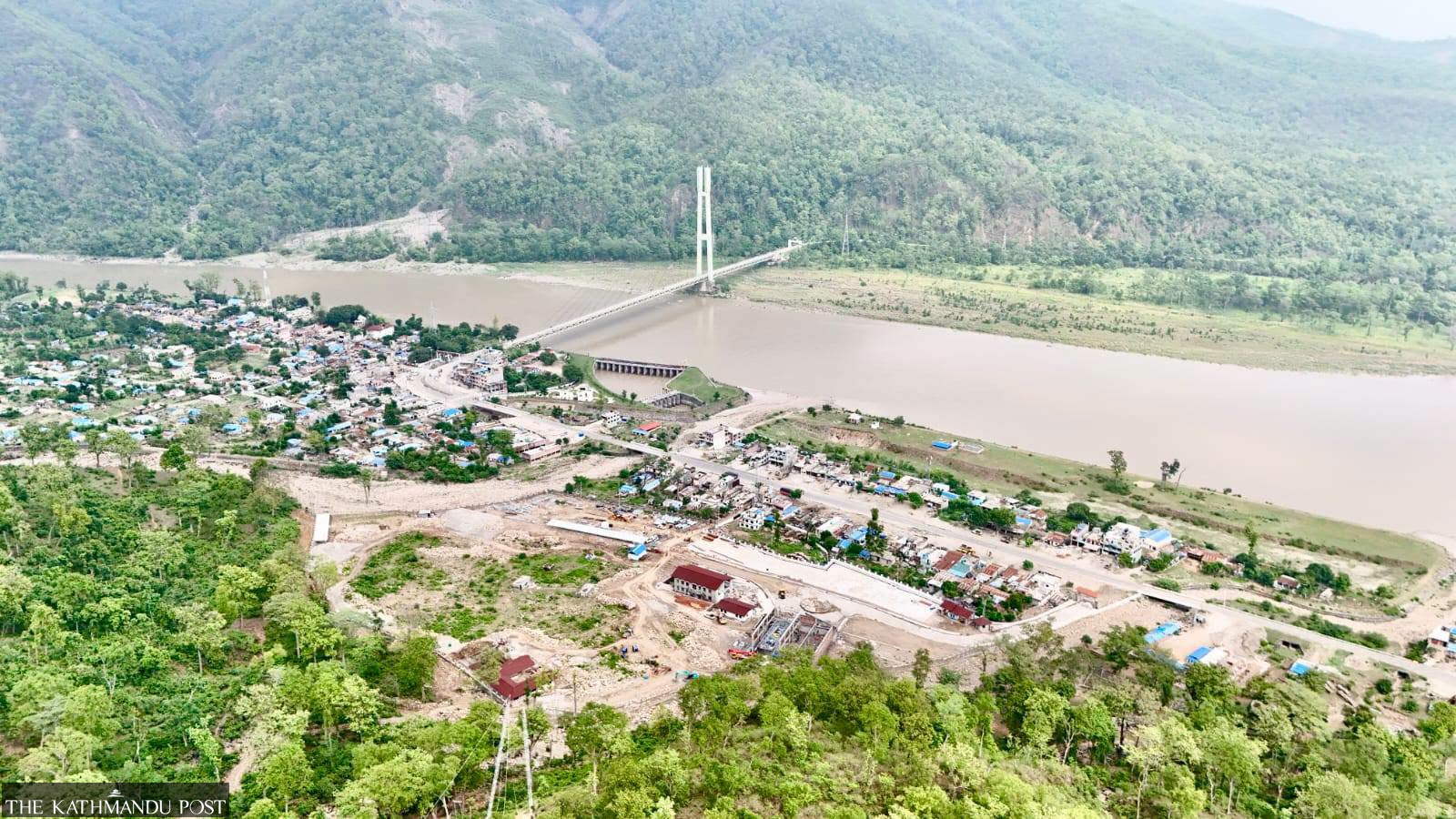
The Rs7 billion Jalpa Devi Cable Car is expected to begin operations in November, linking Chisapani with Rajkanda in the Chure hills and opening up a new tourism destination in far-western Nepal. The cable car will stretch 3.1 kilometres from Chisapani in Lamkichuha Municipality-3, Kailali, to Rajkanda in Mohanyal Rural Municipality-7. Post Photo
The striking design of the Karnali Bridge has long given Chisapani in far-western Nepal a distinctive identity. Located at the meeting point of Lumbini, Karnali and Sudurpaschim provinces, the scenic area is now set to gain another attraction.
Construction of the first cable car in the Sudurpaschim and Karnali regions is nearing completion, with the operator planning to bring it into operation by November.
Around 90 percent of the project has been completed, said Surya Bahadur Thapa, one of the investors and a director of Jalpa Devi Cable Car.
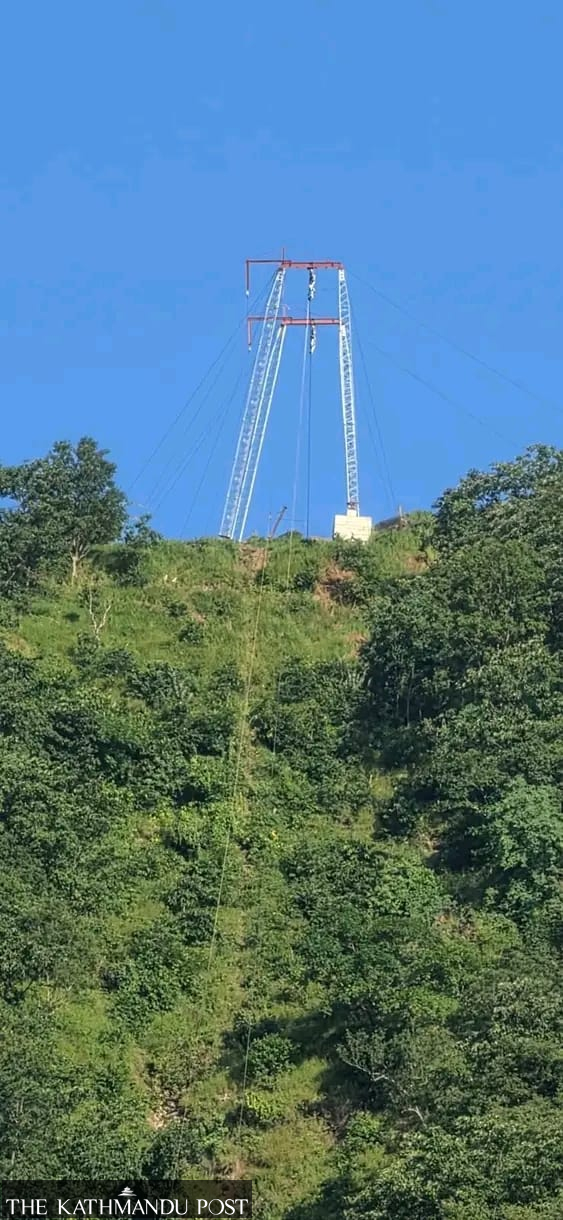
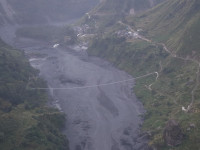
Three of the 14 towers for the cable car have been erected. Foundations for the remaining 11 towers have been built, and a material ropeway has also been built to transport construction materials, Thapa said.
Three of the 14 towers for the cable car have been erected. Foundations for the remaining 11 towers have been built, and a material ropeway has also been built to transport construction materials. Post Photo
“All the foundations for the remaining towers have been completed. With the material ropeway ready, we only need to transport the tower components and erect them,” Thapa said.
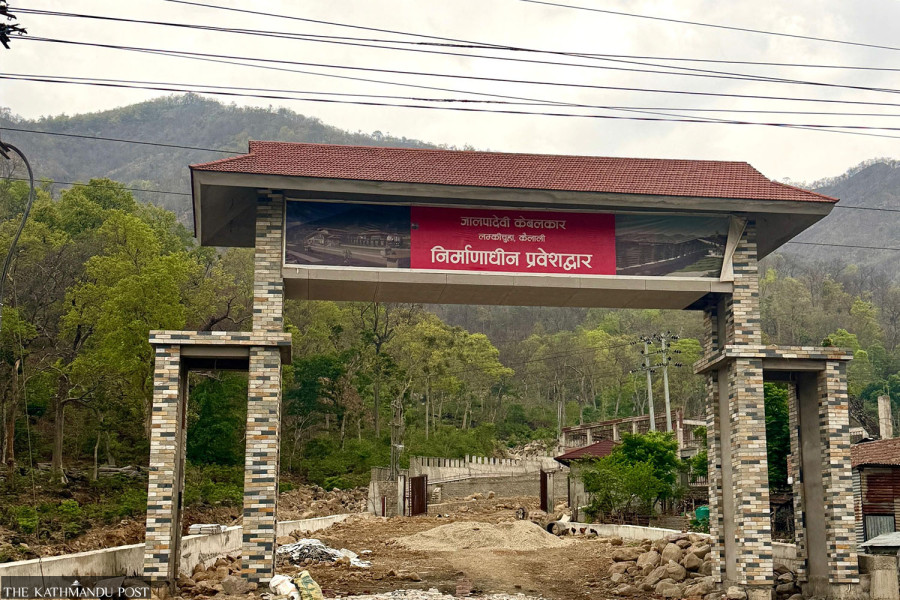
Infrastructure including Jalpa Devi temples at the base and top stations, a cafeteria, drinking water and electricity facilities in the temple area, a one-kilometre scenic wall and a cycling track have already been built, according to Prem Neupane, an administrative assistant at the project.
A parking facility for 1,000 vehicles and a garden have been ready at the base station.
The cable car will stretch 3.1 kilometres from Chisapani in Lamkichuha Municipality-3, Kailali, to Rajkanda in Mohanyal Rural Municipality-7.
Thapa said the project, initially launched with an investment plan of Rs5 billion, is the largest private-sector investment project in Sudurpaschim.
The top station at Rajkanda is located at an elevation of 1,200 metres in the Chure hills of Mohanyal Rural Municipality.
Rajkanda is known as a religious and historical site. Locals say it served as the headquarters of the Dhulikot kingdom, one of the Baise-Chaubise principalities, and that the Dhulikote kings ruled the area for nearly 450 years from 1503 BS.
The remains of the historic Dhulikot palace, Tundikhel, Kotkhana, Khajane Odar, Malika Temple and the queen’s bathing well are among the attractions in the area.
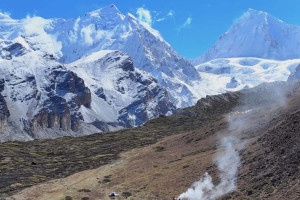
From Rajkanda, visitors can see Chisapani, the Karnali river and the plains of the Tarai, as well as mountain ranges including Badimalika, Api, Saipal, Kanjirowa and Om Parvat, according to Thapa.
“The sunrise view is captivating,” Thapa said. “The one-kilometre-long Great Wall built at Rajkanda, where the top station is located, enhances the area’s appeal. From here, visitors can see the Karnali Bridge and the Tarai in one direction and hills and mountain ranges in another. We have designed the cable car’s top station accordingly.”
Lamkichuha Municipality Mayor Sushila Shahi said building a cable car at the gateway to Sudurpaschim was a matter of pride.
“Below, there is the beauty of the Karnali, while from Rajkanda above, visitors can enjoy rare views,” she said. “Tourists will have the option of travelling by vehicle, trekking or taking the cable car to Rajkanda. We hope this project will increase tourist activity not only in the Lamki area but across Sudurpaschim.”
The company expects the project to attract more domestic and foreign tourists because the base station at Chisapani is directly connected to the East-West Highway.
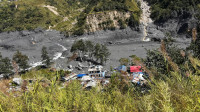
Scenic view of Chisapani Bazaar. Post Photo
Padam Bikram Singh, president of the Nepal Association of Tour and Travel Agents Sudurpaschim, also said the project could attract more Indian tourists.
This is a prestigious tourism project in Sudurpaschim, Singh said. “The road distance from Dhangadhi to Delhi is only around 350 kilometres, while Chisapani can be reached in about four hours by road from Lucknow, the capital of Uttar Pradesh. This could make it an accessible destination for Indian tourists as well.”
Thapa said the cable car project would directly employ between 1,000 and 1,500 people.
“We estimate that around 5,000 domestic and foreign tourists will visit Chisapani every day,” he said. “If such a large number of tourists start arriving every day, agriculture, entrepreneurship and every other sector in the area will become more dynamic.”
The project said it will begin construction of its second phase soon after starting operations during the Dashain-Tihar festival period.
The project kickstarted on January 27, 2025. Entrepreneur Chandra Prasad Dhakal holds a 75 percent stake in the project, while local investors hold the remaining 25 percent.
Although the initial investment was estimated at Rs5 billion, Thapa said the total cost is expected to reach Rs7 billion by the time the project sees completion.
The second phase includes plans to build a five-star hotel in Rajkanda and a three-star hotel in Chisapani, along with other infrastructure.
“We plan to build a three-star hotel, a banquet hall with a capacity for 1,000 people, a casino, cafeteria, swimming pool and other facilities in Chisapani,” Thapa said.
“In Rajkanda, we plan to build a five-star hotel, a seminar hall for 500 people, an attractive Jalpa Devi temple, a one-kilometre-long Great Wall, a children’s park with the capacity for 1,000 visitors and a glass bridge.”




 15.66°C Kathmandu