Judicial Council starts high court appointments, leaves Supreme Court vacancies unresolved
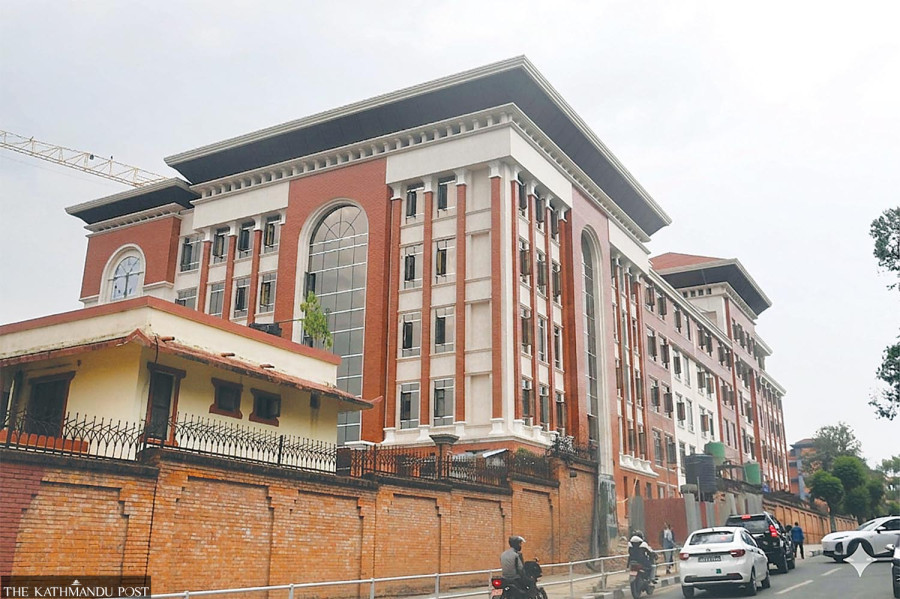
The council's decision to fill lower court vacancies before addressing the top court’s mounting backlog has drawn criticism from judges and the Nepal Bar Association.The Supreme Court building in Kathmandu. Post file photo
The Judicial Council has begun filling judicial vacancies at the high courts while leaving posts vacant at the Supreme Court, despite a mounting case backlog at the top court.
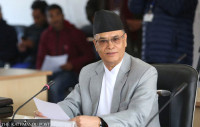
A council meeting chaired by Chief Justice Manoj Kumar Sharma on Tuesday appointed three legal practitioners as high court judges. Supreme Court Registrar Bhadrakali Pokharel, District Judge Himlal Belbase and Gajendra Bahadur Singh, director general of the Judgment Execution Directorate, were appointed to the high courts in Surkhet, Janakpur and Biratnagar, respectively.
Belbase is due to retire in four days on age grounds. Pokharel was appointed a judge as he was due to retire from his position as registrar.
The council also appointed Supreme Court bench officer Bharat Kumar Dahal as a district judge and posted him to the Kailali District Court. It transferred several judges to the high and district courts as well.
The appointments came as the Supreme Court continues to struggle with a large case backlog. On Tuesday, 489 cases were listed for hearing. The court decided 230, while 259 were deferred for various reasons, including cases that could not be heard or were unsuitable for hearing. The court has around 29,000 cases pending.
The Supreme Court constitutionally has 21 justices, including the chief justice, but only 17 are currently serving. Justice Binod Sharma is due to retire next month, further reducing the bench.
As the Supreme Court’s caseload continues to grow while the number of justices declines, the Judicial Council has instead prioritised appointing judges to the high courts, which face relatively less pressure and a lighter caseload.
Chief Justice Sharma said the appointment process had now begun and vacancies at all levels would soon be filled. “Judicial appointments have started,” Sharma said. “Supreme Court justices and chief judges will also be appointed soon.”
However, a Judicial Council member said the Supreme Court and High Court chief judge appointments were unlikely before October 1. The member said Sharma’s forthcoming visit to China would be followed by another council meeting.
The member said the immediate appointments at the high court were partly intended to make some people judges quickly and to clear the way for appointing a new Supreme Court registrar.
Chief Justice Sharma had initially planned to appoint judges to the Supreme Court first, followed by chief judges of the high courts and then high court judges, the member claimed. However, the member said the high court appointments were made first after the council faced difficulty in deciding whom to appoint as the Supreme Court registrar.
Kedar Koirala, general secretary of Nepal Bar Association, criticised the sequence of appointments, saying the council had addressed an administrative issue rather than the judiciary’s most urgent problem.
“It is positive that judicial appointments have finally begun,” said Koirala. “But the problem is in one place and the treatment is being given somewhere else.”
He said the council should have started with the Supreme Court because litigants were being affected by the shortage of judges.
Supreme Court vacancies persist
Full appointments have not been made to the Supreme Court for several years. In June 2025, the Judicial Council recommended Meghraj Pokharel for appointment as a Supreme Court justice, leaving one position vacant at the time. Since then, Justices Prakash Man Singh Raut and Kumar Chudal have retired. Chudal retired in October 2025 while Raut retired in April 2026.
During his parliamentary hearing in May, after being recommended for chief justice, Sharma had pledged to establish a system of appointing judges before vacancies arose. Although he began the appointment process three months after being endorsed by the parliamentary hearing committee and appointed chief justice, Supreme Court judges have criticised him for starting with courts where the need was less urgent.
One Supreme Court justice said the council should have proceeded from the Supreme Court down to the high courts to make appointments in full at once. Appointing justices to the Supreme Court creates vacancies for high court chief judges, while appointing chief judges creates vacancies at the high courts, the justice said. Unless appointments are made in sequence, he argued, there will always be vacancies at one level of the judiciary.
Section 4(1) of the Judicial Council Act 2016 states that the Judicial Council must identify positions that will become vacant when Supreme Court justices reach the mandatory retirement age and recommend appointments at least one month before the vacancies occur.
Sub-section (2) states that, except in cases of retirement on reaching the mandatory age, if a Supreme Court judge’s position becomes vacant for any other reason, the Judicial Council must recommend a replacement within one month of the vacancy.
However, the practice of appointing judges on time, as required by law, has not been established. The same pattern appears to have been repeated this time as well.
Dahal and Kattel recommended as registrars
Following Tuesday’s council meeting, the Judicial Service Commission recommended Baburam Dahal and Thagindra Kattel as Supreme Court registrars. The posts became vacant after Pokharel moved to the high court and Man Bahadur Karki became chief election commissioner.
The commission also recommended Ram Prasad Bhattarai as secretary of the Judicial Council. Their appointments will take effect after Cabinet approval.




 24.03°C Kathmandu