Local governments call for climate justice and compensation at Mustang conference
Representatives from 431 local governments and 41 district coordination committees have gathered in Jomsom to highlight the growing impacts of climate change on Nepal’s mountain communities. Representatives from 431 local governments, including metropolitan cities, sub-metropolitan cities, municipalities and rural municipalities, as well as 41 district coordination committees, are attending the conference along with climate experts. Post Photo
Local representatives from across Nepal have called for climate finance to be treated as a right to compensation for climate-related loss and damage, rather than as aid, as a national climate conference began in the Himalayan district of Mustang on Tuesday.
The two-day Gharapjhong Climate Change Conference, organised by Gharapjhong Rural Municipality, is being held in Jomsom to draw international attention to the growing impacts of climate change on mountain communities.
Representatives from 431 local governments, including metropolitan cities, sub-metropolitan cities, municipalities and rural municipalities, as well as 41 district coordination committees, are attending the conference along with climate experts.
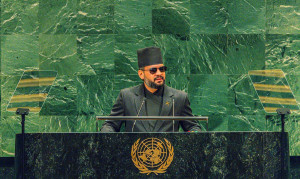
The conference was inaugurated by Minister for Agriculture, Forests and Environment Gita Chaudhary.
Gharapjhong chairperson Mohan Singh Lalchan said the conference was intended to give local governments a common platform to raise their concerns over the climate crisis facing Nepal’s mountain regions.
Although Nepal contributes little to global carbon emissions, participants said its mountain communities were bearing disproportionate human and economic costs from climate change.
They called for climate finance from developed countries to be recognised not as a grant or favour, but as compensation for loss and damage caused by climate change. They also pledged to raise the issue more strongly at international forums, including upcoming Conference of the Parties (COP) meetings.
Addressing the conference, Minister Chaudhary stressed the need for meaningful participation of women at every stage of climate policy and programmes and for greater support for women-led adaptation initiatives.
She also highlighted the need for early warning systems and stronger coordination among the federal, provincial and local governments to reduce the risk of glacial lake outburst floods in the Manang area.
Under the National Climate Change Policy 2019, the ministry would also work to involve young people in climate initiatives through green entrepreneurship, innovation and training, she said.
“Nepal will not only ask for assistance at international forums,” Chaudhary said, adding that the country would continue to advocate firmly for the mountain agenda and climate justice through initiatives such as “Sagarmatha to the Sea”.
The first day of the conference featured technical sessions and panel discussions on climate policy, the environmental condition of Gandaki Province and the relationship between land and climate.
Hariprasad Sharma, Binod Dawadi, Krishnachandra Devkota and Shriprasad Ganesh Bhatta made presentations during the sessions.
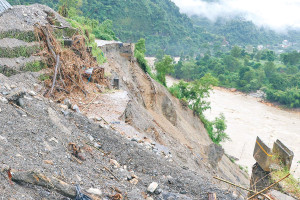
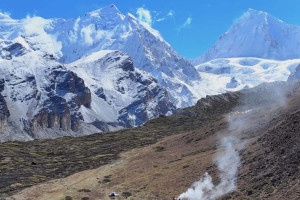
Participants discussed the accelerating rate of glacier melt and the growing risk of glacial lake outburst floods, as well as unseasonal snowfall and avalanches, dry landslides, and growing water and irrigation shortages.
They also examined how these changes are affecting agriculture, livestock farming and tourism, which are central to the livelihoods of mountain communities.
The conference will conclude on Wednesday with the issuance of the “Gharapjhong Declaration on Climate Change, 2026”.
The declaration will be issued from the banks of the Kaligandaki river, against the backdrop of the Nilgiri Himal, as a joint commitment by local governments in Nepal’s trans-Himalayan region, according to the organisers.




 20.08°C Kathmandu