



 20.58°C Kathmandu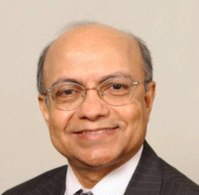




Sat, Oct 24, 2026
National
What should Balendra Shah tell the world in New York?
Ahead of the prime minister’s first UN General Assembly address, experts, leaders and activists share how Nepal should pitch its climate crisis to the world.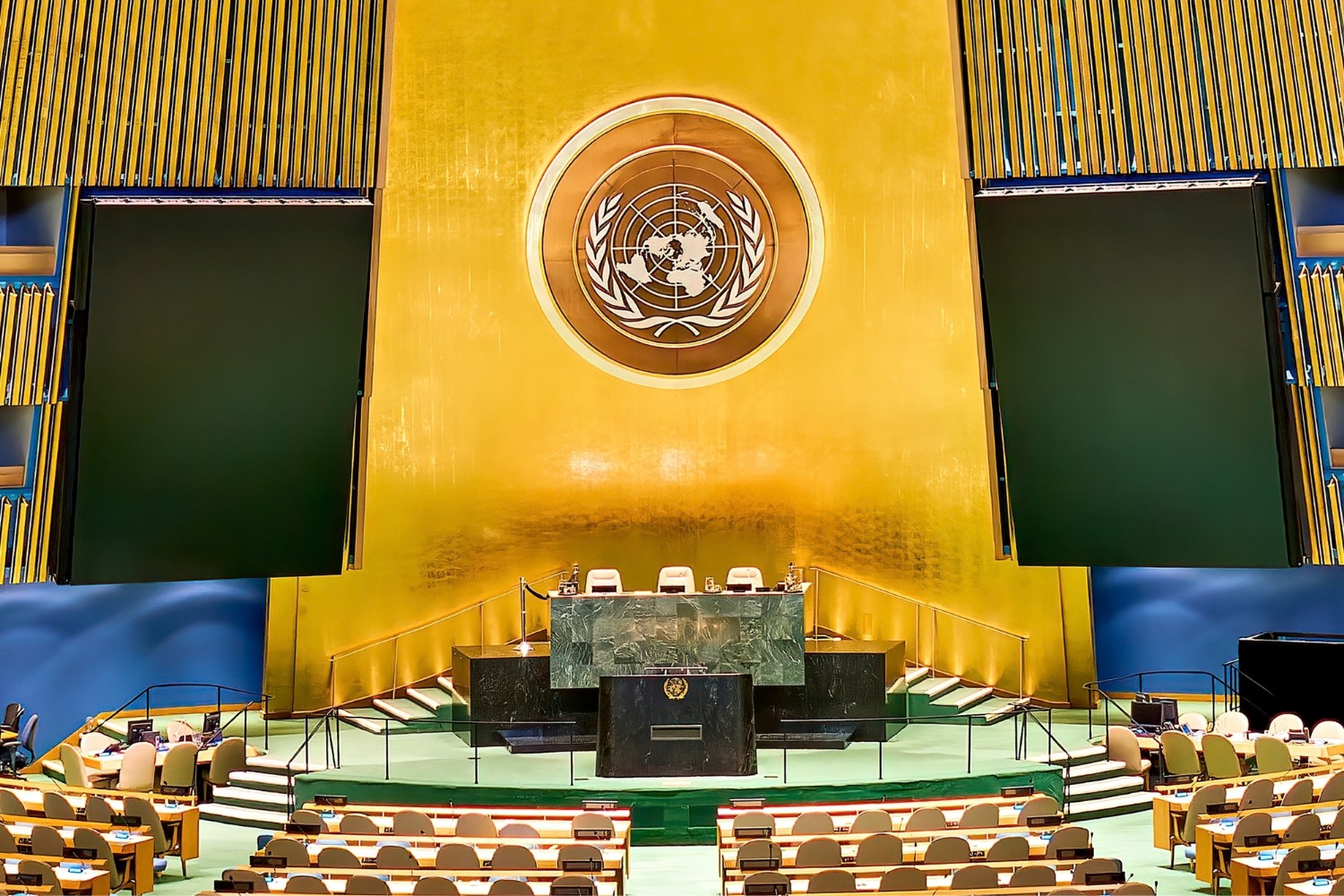
Biken K Dawadi
Published at : September 13, 2026
Updated at : September 15, 2026 14:13
With ten days to go before Nepal’s Prime Minister Balendra Shah addresses the United Nations General Assembly in New York, there is much curiosity around how the young leader will frame Nepal’s climate vulnerabilities.
Amid mounting economic pressures and the heavy toll of recent Bhotekoshi floods, Shah’s upcoming address is expected to present a fierce international demand for climate justice, adaptation financing and equitable accountability.
The Bhotekoshi catastrophe has also renewed a longstanding question for Nepali diplomacy: How can a country with limited influence make its concerns heard in an international system largely shaped by powerful states?
Nepal has been raising the climate justice issue for years, arguing that countries that have contributed little to global emissions should not bear a disproportionate share of the consequences. But that appeal has largely been ignored, or so it seems.
In this context, the Post recently asked nine key voices—veteran diplomats, political leaders, climate experts, activists and writers—what Prime Minister Shah must tell world leaders.
Several of them say Shah should go beyond recounting the devastation and use it to demand practical measures, from stronger early-warning systems and scientific cooperation to dependable financing for recovery and resilient infrastructure.
Their answers vary widely, from regional early-warning cooperation and climate finance to UN reform, strategic autonomy and a more assertive voice from the developing countries. Taken together, they offer a map of the arguments Nepal could take to the world stage.
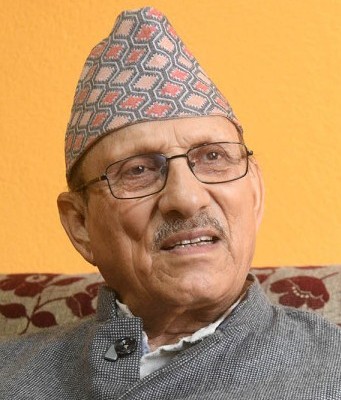
Former UN assistant secretary-general Kul Chandra Gautam, for one, has called for Nepal, India and China to establish a Himalayan climate-resilience mechanism to share data, improve early warnings and coordinate assistance when disasters strike.
Former prime minister Baburam Bhattarai, meanwhile, argues that Shah should challenge an international order in which powerful countries exercise disproportionate influence, while making a case for greater representation of poorer nations.
Others say Nepal should resist being drawn into geopolitical camps and instead pursue strategic autonomy, grounded in sovereignty, international law and national interest.
There is also a question of tone. Shah’s political appeal has been built partly on a rejection of conventional political language. Gopal Bahadur Thapa, veteran diplomat and former foreign ministry chief of protocol, argues that his UN address should reflect that identity, using simple language and striking facts rather than diplomatic formulas. The recent floods, with its missing and dead, could provide the emotional centre of such a speech, Thapa says, but the address would need to move quickly from tragedy to proposals.
To be sure, a powerful speech can attract international attention, but attention does not automatically translate into funding, technology, institutional reform or regional cooperation. Nepal has estimated that as much as $4.7 billion (or about Rs723 billion) will be required for recovery and rehabilitation after the floods. Of which, infrastructure accounts for the largest share of the estimated recovery bill, at Rs473.57 billion, or 65 percent.
The value of Shah’s visit will ultimately depend on what follows the address, including the alliances he builds and the commitments he secures on the sidelines of the General Assembly.
His first appearance at the General Assembly is therefore both a diplomatic opportunity and a test of political maturity. He can present Nepal as a country seeking sympathy—or as one offering concrete ideas while demanding greater fairness from the international system.
Kul Chandra Gautam Former Assistant Secretary-General of the UN
Nearly three years ago, standing in the shadow of Mount Everest, the UN Secretary-General warned that he had come to ‘cry out from the rooftop of the world’ against the madness of an impending climate disaster.
Sadly, that cry from the rooftop of the world was not heard loudly enough. Nor were the warnings from Nepal, other vulnerable nations, and the world’s leading scientists.
Last month, Nepal and the Tibet region of China witnessed devastating consequences.
There is a cruel irony here. Nepal has done its part. We have restored our forests on an impressive scale. We are rapidly moving toward clean energy, promoting electric mobility, and implementing climate-adaptation plans at the local level. Yet a country responsible for less than 0.1 percent of global greenhouse-gas emissions is paying an ever-higher price for a crisis it did not create.
Those who contributed least to the climate crisis should not be left to pay the greatest price for it. Shah should not use the General Assembly to point fingers. We are not here to blame any nation or demand compensation from any country. We are here to demand solidarity—and to seek solutions.
The world has agreed, through the United Nations Framework Convention on Climate Change, to act based on ‘common but differentiated responsibilities and respective capabilities’.
Shah needs to emphasise that those principles must now become action.
Nepal should propose that, as an urgent first step, China, India and Nepal establish a trilateral Himalayan climate-resilience mechanism to share data, strengthen early-warning systems, exchange scientific information and coordinate assistance when disaster strikes.
Let this not be only a response to one disaster. Let it be the beginning of a new model of Himalayan solidarity—one that turns shared vulnerability into shared responsibility, shared knowledge into shared preparedness, and shared danger into shared action.
The Himalayas are warning humanity. The prime minister must urge the international community: The time to act is now.
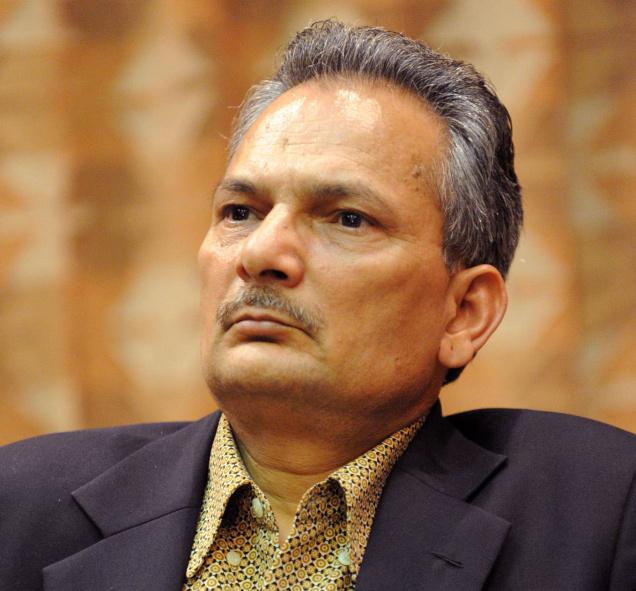
Baburam Bhattarai Former Prime Minister of Nepal
Prime Minister Balendra Shah should emphasise several key issues.
First is the current world order. The international structure established after the Second World War has largely broken down in recent decades. Major powers have repeatedly failed to uphold international law, intervening in other countries and violating their sovereignty. Other centres of power are following suit, pushing the world towards greater disorder. The prime minister should therefore call for a new world order based on equal rights, sovereignty and meaningful participation for all nations.
Second is the global economic system. Countries like Nepal continue to suffer from an unequal international economic order despite the commitments and privileges extended to least developed countries through various international agreements. Poorer countries export primary commodities and labour while importing expensive goods and technology from richer nations. This perpetuates cycles of poverty and unemployment. The Global South must therefore demand a fairer international financial and trading system.
Third is the growing climate crisis. Developed countries have contributed disproportionately to global carbon emissions, yet major powers have repeatedly failed to honour commitments made at climate conferences such as COP. As temperatures rise, glaciers in the Himalayas and ice at the poles are melting, increasing the risk of catastrophic disasters. Nepal is already experiencing the consequences. Although Nepal contributes only around 0.01 percent of global emissions, countries such as ours bear a disproportionate share of the damage. The prime minister should raise this issue forcefully and seek international compensation, in accordance with international law and commitments made through global climate agreements.
Fourth, the UN itself needs reform. The existing structure, particularly the Security Council, reflects an older balance of power and gives disproportionate influence to a handful of countries, leaving the majority with little meaningful role. In keeping with the principles of the democratic age, the UN should be restructured to ensure that least developed countries and the wider Global South have a stronger voice and their rights are properly represented.
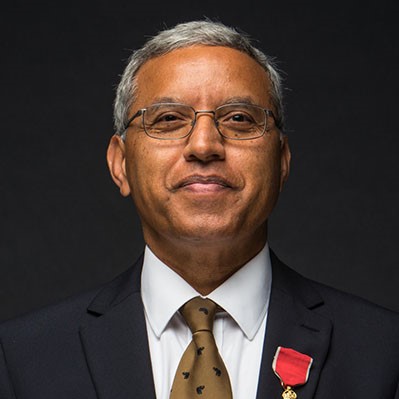
Surya Subedi OBE Veteran International Jurist
The Prime Minister of Nepal should present himself before the United Nations General Assembly not as the representative of a nation seeking charity, but as the voice of a resilient people demanding justice, equity, and principled international solidarity in the face of a climate catastrophe they did little to create. His tone should be dignified, confident, and statesmanlike, emphasising that Nepal stands today on the front line of the global climate crisis, bearing the human, economic, and environmental consequences of a warming planet despite its negligible contribution to global greenhouse gas emissions. He should frame the recent floods, landslides, glacial lake outburst events, and other climate-induced disasters not merely as national tragedies, but as manifestations of a profound injustice in the international system, where vulnerable mountain countries are paying a disproportionate price for historic emissions generated elsewhere. Speaking from a position of moral authority rather than victimhood, he should remind the international community that climate action is not an act of benevolence but a shared legal, political, and ethical responsibility grounded in the principles of equity, common but differentiated responsibilities, and international cooperation. The Prime Minister should make clear that Nepal seeks partnership, not patronage; solidarity, not sympathy. He should call upon states, international financial institutions, development partners, and climate funds to assemble a comprehensive package of financial, technical, and capacity-building support for recovery, reconstruction, adaptation, and long-term resilience, presenting such assistance not as aid to a helpless nation but as a tangible expression of global responsibility toward those suffering the consequences of a crisis they did not cause. In doing so, he should position Nepal as a principled champion of climate justice on behalf of vulnerable mountain and developing countries worldwide, transforming national adversity into a compelling call for a fairer, more accountable, and more humane international response to the defining challenge of our age.
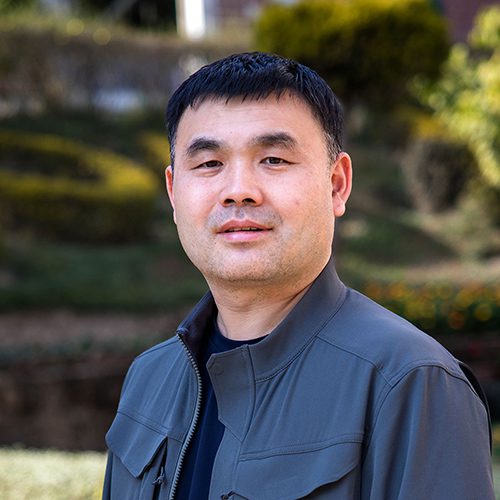
Qianggong Zhang Head of Climate and Environmental Risks, ICIMOD
We have been sounding the alarms for climate-driven disasters for over a decade, although we could never have imagined the scale of the Kyirong-Rasuwa flood. Such a climate-driven disaster exposes to us the systemic gaps in high-mountain risk governance. It demands risk-informed reconstruction and land use, especially in the Hindu Kush Himalaya (HKH), where low-emitting countries like Nepal pay an outsized price.
We see through our work that the climate risks are increasing, but the pace and scale of our science, financing and response mechanisms are yet to catch up.
In his recent address, the UN Secretary-General has underscored that the world is on course to overshoot the 1.5 degrees Celsius global warming threshold. But for the mountains, 1.5 degrees is already too much. The question is increasingly not simply how we cope with climate change, but how communities, ecosystems and countries survive in a rapidly changing climate reality.
This requires us to look beyond individual disasters and address the wider systems that determine how countries and communities prepare, respond and recover. Climate finance, science and updated information, preparedness, community support, institutional capacity and mechanisms to translate knowledge into timely action all need to be strengthened.
We also need to rethink global priorities. Mountains can no longer be treated as remote or peripheral regions. They are critical to the planet’s environmental and ecological security and provide essential water, ecosystems and livelihoods far beyond national borders.
Countries such as Nepal are increasingly struggling to cope with disasters that are becoming more frequent, severe and costly. A single major disaster can set development back by years. Recovery and reconstruction require enormous resources that many vulnerable countries simply do not have.
The estimated cost of Kyirong-Rasuwa flood recovery is expected to be enormous, amounting to over half of Nepal’s actual annual revenue collection. Rebuilding requires money. Better science requires investment. Preparedness requires sustained support. And communities need access to timely, trusted information before hazards become disasters.
Nepal’s message to the global community [through Shah’s address] could focus on appealing to the parties to establish a dedicated Himalayan window under the Loss and Damage Fund, fast-tracking an initial emergency tranche for Kyirong-Rasuwa as an explicit loss-and-damage case linked to climate-driven cryosphere change.
Short-term shocks to mountain countries will become long-term water security risks for one-quarter of humanity, as over 2 billion people depend on HKH waters. These impacts will eventually reach downstream populations worldwide, so we must prepare now.
Nishcal Rai Whip, Nepali Congress
Prime Minister Shah should not go to the United Nations as the leader of a small state pleading for sympathy or as a state aligning itself with a geopolitical camp. Nepal should position itself as an assertive democracy pursuing strategic autonomy, with friendship for all, subordination to none, and cooperation based on national interest and international law.
Climate change is perhaps the most vivid example of whether this international order is just. Nepal accounts for less than 0.1 percent of global greenhouse gas emissions, but according to the World Bank, unmitigated climate change may cut Nepal’s GDP by at least 7 percent by 2050. Nepal’s latest NDCs show that $73.74 billion will be needed to reach its quantified mitigation objectives until 2035 and more than 85 percent of that will depend on international support.
Thus, justice has to mean something. Distributive justice is about distributing responsibilities and costs based on contributions and capabilities. Procedural justice requires that vulnerable states have influence over the rules and financing of these processes. Recognitional justice means that Himalayan people and future generations matter in global discussions.
Nepal has already put forward such claims in front of the International Court of Justice. In December 2024, Foreign Minister Arzu Rana Deuba appealed for climate finance, technologies, and climate information, especially considering historical responsibility for emissions.
Thus, climate finance and loss and damage finance are not about charity. This is about responsibility and fairness. But justice also means that Nepal should take responsibility by improving land-use planning, infrastructural preparedness, warning systems, scientific monitoring and transparent governance.
We do not need to ask powerful countries to represent our voice. We should ask for international relations in which power does not matter when discussing sovereignty, life and climate losses.
Apekshya Shah Chair, TU Department of International Relations and Diplomacy
When a disaster strikes, international actors understandably rush to offer humanitarian assistance and compassion. Such solidarity matters. But if mountains are collapsing, rivers are changing course, and infrastructure is repeatedly damaged, Nepal needs support in understanding precisely why. Disasters will happen; the question is whether we learn enough from each one. The prime minister should call for sustained international cooperation in mountain science, monitoring, early-warning systems, disaster-risk reduction and resilient infrastructure. Every disaster should provide an opportunity for not only immediate foreign help, but also deeper collaboration to better understand Nepal’s changing environment and build its resilience.
While climate change will undoubtedly be on the agenda, Nepal needs to be more specific about the concerns of mountain communities, which experience disproportionate climate risks despite contributing little to global emissions. But Shah should not talk solely from a position of weakness. Nepal’s achievements in forest protection and the growing usage of electric vehicles show that the country is taking substantial domestic action. As a result, he should demand greater international responsibilities while expressing confidence in the country’s own achievements.
Nepal also bears a larger diplomatic obligation. With a long history of engagement with the United Nations, Nepal has the moral authority to advocate for multilateralism and international norms. At a time when international relations are becoming more transactional, countries like Nepal should remind the international community that sustainable development and human dignity cannot be achieved solely through calculations of immediate national interest.
Most significantly, Shah’s speech should be tied into a diplomatic strategy. If Nepal wants stronger international attention to mountain risks, it should coordinate with other mountain and climate-vulnerable countries and use the General Assembly to build common positions. The speech should open those conversations, not conclude them. One of the important objectives of the meetings on the sidelines should be not only to build coalitions, but also to discuss how to ensure that international assistance pledged after disasters is delivered more predictably and in a timely manner.
Mega Maskey Climate Justice Activist
It is evident that the glacier collapse that unleashed a flash flood on the Bhotekoshi River near Nepal’s border with China, killing hundreds, was not a natural disaster but the compounded impact of climate change. Fossil fuels remain the primary driver of this crisis, responsible for 86 percent of global CO2 emissions over the past decade. Despite this, countries are planning to produce more than double the amount of fossil fuels than would be consistent with the 1.5°C temperature goal by 2030.
No country can manage the transition away from fossil fuels alone. Fossil fuel production is embedded in global markets, trade rules, investment treaties and financial systems, and decisions taken in one country impact the conditions faced by others. Yet no mechanism currently exists to control this production.
The prime minister should call for an ambitious, legally binding instrument such as a Fossil Fuel Treaty that would provide a basis for cooperation between producing and consuming countries, complementing the UNFCCC and the Paris Agreement rather than duplicating them. This transition demands strong international cooperation, and Nepal holds both the moral ground and the standing to ask for it and to lead this discussion globally.
At UNGA, the prime minister must say loudly and clearly that this devastation is a result of historical emissions of developed countries and fossil fuel companies burning fossil fuels for the past two centuries. We must demand reparations and compensation for loss and damage that this has caused. Developed countries must be held accountable to their financial obligations under Article 9.1 of the Paris Agreement, and deliver the estimated $5.1–6.8 trillion required up to 2030, in developing countries.
Developed countries must be urged to provide new, additional, public climate finance alongside comprehensive debt cancellation. The Fund for Responding to Loss and Damage (FRLD) must be scaled up to hundreds of billions of dollars annually, with developed countries committing robust provisions for its first replenishment cycle in 2027. Shah should call for the immediate operationalisation of a rapid-response window within the FRLD to provide financial relief following acute climate disasters.
Ramesh Bhushal Environmental Journalist and Writer
Logical presentation is key because this is a political conference, and the prime minister’s speech must capture everyone’s attention. Therefore, how the address is delivered is crucial. It must include a mix of emotions, scientific facts, urgency and anger.
Nepal has been raising the issue of climate justice for years. Nearly two decades ago, in 2009, to draw global attention to climate change, a cabinet meeting was held at the base camp of Mount Everest, and the delegation led by the then prime minister travelled to Copenhagen, the capital of Denmark, to participate in the United Nations Climate Change Conference. Since then, Nepal has continuously been raising its voice. When standing on the world stage after suffering tragic events involving thousands of missing people and hundreds of deaths, the recent disaster naturally takes centre stage; however, rather than getting entangled only in that, presenting examples from our own past as well as from other countries will show that this is not just our individual plea, but a collective call.
Countries like Nepal must place greater emphasis on the point that assistance received to cope with the impacts of climate change should not be charity, but unconditional financial support. The process for receiving climate financial aid should be simplified, and rich and developed nations must be urged to swiftly pour funds into the Climate Loss and Damage Fund, which currently stands almost empty.
Other countries must also be urged to raise Nepal’s agenda, and it must be stated that Nepal is ready to take leadership in the cause of climate justice.
Since developed countries are adopting a policy of evading responsibility rather than taking ownership of critical issues like climate change, an argument must now be made as to how long countries like Nepal must pay the price for that delay.
Domestically, as the prime minister’s visit is being viewed with high expectations, people should be informed not to hold excessive expectations. The public here must also be clearly told that this is a routine visit taking place under special circumstances, and that the delegation will be there to present our case to the global community.
Gopal Bahadur Thapa Former Chief of Protocol, Ministry of Foreign Affairs
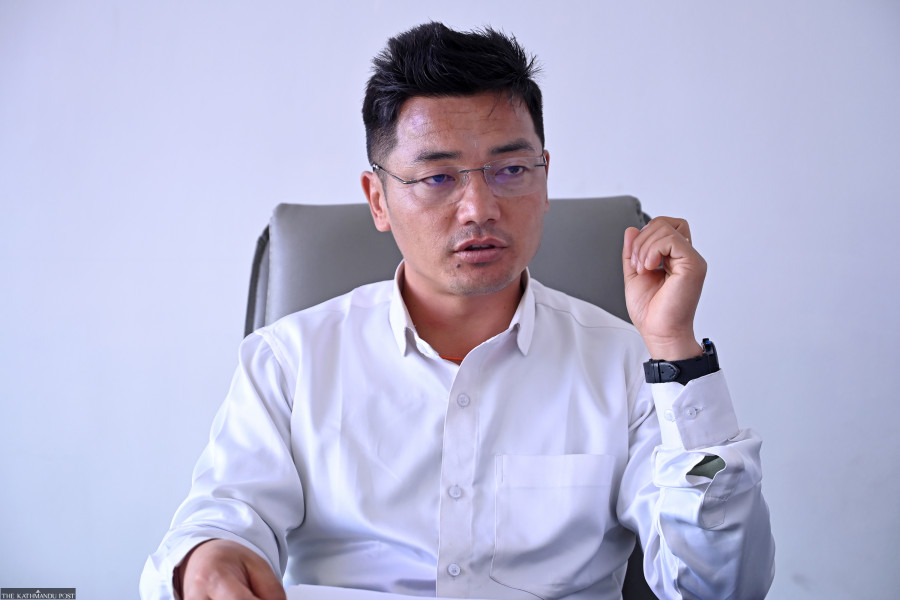
At the UN podium, Shah’s speech should be kept Balen-like, not laden with diplomacy. The world has heard enough formal speeches. It has not heard a 35-year-old rapper-engineer who became prime minister after a youth uprising, talking about burying around 1,000 unidentifiable bodies. He should use simple language, the kind an engineer would use. That alone will draw attention.
It would be better if it were structured in three parts for a 12-minute speech.
The first part should explain the Bhotekoshi catastrophe in plain words but with a moving message that grabs the attention of the audience at the Hall.
The second part should contain the truth. Here, facts need to be stated forcefully: “Nepal emits 0.1 percent of the global emissions. Nepal did not cause this, but paid the price. Glaciers do not carry passports. Ice broke in Tibet, death came in Nepal, water flowed to India. Yet Nepal got no warning. Our gauge went offline at 8:40 am. We learned about the flood 16 minutes after it entered Nepal. Floods do not need visas. Our warning system should not need visas either.”
On the solution part, the prime minister should propose a three-country mechanism with India and China, a Himalayan Early Warning Pact under ICIMOD to monitor, inspect lakes, and warn automatically within two hours.
In the third part, he should move from risk to justice. He should stress the need for 3 ‘R’s, namely relief, rehabilitation and reconstruction. Then, he should also ask for 3 other ‘R’s: responsibility, reparation and resilience.
He should exhort the international community to accept that the disaster was worsened by global warming. Shah should emphasise that Nepal is not seeking charity, but climate justice. He should ask the Loss and Damage Fund to release funds Nepal has already applied for. He must also insist upon grants, not loans. Nepali taxpayers should not be made to repay a loan for a disaster caused by someone else’s smoke. He should also appeal to the global community to help Nepal with satellite data, insurance for hydropower, and technology for stronger roads.
Then he should end with a Balen line, not a slogan, perhaps on the lines of “My generation cleaned the streets of Kathmandu. Now we must protect the roof of the world. Help us turn Bhotekoshi from a burial ground into a turning point.”
Biken K Dawadi
Dawadi is an Op-Ed Editor at the Post.
Related News

×