Five days, five questions: How Army Headquarters became Nepal’s political centre
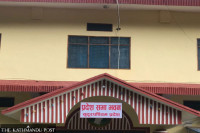
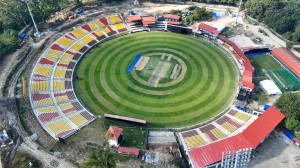
The Gen Z uprising brought down the government and left Nepal in a political vacuum. Here is how the five days that followed unfolded, as Army Headquarters emerged as the centre of efforts to restore order and form a new government. Nepali Army Headquarters
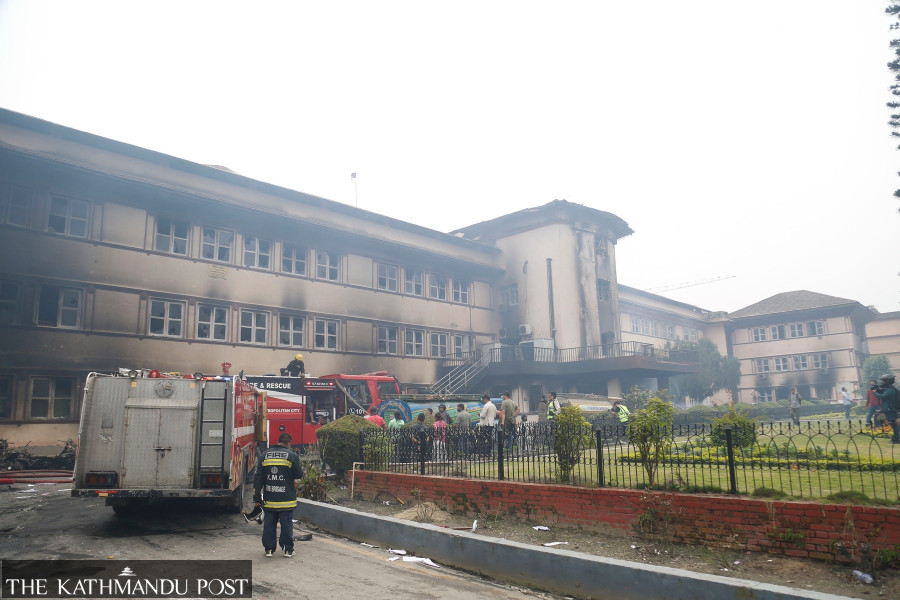
The September 2025 Gen Z uprising did more than bring down the KP Sharma Oli government. For five extraordinary days, as Parliament, Singha Durbar, the Supreme Court, the President’s Office and other state institutions came under attack, the country’s political centre of gravity shifted to Nepal Army Headquarters, known as Jangi Adda.
The Kathmandu Post’s Matrika Dahal and Tufan Neupane, based on interviews with more than 25 people and records of government, security and investigative bodies, revisited the immediate aftermath of the uprising and reconstructed how the transition unfolded.
What followed was a chaotic five-day transition, during which the centre of political decision-making shifted repeatedly — from the streets to Singha Durbar, Sheetal Niwas and, increasingly, Army Headquarters. The sequence of events also raised questions about how decisions were made, who was in charge, and how the country moved from the collapse of an elected government to the formation of an interim administration.
What happened after the government lost control?
The shift began as the elected government lost control of the situation.
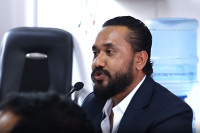
On September 9, the second day of the uprising, as violence and arson spread across Kathmandu, Army Chief Ashokraj Sigdel appeared on television and called for negotiations. About an hour later, the Army formally came onto the streets, with other security agencies operating under its command. By then, 51 people, including three police personnel, had been killed and major state buildings had been attacked or burned.
The following day, political and administrative activity increasingly moved to Jangi Adda. The chief secretary, Army chief, police chief, Armed Police Force chief and National Investigation Department chief travelled there by Army helicopter. From Army Headquarters, the chief secretary coordinated with civil servants around the country, while the Army worked to secure key government facilities and maintain essential supplies.
But Jangi Adda soon became more than an emergency security centre.
On September 10, representatives of different Gen Z groups began meeting there to discuss the formation of a new government. Army Chief Sigdel participated in the process. The Army also called on different groups to identify themselves and submit the names of their representatives.
As civilian political institutions became paralysed, questions normally settled by political parties and Parliament were increasingly being discussed at Army Headquarters.
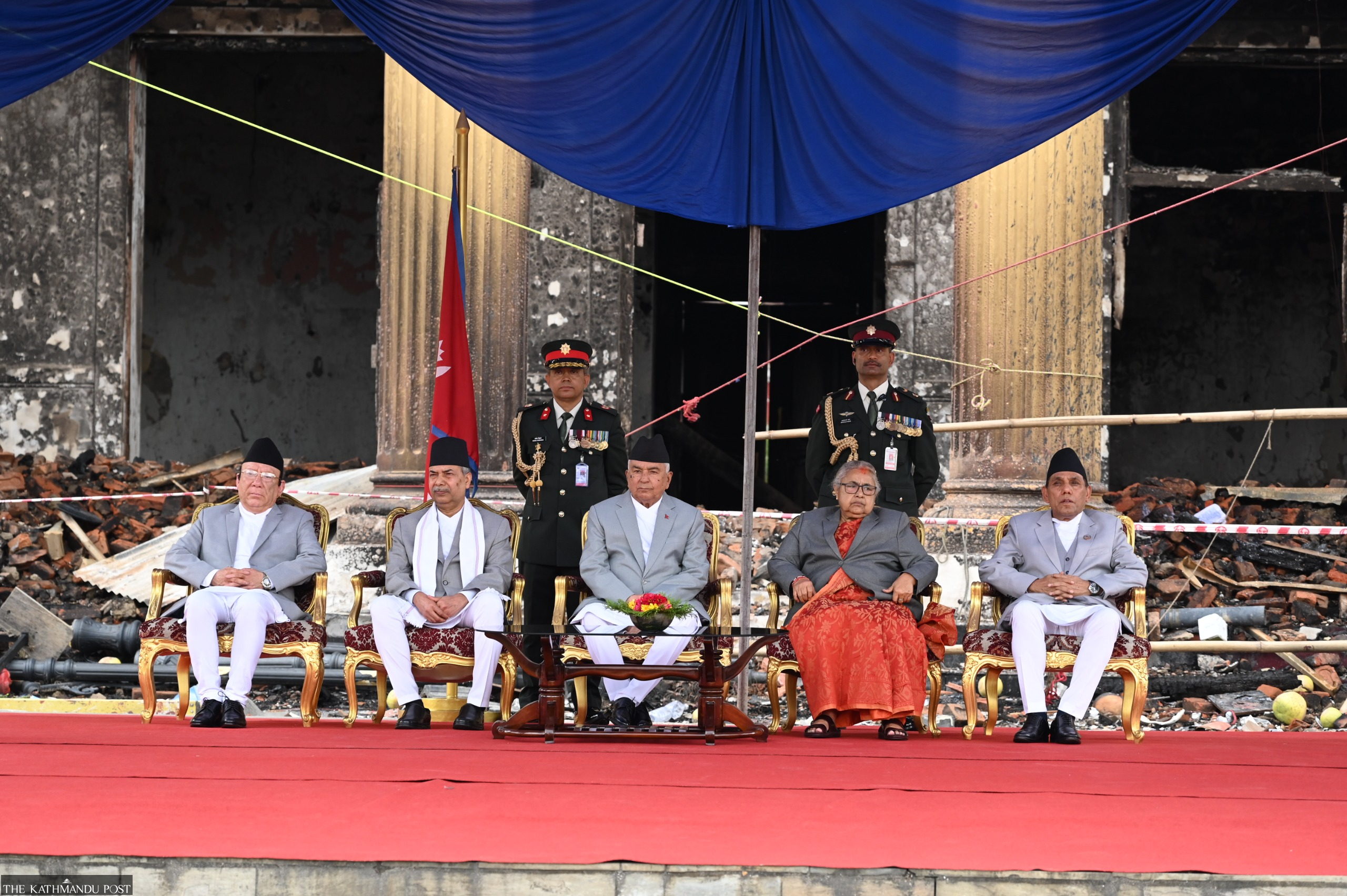
President Ramchandra Paudel, Vice President Ram Sahaya Prasad Yadav, and then Prime Minister of the interim government Sushila Karki in front of the burnt Sheetal Niwas building. Post photo
What went wrong in the government’s response to the uprising?
The crisis was not entirely unforeseen. But almost every layer of the state appears to have underestimated its scale.
On September 7, on the eve of the protests, the Central Security Committee discussed the demonstrations but did not adopt a specific strategy for the following day. The prevailing assessment was that the demonstration would be relatively small and peaceful, with an estimate of about 8,000 participants. A senior military officer later told The Kathmandu Post: “We all failed at intelligence,” including the Army.
The consequences became evident on September 8.
After protesters broke through a police barricade and moved towards Parliament, a curfew was imposed at 12:30 pm. The District Security Committee then requested Army assistance. Troops left Singha Durbar at 12:45 pm but did not reach the Parliament compound until 2:50 pm—a delay of more than two hours over less than two kilometres. By then, a protester had already been killed by police gunfire.
The government itself also appeared remarkably detached from the scale of the crisis. At its 6 pm Cabinet meeting on September 8, despite dozens of deaths and injuries, there was no substantive decision on the protesters, the dead or the injured. The meeting dealt instead with administrative matters. Even measures publicly announced afterwards, such as relief for victims and an investigation, were not reflected in the formal decisions of the meeting.
The next day brought an even larger failure.
A meeting at Army Headquarters had agreed that the curfew should continue from 5 am on September 9. But the order was not issued until 8:30 am. By then, protesters were already on the streets.
What followed was the collapse of state authority: arson, vandalism, looting and attacks on political leaders and state institutions. Oli resigned at about 2:30 pm.
How did the Army become involved in the search for a new government?
The Army says its initial role was to prevent further loss of life and protect critical institutions. But circumstances quickly pushed it beyond that function.
On September 9, then Kathmandu mayor Balendra Shah publicly urged protesters to negotiate with the Army chief. That effectively placed the Army in the middle of a political process. The following day, talks with Gen Z groups began at Army Headquarters.
The Army was now involved in discussions over who should lead the country.
Sushila Karki’s name emerged during these discussions. Om Prakash Aryal, who later became home minister in Karki’s interim government, said he proposed her name at Jangi Adda. Gen Z representatives subsequently formalised the choice through a vote on Discord.
Supreme Court of Nepal after arson on September 9, 2025. File Photo
The Army’s involvement went even further.
On September 11, President Ram Chandra Paudel held discussions at Sheetal Niwas about possible ways out of the constitutional crisis. One proposal from Army Chief Sigdel was that former king Gyanendra Shah could be brought into the discussions as another stakeholder — not as a proposal to restore the monarchy, but as part of considering different options for resolving the crisis.
A representative was sent to Gyanendra’s residence. He declined to come without a formal written invitation from the major political parties.
The episode illustrates just how far the political vacuum had spread. The President was trying to preserve constitutional government; political parties were divided; Gen Z groups were demanding an entirely new political arrangement; and the Army had become the institution facilitating conversations among them.
How did Sushila Karki emerge as prime minister?
There was initially an attempt to avoid dissolving Parliament.
On September 11, President Paudel proposed several constitutional options, including appointing a former chief justice or another non-parliamentarian as prime minister while retaining the House and holding elections within six months. He also considered summoning Parliament to amend the Constitution and even declaring a state of emergency to manage the crisis.
Paudel then flew with Army Chief Sigdel to Chanwan, where Oli had been taken after the violence.
The President proposed an emergency declaration as a way to avoid dissolving the House. Oli did not agree. But Paudel obtained what appeared to be a separate understanding: a new government could be formed — even one headed by Sushila Karki — without dissolving Parliament.
That understanding did not survive.
Karki and representatives of the Gen Z groups continued to push for a new political arrangement. Paudel continued trying to preserve the House, but the morning of September 12 brought another deadlock. Security officials told him that the situation had deteriorated beyond the possibility of keeping Parliament intact and that the protesters opposed retaining it.
By then, the effort to preserve Parliament had effectively run out of room.
On the evening of September 12, Paudel appointed Karki prime minister of an interim government in front of the burnt presidential palace. Parliament was dissolved soon after, marking a decisive break with the arrangement Paudel and Oli had discussed the previous day.
Karki’s appointment was therefore not simply the result of a conventional constitutional process. It emerged from negotiations involving the President, Army, Gen Z representatives and remnants of the old political establishment.
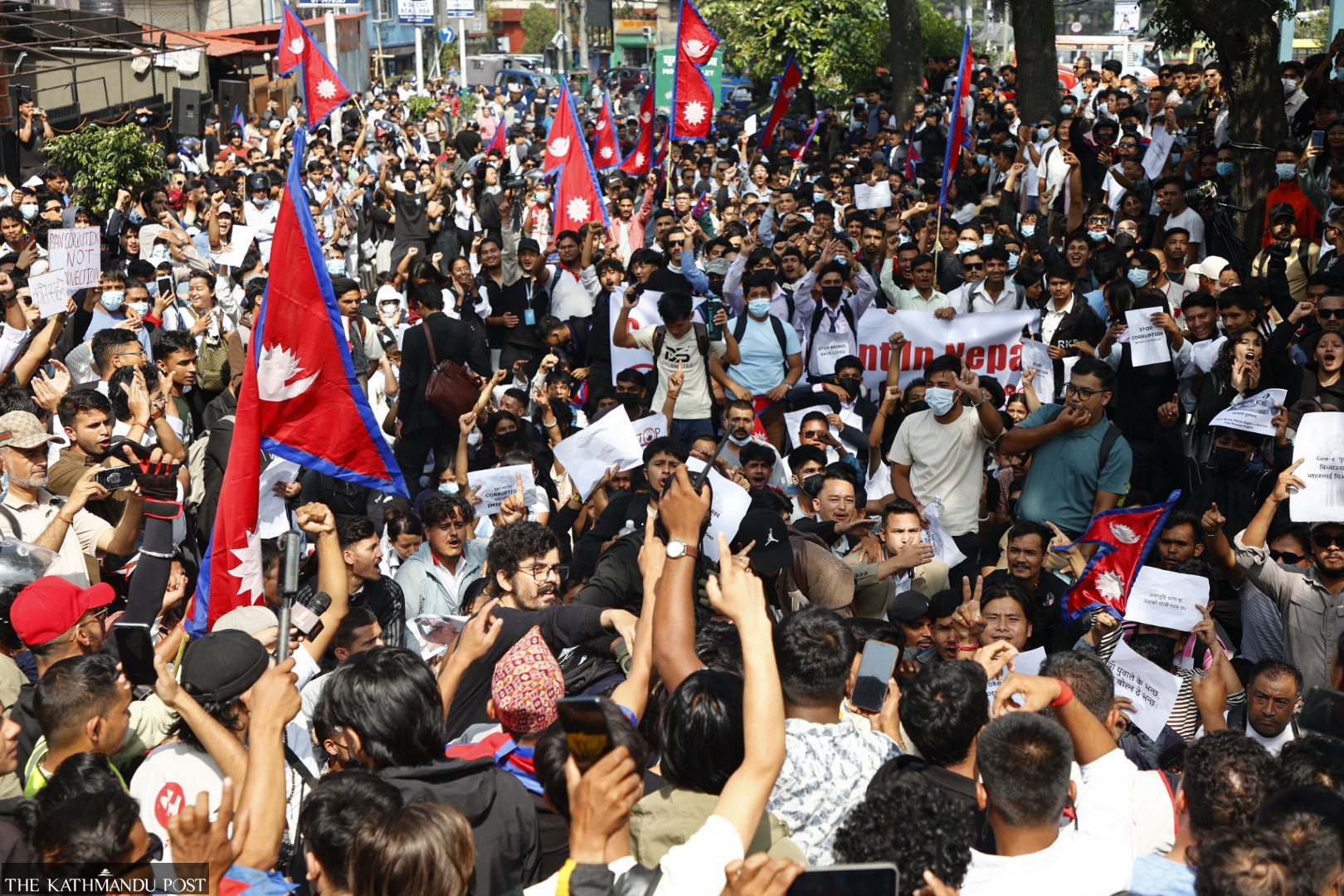
Gen Z protestors at Maitighar, Kathmandu, on September 8, 2025. File Photo
Did the Army overstep its constitutional role?
That is the unresolved question at the heart of the entire episode.
The Constitution gives the Army a defined role. Army mobilisation requires a recommendation from the National Security Council followed by a Cabinet decision and presidential authorisation. Yet the reconstruction highlights a major contradiction.
The Army has maintained that it was not formally mobilised on September 8 or 9 because the required constitutional process had not taken place. The government also said it had not decided to mobilise the Army.
But the Army was visibly deployed from around 10 pm on September 9.
The National Human Rights Commission subsequently questioned how this happened if no government decision had been made. It also questioned why the Army, which already had personnel positioned near important state institutions, appeared unable to adequately protect some of those buildings during the violence.
Then there is the political role.
It facilitated negotiations, hosted discussions over the formation of a government and became a venue where the next prime minister’s name was discussed. The Army chief personally participated in some of those conversations.
That may have been understandable amid an extraordinary breakdown of civilian authority. But it also raises questions about the constitutional limits of the Army’s role.
The central lesson of those five days is therefore bigger than the question of whether the Army saved Nepal from further chaos. The deeper issue is what happens when elected institutions fail simultaneously: who fills the vacuum, and under what constitutional limits?
For five days in September 2025, that vacuum was filled, at least in part, by Jangi Adda.
The fact that Nepal eventually emerged with a new government does not settle the questions raised by that intervention. It makes them more important.




 13.76°C Kathmandu