In a surprise to the foreign ministry, Rubio calls Lamichhane
The US Secretary of State’s call to the RSP chair comes as foreign diplomats seek alternative channels of engagement with Nepal. US Secretary of State Marco Rubio (right) and Rastriya Swatantra Party chair Rabi Lamichhane
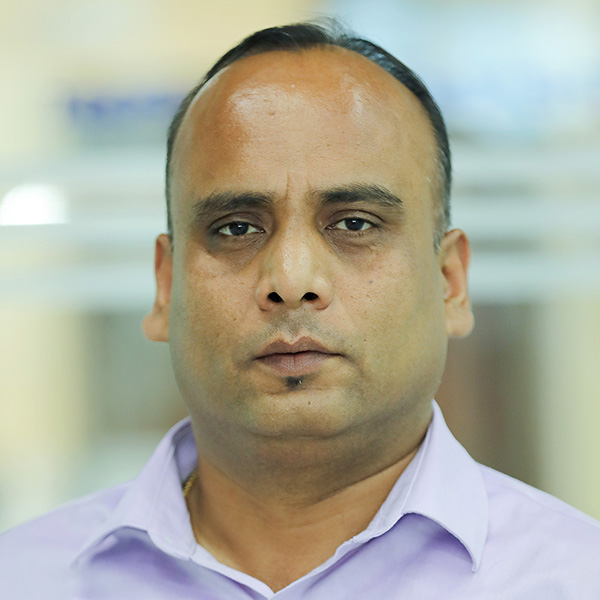
US Secretary of State Marco Rubio called Rabi Lamichhane, president of the Rastriya Swatantra Party, on Monday to express condolences over the loss of life in the Bhotekoshi floods and solidarity with the people and government of Nepal.
Rubio also said the United States was ready to provide additional support, the RSP said in a statement on X.
The call came in the aftermath of the August 26 floods along the Bhotekoshi river, which have devastated riverbank areas. So far, 1,355 bodies have been recovered, while another 5,000 people remain missing, including approximately 600 foreign nationals from 35 countries.
The conversation between the two leaders, however, caught even the Ministry of Foreign Affairs by surprise. Officials at the ministry told the Post they were unaware of the conversation between Lamichhane and Rubio.
“We came to know about the conversation through the media,” said one ministry official.
Lamichhane is one of the most powerful leaders in Nepal’s ruling party, which won 182 seats in the March election. His growing political influence, accessibility to foreign diplomats and contacts with senior US officials appear to have made him an increasingly important figure for Washington to engage with.
This is not the first time senior US officials have turned to Lamichhane.
In the third week of April, US Assistant Secretary of State for South and Central Asian Affairs Samir Paul Kapur held talks with Lamichhane in Kathmandu after Prime Minister Balendra Shah declined to meet him.
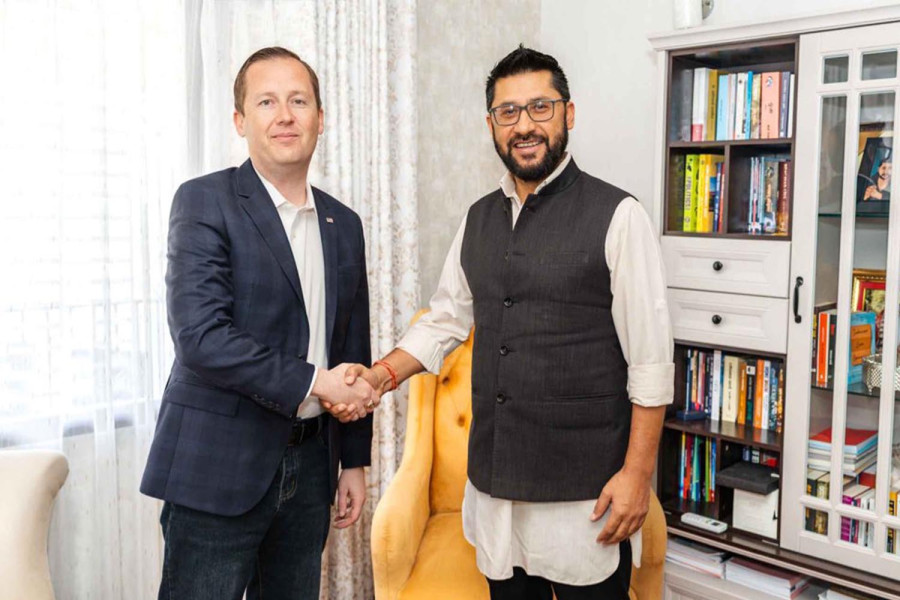
US President Donald Trump’s special envoy for South and Central Asia, Sergio Gor(left), met with the ruling Rastriya Swatantra Party chair Rabi Lamichhane in Kathmandu on May 2. Photo: Courtesy of US Embassy in Nepal
In the first week of May, Sergio Gor, the US president’s special envoy for South and Central Asia and US ambassador to India, also met Lamichhane in Kathmandu. Gor later met him in New Delhi on May 4, where the RSP president was invited by India’s ruling Bharatiya Janata Party.
According to one RSP leader familiar with the meeting who spoke to the Post, Gor expressed disappointment at not being able to meet Prime Minister Shah and invited Lamichhane to visit Washington, DC.
“Gor has told Lamichhane that if he visits Washington, he’d help secure meetings with senior US officials,” the RSP leader said. “Even with President Trump.”
The Post could not independently verify the RSP leader’s claim.
During the same visit to India, Lamichhane received a rousing welcome from the BJP and held meetings with Prime Minister Narendra Modi, Home Minister Amit Shah, External Affairs Minister S Jaishankar and National Security Adviser Ajit Doval, among others.
Gor had also called on Lamichhane on March 25, shortly after the RSP’s strong electoral victory.
“Lamichhane’s personal relations with Gor and his connections with some State Department officials played a key role in the telephone conversation between Lamichhane and Rubio on Monday,” said a senior Nepali diplomat who asked for anonymity so he could discuss foreign policy dynamics.
Lamichhane has also become an alternative point of contact for diplomats in Kathmandu as Shah has tightened access to foreign diplomats. Several diplomats and officials have instead held meetings with Lamichhane, Finance Minister Swarnim Wagle and Foreign Minister Shisir Khanal.
A former Nepali ambassador to the United States said the Rubio-Lamichhane call was not simply a matter of protocol but also reflected Nepal’s changing political power structure.
“Since the prime minister is inaccessible, foreigners definitely look for other ‘influential’ leaders to engage with,” the former ambassador told the Post, who also asked to remain anonymous so he didn’t jeopardise relationships with the government.
“Foreigners look at the psychosocial phenomenon within the power structure of a party and the government,” he said. “They like to engage with people they feel comfortable talking to — those who are powerful and accessible.”
Former ambassador Dinesh Bhattarai said Shah’s earlier decision not to meet visiting US diplomats could be one reason Washington has increasingly engaged Lamichhane. Another factor, he said, was the distribution of political power.
“Initially, the prime minister did not meet the US diplomats who visited Kathmandu. That could be one reason,” Bhattarai said. “Second, it is also about where the power lies.”
On August 10, Shah held separate meetings with Indian Ambassador Naveen Srivastava and Chinese Ambassador Zhang Maoming, in his first individual engagements with Kathmandu-based foreign diplomats since taking office.
The latest call, however, does not appear to signal a breakdown in formal diplomatic engagement between Washington and Kathmandu. A Foreign Ministry official said Khanal had already spoken with the US Under Secretary of State for Political Affairs Allison Hooker on August 27, a day after the floods struck. Following that conversation, the United States committed to helping Nepal cope with the disaster and to rescuing missing people, including US nationals.
Washington announced initial assistance of $500,000, provided through Catholic Relief Services for emergency shelter, relief items, water, sanitation, and hygiene assistance. On August 29, it announced an additional $3.6 million in humanitarian assistance.
Anil Giri is a Chief Sub Editor covering diplomacy, international relations and national politics for The Kathmandu Post. Giri has been working as a journalist for more than two decades, contributing to numerous national and international media outlets.




 14.7°C Kathmandu