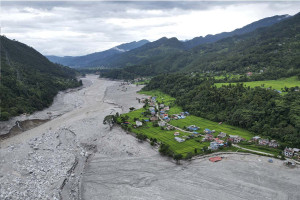
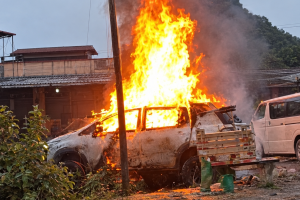
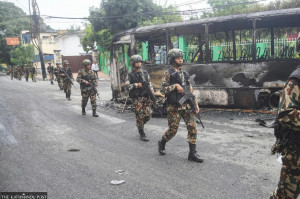
The government has introduced a new set of rules for domestic and foreign media outlets covering the recent Bhotekoshi floods.
According to the Department of Information Administration and Press Branch under the Ministry of Information and Communications, foreign correspondents are required to submit a copy of their passports and valid visa, along with an appointment letter/agreement with their media organisation.
According to Govinda Prasad Pandey, spokesperson for the Department of Information, this is not a new policy or arrangement. The issuance of press passes has long been a regular process of the department.
“The same arrangement has long been in place for foreign journalists as well, operating under the regulations and procedures governing print and broadcasting. The existing provision has simply been continued,” Pandey said.
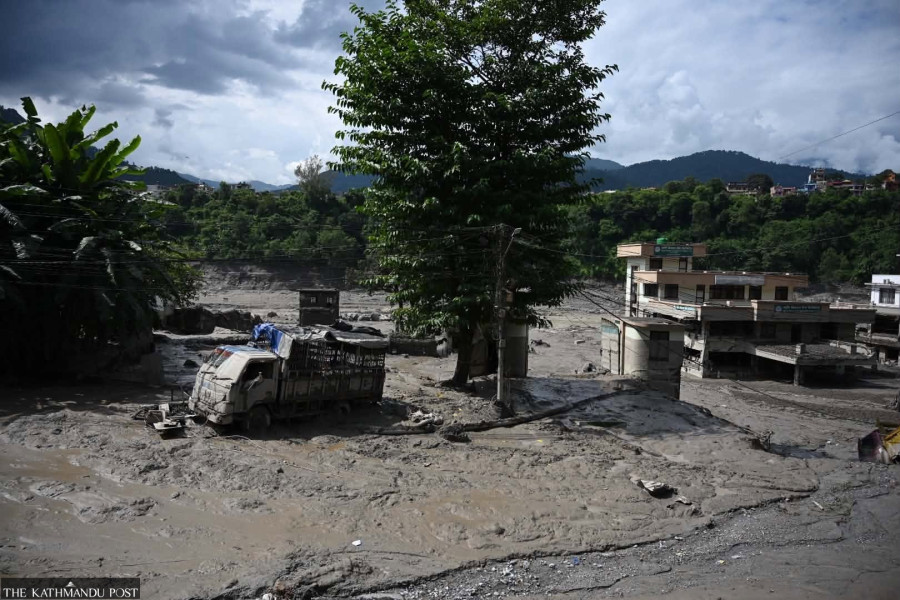
After the deadly floods in the Bhotekoshi River on early Wednesday, many foreign correspondents from international media have reached areas severely affected by the disaster.
The department has also asked foreign journalists to submit a recommendation letter from their media organisation and a recommendation letter from the foreign ministry of the country concerned or from its embassy/consular office in Nepal.
“It is not a permanent rule,” a government official told the Post, adding, “it is only aimed at streamlining the current disaster coverage.”
Foreign correspondents must also submit an identity card issued by their organisation and details of their pay and perks.
After submitting these documents, correspondents should apply online.
“After the online application is approved, the applicant must personally appear at the department to collect the press representative certificate and journalist identity card, carrying two passport-size photographs in the prescribed format,” said the notice.
Talking to the Post, Pandey said: “The office will remain open and provide services even on public holidays so that foreign journalists coming to Nepal for reporting do not have to wait or face any inconvenience.”
Pandey also clarified that foreign journalists who have already arrived in Nepal but have not obtained a press pass must obtain one before undertaking reporting. “If someone reports without a press pass, it will not be considered legal, and not to have completed the required procedures,” he said.
According to the notice, for Nepali applicants seeking a press representative certificate or journalist identity card must apply online through the department’s website, www.doib.gov.np.
Nepali journalists should submit a copy of their citizenship certificate, appointment letter issued by the media organisation, and a recommendation letter from the organisation for the issuance of a press representative certificate.
“Academic qualification certificates, a certificate showing the organisation’s registration has been renewed/updated, a commitment letter and certified bank details showing receipt of salary as well as regular allowances should be produced,” the notice reads.
Meanwhile, a communications ministry official, requesting anonymity, said the notice was issued to keep track of foreign journalists working in the country.
Anil Giri is a Chief Sub Editor covering diplomacy, international relations and national politics for The Kathmandu Post. Giri has been working as a journalist for more than two decades, contributing to numerous national and international media outlets.




 25.12°C Kathmandu