School bill is caught between who decides and who pays
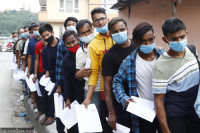
Local governments resist federal encroachment, while private schools want policy certainty and teachers better pay and benefits. Community schools continue to collect fees under various headings, they said, because government funding is insufficient to meet their operating costs. Post Photo
The government’s attempt to overhaul Nepal’s school education system has run into competing demands from local governments, private school operators, teachers and educationists. Replacing a law enacted more than five decades ago will require resolving those divergent interests.
The Ministry of Education and Sports has begun drafting a new School Education Bill after completing consultations across all seven provinces. Stakeholders who took part in the process have called for free and compulsory education to be implemented, local governments’ constitutional powers to be protected, private investment to be safeguarded, and teachers’ working conditions to be improved.
The proposed legislation is intended to replace the Education Act-1971. Successive governments have attempted to introduce a new law since 2017 to reflect Nepal’s transition to a federal republic, but political instability and opposition from various interest groups have repeatedly stalled the process.
One of the biggest challenges is reconciling the constitutional guarantee of free education with the reality facing schools and families.
Educationist Bidyanath Koirala, who took part in consultations across provinces, said the demand for implementing free and compulsory education was consistent nationwide.
“The overwhelming feedback from provinces is that ‘compulsory’ education must be guaranteed by local governments, and free education must be heavily supported through financial collaboration with the federal government,” Koirala said during a discussion in Kathmandu on Sunday.
Nepal’s Constitution recognises education as a fundamental right and guarantees compulsory education up to grade 8 and free education up to grade 12. Yet around 750,000 children remain outside the school system, according to government statistics, while many students drop out before completing Grade 8.
Stakeholders said the constitutional promise of free education has also been undermined by underfunding. Community schools continue to collect fees under various headings, they said, because government funding is insufficient to meet their operating costs.
The bill has also revived a dispute over the division of powers between the federal and local governments. Under the Constitution of Nepal, local governments are responsible for managing school education up to grade 12. Local representatives have accused the federal government of trying to centralise powers that were constitutionally devolved to them.
Bhim Prasad Dhungana, president of the Municipal Association of Nepal, said local governments had already demonstrated their ability to provide free education despite inadequate teacher quotas from the federal government.
“Even though the federal government has completely failed to provide the necessary teacher quotas, several rural and urban municipalities have successfully implemented free education using their own limited resources,” Dhungana said. “The upcoming Education Act must formalise and protect this local initiative.”
Parbati Sunar, secretary of the National Association of Rural Municipalities in Nepal, similarly urged the federal government not to encroach on local governments’ constitutional authority. She also called for measures to restore the dignity and self-respect of teachers at the local level.
Private schools, meanwhile, are seeking greater certainty over their future. A draft considered before the dissolution of parliament last year proposed gradually converting private schools into non-profit trusts. This proposal prompted strong opposition from school operators who warned that the measure would drive private investment out of education.
Yuvraj Sharma, president of the Higher Institutions and Secondary Schools’ Association Nepal, called for a long-term policy on private investment.
“We want to believe that the state intends to regulate the private sector whilst simultaneously encouraging it,” Sharma said. “The new School Education Bill must provide a clear and stable legislative roadmap for the next two to three decades. We should also be exploring avenues to attract foreign direct investment into our education system.”
Subash Neupane, president of National PABSON, said inadequate investment in community schools was hampering the delivery of technology-driven education. He called for school mapping rules to apply to private schools as well.
PABSON President Krishna Prasad Adhikari opposed the existing requirement that private schools provide scholarships to 10 percent of their students. He called for the quota to be reduced to five percent and strictly enforced, arguing that the current provision was unsustainable for many schools.
Adhikari also said local governments should not arbitrarily cap school fees without considering individual schools’ infrastructure and operating costs.
More than a dozen student representatives at Sunday’s discussion called for students to have a greater role in policymaking. They also demanded a curriculum focused more heavily on practical skills and modern technology.
Teachers’ rights are another major point of contention. Laxmi Kishore Subedi, president of the Nepal Teachers’ Federation, warned that teachers would launch nationwide protests if the new law failed to guarantee their professional rights and welfare.
He called for job security and minimum remuneration standards for teachers and school employees, including Early Childhood Development facilitators, Grade 12 teachers, temporary staff and relief teachers, with benefits comparable to those of federal civil servants.
The government last week announced a blanket monthly wage increase of Rs5,000 for ECD teachers and school employees. Teacher unions, however, have described the measure as a temporary fix, saying many educators continue to survive on low wages funded through federal grants and irregular support from local governments.
“Why is the teaching profession failing to attract new talent? Why are current teachers abandoning the profession for other careers?” Subedi said. He urged greater investment in infrastructure and human resources in community schools, particularly in remote districts.
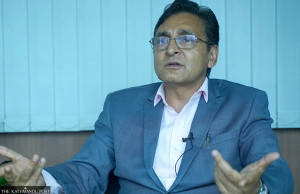
Education Minister Pokharel said the new law would require coordination among the three levels of government. He acknowledged that local governments have constitutional authority over school education but said those powers must be accompanied by corresponding responsibilities.
“The constitution has granted local governments the right to oversee school education, but with those rights come profound responsibilities,” he said. “One cannot demand constitutional rights whilst running away from the corresponding duties.”
Pokharel said the government would pursue a transparent legislative process and acknowledged deep-rooted problems in the education sector.
According to Shailendra Jha, an adviser to the education minister and led the provincial consultations, the ministry has received detailed recommendations from teachers, school employees, private school operators and local officials.
Jha said the ministry had begun drafting the bill based on the nationwide feedback and aimed to table the legislation in the House of Representatives well before the upcoming winter session of parliament.




 26.02°C Kathmandu