Chief Minister Shah weighs confidence vote as Sudurpashchim sinks deeper into budget crisis
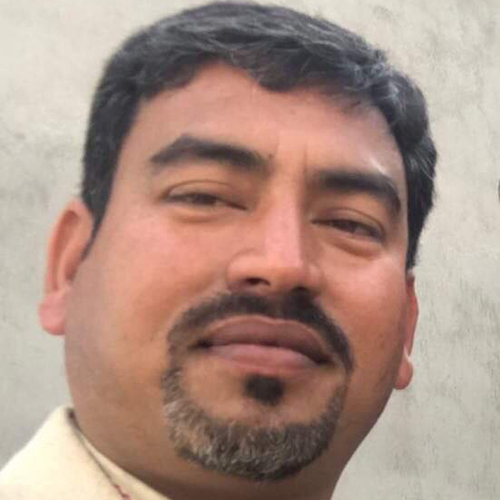
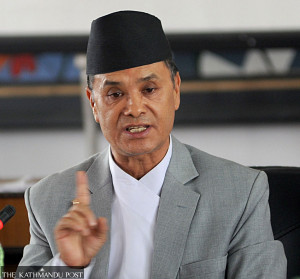
Reduced to a minority after the UML withdrew support, the chief minister is banking on talks in Kathmandu as the province remains trapped in a fiscal vacuum. Chief Minister Kamal Bahadur Shah File Photo
Sudurpashchim Province is grappling with twin crises after the provincial government failed to endorse the budget for the new fiscal year, and Chief Minister Kamal Bahadur Shah lost his majority when the CPN-UML withdrew support from the ruling coalition.
The political uncertainty has fuelled debate over whether Shah should resign or seek a vote of confidence in the Provincial Assembly within the 30-day constitutional deadline. The prolonged deadlock has also raised concerns over how long the province can function without a budget.
The Nepali Congress-led coalition, which included the UML, tabled the budget for the next fiscal year in the Provincial Assembly on June 15 with the backing of ministers from both parties. The alliance unravelled after the UML rejected the budget and registered a proposal to cut the allocations of six ministries to a token Re1 each.
Shah responded by dismissing four UML ministers, including a minister of state, on July 15. The UML then formally withdrew its support, leaving the government in a minority. The opposition Nepali Communist Party (NCP) immediately demanded that Shah resign to make way for a new administration.
Shah, however, has ruled out stepping down for now, saying he is awaiting the outcome of discussions among senior leaders in Kathmandu.
“There is no need to rush. The constitution provides a 30-day window,” Shah told thePost. “Talks are under way among the top leaders at the centre, and I believe a solution will emerge.”
Under the constitution, a chief minister must seek a vote of confidence within 30 days if a coalition partner withdraws support or if a no-confidence motion is registered.
“Rather than resigning, I will test my majority on the floor of the assembly in line with the constitution,” Shah said. “We are also holding discussions with various political parties in the province.”
Before the coalition collapsed, the government commanded 29 seats, with 18 lawmakers from the Nepali Congress and 11 from the UML. In the 53-member Provincial Assembly, 27 seats are required for a majority.
With the alliance broken, the NCP has become the key player. The party holds 20 seats, excluding the Speaker and one suspended lawmaker. The assembly also has one member from the Rastriya Prajatantra Party, while one seat is vacant.
Any new government will require an alliance between at least two of the three largest parties, the NCP, Congress and UML. Congress president Gagan Thapa has already said his party will not support a three-party coalition in the province.
After losing UML backing, Shah sought support from the NCP, but the party has remained firm that he must first resign.
“Since the chief minister has lost his majority, our parliamentary party has decided that he should resign to pave the way for a new government,” said Khag Raj Bhatta, leader of the NCP parliamentary party. “We have already resolved to take the initiative to form a government under our leadership.”
The political impasse has also pushed the province into a fiscal crisis. With no alternative arrangement made before the end of the previous fiscal year, Sudurpashchim entered a financial vacuum on July 17.
It is the second such crisis in the province. Political disputes last year also left Sudurpashchim without a budget for three months.
Without an approved budget, government agencies cannot authorise public spending. Shah said the government is considering introducing an ordinance to allow advance expenditure. According to him, the executive still has the authority to bring a bill for revenue collection and meet administrative and operational expenses.
Although the fiscal vacuum has halted government spending, revenue collection and essential public services will continue. In the absence of a Financial Act, revenue will be collected under the Provisional Revenue Collection Act.
Chakra Bahadur Malla, the UML chief whip in the province, blamed Shah entirely for the crisis.
“The chief minister made no effort from June 15 to July 15. We had made it clear immediately after the budget was presented that we would not support it,” Malla said. “Had he initiated dialogue earlier, we could have reconsidered the issues affecting the province.”
Civil society leaders have criticised the repeated fiscal paralysis, calling it a reflection of political irresponsibility.
“This provincial government has shown no signs of improvement. Political leaders have treated the province like a toy,” said Pramod Pathak, a civil society activist in Dhangadhi. “We hear nothing but stories of mismanagement. Failing to pass the budget on time raises serious questions about the relevance of the provincial structure.”




 15.66°C Kathmandu