



 15.52°C Kathmandu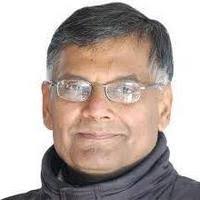
Tue, Oct 27, 2026
Columns
Deciphering the cacophony of silences and the roar of approval
Whatever PM Shah does, a phalanx of performers is ready to present his act as a ‘masterstroke’.
bookmark
CK Lal
Published at : October 6, 2026
Updated at : October 6, 2026 22:28
‘Contempt of court’ is meant to shield the institution from targeted attacks that seek to delegitimise its authority by unfairly questioning its integrity. However, the line between politics and justice gets somewhat blurred when constitutional issues are decided by the bench rather than the legislature that is relatively open to criticism. The judicial overreach in Nepal dates to the 1990s, accompanied by a patchy record of public critique.
The perils of political judgement became clear to Justice Bishwonath Upadhyaya (1930–2014) when the CPN (UML) dragged his decision to restore a dissolved Pratinidhi Sabha in August 1995 into street protests. Merits of the judgement notwithstanding, the party became an instrument of politicising the judiciary.
The statute of 1990 fell by the wayside when Maoists began to fire upon the constitutional order—howsoever imperfect it was and often misused by the executive—from the countryside in 1996. The interim constitution of 2007 was meant to be a legal bridge to transform the Nepali polity, but it was instead used to assert the power of the old order.
When the Supreme Court ruled on November 25, 2011, that the Constituent Assembly (CA) had no right to extend its term beyond the absolute maximum of six months under the doctrine of necessity, it did two things. First, it placed the CA under the ambit of a transitional statute as if it were a standard and routine governing document promulgated under normal circumstances. Secondly, the sovereign rights of a transformative body were circumscribed under this perilous doctrine.
By precipitating the self-dissolution of the CA on May 25, 2012, the Supreme Court asserted its supremacy in an unmistakable manner. The process of politicisation was complete with the enthronement of Chief Justice Khil Raj Regmi as the Chair of the Interim Election Council on March 14, 2013. It may have been a coincidence, but three of the judges who had agreed with his judgement served as chief justices of the country.
After Justice Regmi, Justice Cholendra Shamsher Rana is perhaps the second most controversial figure in Nepal’s post-1990 judicial history. He escaped impeachment by the skin of his teeth due to a procedural closure rather than a substantive judgment. He retired in suspension but without losing his pension and other benefits.
His official conduct aside, Rana isn’t a very agreeable person. Superciliousness extrudes from his pores even during chance meetings with whoever he considers a nobody. Despite all that, when he was picked up at an odd hour without a formal arrest warrant in the manner of an ‘abduction’, questions should have arisen whether law is still supreme in the land of Pashupatinath, Sagarmatha, Buddha and one-horned rhino.
Rana’s brother claimed that the police told him the former Chief Justice had been taken away for his own safety because he faced risks from some ‘Gen Z protestors’. The government’s spokesperson, however, denied what the affected party had told the media based on what had been reported to him. If the risk was indeed from a Gen Z group, the police certainly had reason to be terrified of providing security to the former justice at his own residence.
After widespread arson, lynching of security personnel and houses set ablaze with people still inside on September 9, 2025, nobody dared take threats from Gen Z protestors lightly. Mercifully, risks to Rana’s life subsided within 24 hours in what amounted to unlawful custody, and he was dropped back at his house, presumed to have been already fortified with fail-proof security.
Cowering silence
Irrespective of professional conduct or personal attributes, every citizen is entitled to freedom from unlawful detention. Rana was taken into police ‘protection’ without due process. The Human Rights Commission (NHRC) was denied access when its officials tried to reach him to assess the situation. In a normal society and functioning polity, such an episode would have created a public uproar. But the cacophony of silences in Kathmandu suggests three popular English expressions.
The first is the title of a novel adapted into an Oscar-winning film: The Silence of the Lambs. Any attempt to summarise a complex work of art in a sentence is, at best, foolhardy. But silence must not be confused with acquiescence is an important theme of the novel. The Rana family appears to have realised that discretion is the better part of valour in the post- Chartreuse Revolt order.
The second phrase—drawn from Sir Arthur Conan Doyle’s 1892 Sherlock Holmes short story—depicts an expected response whose absence is itself significant: ‘The dog that didn’t bark’. Imagine if a Maoist government had picked up a former Chief Justice in the middle of the night. The media would have gone crazy denouncing absolutism. Barring a few honourable exceptions, Rana’s ‘capture’ elicited meaningful silences.
The third one comes from the title of a century-old book by the French philosopher and essayist Julien Benda, later published in English as The Treason of the Intellectuals. Benda argued that ‘intellectuals’ have a moral duty to speak for truth and reason. Treason occurs when they abandon their objectivity to champion partisan politics or, perhaps, lapse into silence in the face of injustice. Nepal’s chauvinistic progressives and latte liberals are infamous for being ethnonationalists. They appear to have lost their enthusiasm even for the supremacy of law.
Roaring approval
Driven by a vindictive vision, Prime Minister Balendra Shah began his national term by reviving a task he had been forced to leave unfinished as Kathmandu’s mayor: Clearing unauthorised settlements of landless squatters without an ounce of intent to resettle. Bourgeois aesthetics celebrate the sanitisation of urban blights. As Kathmandu’s upper-middle class drives from Kopundole to Thapathali, they no longer have to gaze upon the ‘wretched of the earth’ from the air-conditioned comfort of their sleek EVs.
The cohort of vengeful ‘nepo-brats’—the entitled offsprings of Panchayat-era beneficiaries who fuelled the Balen phenomenon—craved nothing as intensely as the humiliation of post-1990 politicos. They rejoiced when former Prime Minister Khadga Prasad Sharma Oli—his own despicable record notwithstanding—was arrested on flimsy grounds and an Interpol notice was slapped on another former Prime Minister Sher Bahadur Deuba. Shah’s zealots were ecstatic when nearly 1,600 political appointees of previous governments were purged overnight through an ordinance.
Right-wing revolutionaries are jubilant that their idol—a republican version of King Mahendra in dress and demeanour—has been treating the Parliament with as much autocratic disdain as the Machiavellian monarch. Shah refused to address its inaugural session, walked out midway through President Ram Chandra Paudel’s address, dodged questions for as long as politically possible and has attended fewer than 15 percent of its sittings to date.
Whatever Shah does, a phalanx of performers is ready to present his act as a ‘masterstroke’—an expression borrowed from sycophantic conch-blowers of the Hindutva regime in India. The panegyric being sung in praise of a perfunctory speech at UNGA belongs to the realm of devotion rather than admiration.
Given the vast corpus of historical speeches available on the internet, and the exhaustive data surrounding the ‘Himalayan Tsunami’ in the media, a large language model could, with the proper prompts and cues, easily churn out an impressive oration. What it cannot so easily supply is the play of emotion across the face of the person delivering it. Words may now be summoned on demand; genuine conviction remains harder to fabricate. And the eyes reveal even less when the windows to the soul are safely hidden behind dark glasses.
In an era of cowering silences and fawning roars, it becomes all the more vital to speak without fear or fervour.
CK Lal
Lal is a writer and political analyst.


Most Read from Columns


Editor's Picks

What to know about the US trial over Mamta Kafle’s disappearance
NPL returns with bigger ambitions and global recognition
What’s new in the Nepal Premier League’s third season?
After Nepal’s recent disaster, it wants to test whether COP31 can deliver climate justice

Why does an hour long flight to Dhangadhi cost more than a flight to New Delhi?
E-PAPER | October 27, 2026

×