



 14.69°C Kathmandu
Sat, Oct 24, 2026
Columns
Celebration of upper-caste privilege or a national occasion?
The celebration of Janai Purnima highlights an urgent need to critically examine traditions that uphold upper-caste dominance in Nepal.
bookmark
Mitra Pariyar
Published at : August 24, 2026
Updated at : August 24, 2026 21:18
I prefer to describe the caste system in modern-day Nepal (and, of course, India) with the metaphor of the sewage system. Much of it is subterranean, invisible in public, but operative all the same. And it greatly influences every person, every home, every community and every government.
Whatever one may think of the incumbent government, sociologically speaking, there’s been a significant paradigm shift. I don’t just mean the generational change. After decades, a young Madheshi man from the lower stratum of society rules the country. In a long while, we haven’t had a leader who doesn’t wear a janai, a sacred thread.
An inglorious festival
It’s an irony, however, that the same executive head seems intent on promoting Hinduism in public life. Otherwise, he wouldn’t have held elaborate ceremonies with 108 Brahmins reciting Vedic mantras at his swearing-in.
Balendra Shah has little political will to strengthen the dignity and rights of the Madheshi communities and of the lower castes. We haven’t seen any signs of that in the past five months. His Cabinet may be working for change on many fronts, but it has done nothing to tackle structural change. They don’t talk about it, let alone do something about it. Nor do parliamentarians from the ruling Rastriya Swatantra Party (RSP) raise their voices for change in this area. Even some of the charismatic Dalit activists-turned-lawmakers, such as the controversial Khagendra Sunar, have remained silent.
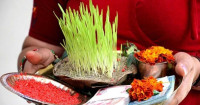
People would appreciate even a small gesture towards challenging Brahmanism. Jettisoning the festival of Janai Purnima from the list of national holidays would, for example, win the kudos of many Dalits and ethnic minorities. Janai Purnima falls on August 28 this year, heralding the festive season. It’s the day the upper castes change their janai, the sacred thread. The janai symbolises the ritual purity, cultural domination and political authority of the upper castes. So, this is strictly a celebration of Brahmins and Chhetris.
And yet, as a national holiday, the majority of the population that doesn’t receive the sacred thread—mainly Dalits and ethnic groups—are also made to celebrate the day as a special occasion. In other words, these communities are forced by the state, as it were, to applaud and affirm their own domination.
This has been the case since the Puranic period. The unclean or lower castes are ritually excluded by denying them the sacred thread. Thus, a festival like Janai Purnima re-affirms and consolidates caste hierarchy—in contravention of the constitution and law. Yet, many people celebrate the festival uncritically. Even the seasoned advocates of Dalit rights refuse to raise a voice against such state-sponsored events and activities that implicitly strengthen caste hierarchy.
It’s a pity, as aforementioned, that even a prime minister from the marginalised oil-pressing Teli community doesn’t see any issues with festivities like Janai Purnima. Is he blinded by his faith? Or perhaps he doesn’t dare do anything to upset the apple cart!
A tale of two professors
Time and again, the Madheshi communities witness inter-religious tensions, and the same happened a while ago. Opinion pundits, the media and the religious authorities were cautious not to inflame the situation and to maintain ‘social goodwill’. That’s the right approach, of course. Social goodwill must be promoted everywhere. It’s good that, after initial criticisms, the government took appropriate measures to resolve the problems.
The discourse about maintaining goodwill, however, is limited. It doesn’t focus on intra-religious issues—mainly caste issues—as much as on inter-religious issues. Both Hindu and Muslim communities must, of course, live in peace and harmony alongside each other, as they have always done in this country. The last thing we want is communal hatred and violence.
But the issues of caste hatred within the dominant Hindu communities are too great to ignore. It’s sad that nobody gives it a thought when they stress on ‘social goodwill’. In fact, inter-caste tensions have greater potential than inter-religious tensions. The way upper or cleaner castes exclude, humiliate and attack the lower or unclean castes is far worse than how a Hindu treats a Muslim in our country.
I was delighted to read a recent Onlinekhabar article by TU sociology professor and commentator Chaitanya Mishra. He hits the nail on the head by arguing that caste discrimination is a ‘special’ case of religious discrimination. I have been trying hard to bring religion into our debates about caste discrimination, with limited success. Even Dalit intellectuals refrain from problematising their clear religious injunctions that actively promote casteism.
Mishra’s line is brave and objective and very useful for promoting ‘social goodwill’. It targets the root problems. The slogan of social goodwill would mean nothing until caste-based ill-will and disharmony and even violence are allowed to persist, uncritically, like an open sewer.
Unfortunately, our line is still in a great minority. The majority attitude is reflected in another (emeritus) TU professor and well-known political commentator Surendra KC’s recent observations. Reacting to Sher Bahadur Deuba’s comments about the Hindu religion, KC argued that religion must not be brought into political debates and discussions. He said that we (that is, the elites from the dominant castes) must continue to follow our kul dharma at home and let people of different faiths and castes do what they want to do.
On the face of it, KC’s observation may seem harmless, but it has sinister objectives. He wants to preserve the caste hierarchy silently, as a domestic tradition—the anti-caste laws notwithstanding.
If we want to eradicate the seeds of social disharmony and communal violence, rather than merely reacting when problems appear, we must follow Mishra’s advice. We must problematise all social issues including those umbilically connected to the dominant religion and culture.
The religious and cultural matters are highly sensitive and challenging. They need to be re-imagined and reformed according to modern law. But not talking about them at all—as KC advises—is not a durable solution. People normally don’t even think, let alone talk about the sewer. But what happens when it’s blocked, broken or poorly managed?
Mitra Pariyar
A graduate of Oxford University, Pariyar is a Dalit rights activist who has worked in universities in Australia and England. Pariyar is affiliated with the Nepali Communist Party.



Most Read from Columns


Editor's Picks





E-PAPER | October 24, 2026

×