Why do women in literature keep turning into trees?
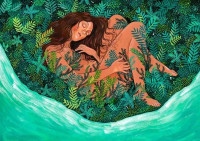
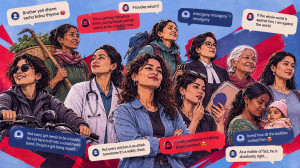
From Greek mythology to contemporary fiction, women escape violence by becoming trees. These transformations reveal a deeper crisis of faith in humanity and the world it has built. Illustration by Helena Perez Garcia for the documentary ‘Land of Gods’. Courtesy of Helena Perez Garcia
Much of the literature asks us to become more humane. Whether it is to deepen our empathy, broaden our imagination or harbour care for a shared world. Yet when certain women in literature find themselves cornered by violence, they start becoming less human. Instead, they become trees. Again and again.
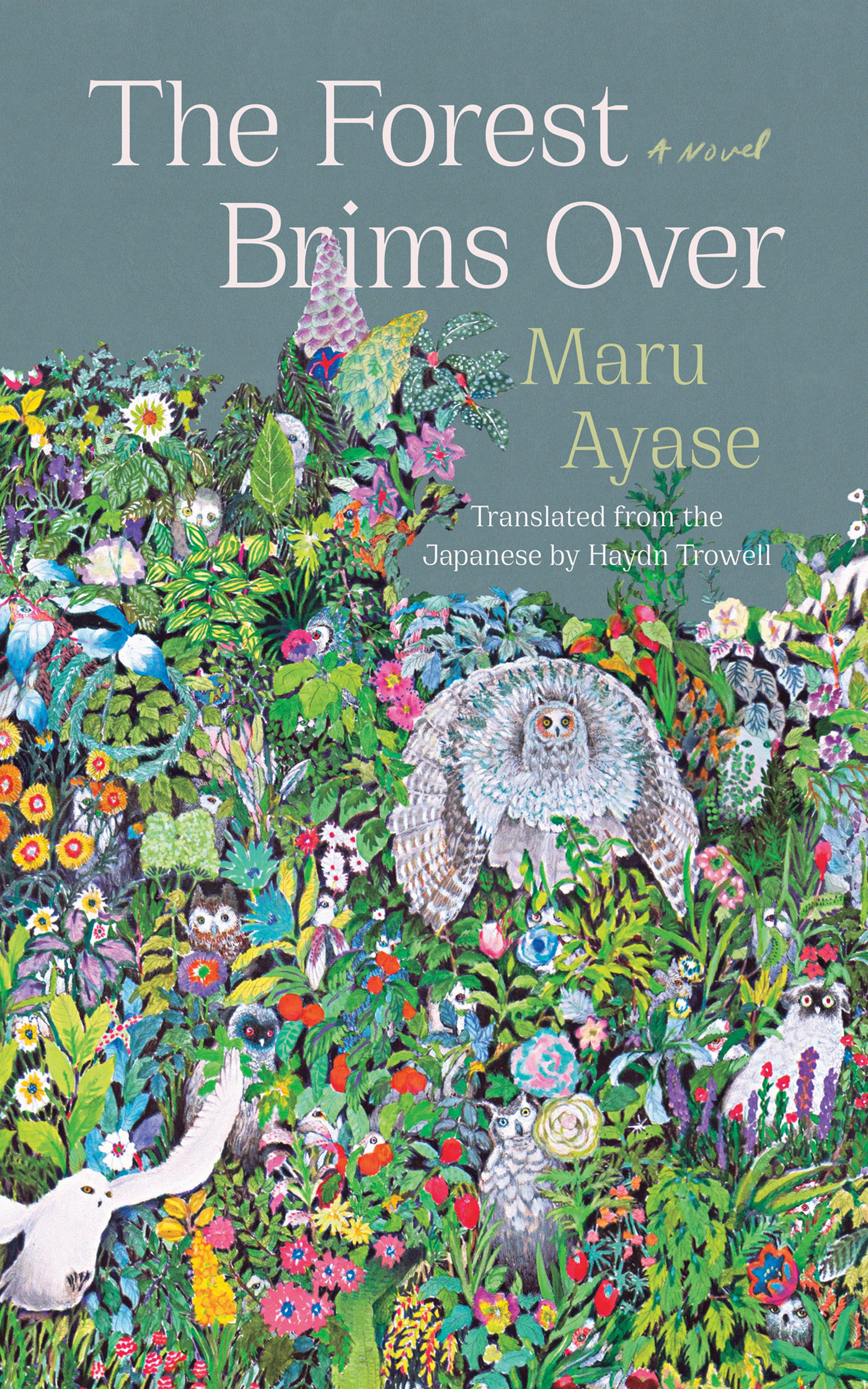
The recurrence of this literary device is so specific that it becomes difficult to ignore. Daphne dissolves into a laurel tree to evade Apollo’s pursuit. In the Lithuanian tale ‘Eglė the Queen of Serpents’, a mother and her children become trees after her brothers kill her husband. In Maru Ayase’s novel ‘The Forest Brims Over’, a wife transforms into a forest, escaping her husband’s control. Han Kang’s Yeong-hye in ‘The Vegetarian’ abandons meat, language, desire and eventually humanity itself, convinced she can live off of sunlight. In Shahrnush Parsipur’s ‘Women Without Men’, Mahdokht buries herself in the earth until she transforms into a tree, her roots extending where her body no longer can. None of these choices or transformations are arbitrary. Each emerges as a response to a human world that has become impossible to inhabit.
Violence is often understood as an active, external, tangible action. A war begins. A murder occurs. One body strikes another body. Yet beneath this visible violence lies a quieter, more ordinary violence that structures everyday life. Human civilisations have survived through logics of extraction. We turn forests into timbers, mountains into mines, bhumiinto jagga, rivers into resources, animals into meat. Almost as an instinct, we refer to mountains as challenges to conquer, land as property to possess and nature becomes a force to be tamed. We are all complicit in the violence of being human, having built a world that measures the earth not with our bodies, but by its usefulness to us.
Courtesy of Penguin Books UK
Women have historically occupied an eerily similar position. Like nature, they are imagined as something to cultivate, possess and legislate over. The pronoun ‘she’ for ‘mother nature’ feminises the earth while naturalising women’s availability. Both are expected to nourish endlessly while absorbing violation, to give without asking what they receive in return, to remain fertile, forgiving and endlessly available. Hence, domination of women and the domination of nature emerge from the same logic: the belief that the living world exists to be mastered over. The woman and the tree are never truly that far apart: both occupy the same place within human imagination, not fully subjects but beings fully subjected upon.
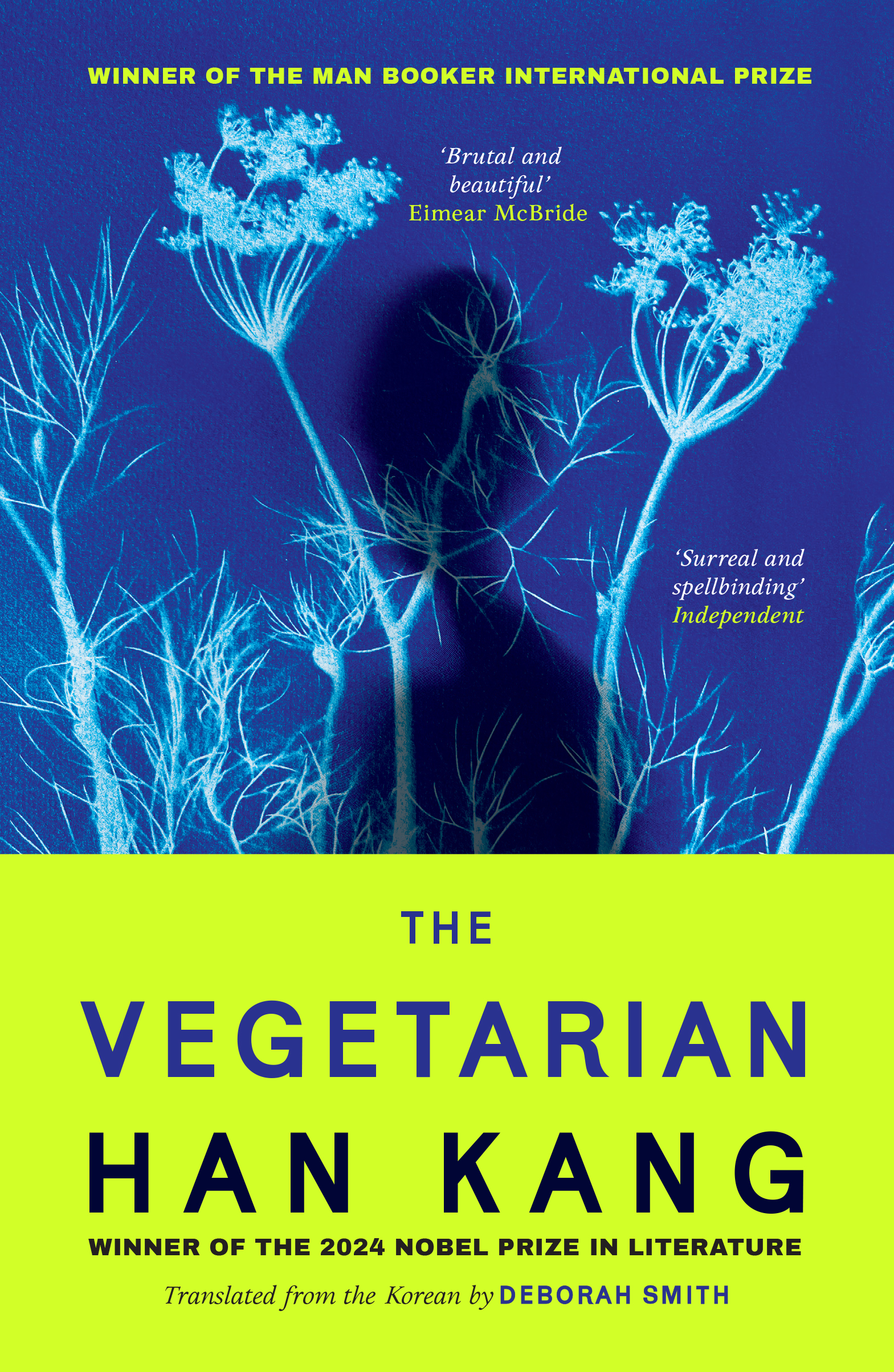
Han Kang’s ‘The Vegetarian’ begins with a simple refusal at its premise. Yeong-hye stops eating meat because of a dream she has. But placed amid the context of South Korea’s patriarchal society, her refusal becomes a radical act. By rejecting meat, she rejects participation in violence. She stops consuming, talking, desiring and fulfilling expected roles. Her body becomes the territory over which she can still exercise sovereignty.
As Yeong-hye withdraws from the human world, she becomes convinced that she is becoming a plant. To everyone else, it appears as a delusion; to her, it is the only coherent response left. Here, the core idea lies in the contradiction that the only life Yeong-hye can imagine free of violence is one that cannot sustain human life at all.
Instead of answering the question of whether Yeong-hye is insane, Han Kang further probes her readers. Medically and socially, Yeong-hye is labelled diseased or crazy. While she dreams of blood, everyone else continues eating dinner. But is adapting to violence considered sanity in the first place? What if the true madness lies in conforming so completely to violence that it no longer appears violent? Han Kang never asks us to believe if Yeong-hye is right but she leads to a much more uncomfortable question: why does this seemingly impossible longing still feel morally comprehensible to us?
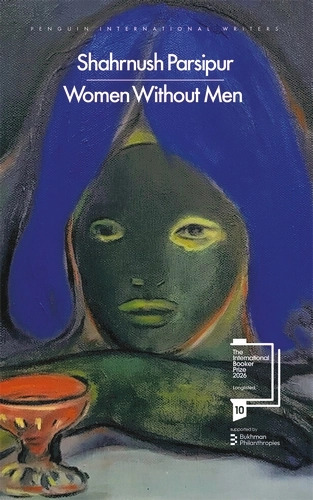
Courtesy of Penguin Books India
Shahrnush Parsipur’s ‘Women Without Men’ poses a similar question from another direction. Published in Iran, the novel challenged prevailing ideas about female sexuality and authority so much so that Parsipur was imprisoned while her works were banned for years. This response from the state exists almost as an extension of the novel itself. It continues to remind us that any woman who dares to imagine an alternate way of being is always subjected to some form of harm and treated as a threat to the existing order.
Much of the novel unfolds within a garden, outside the social architecture that governs women’s lives. Away from surveillance, it offers the possibility of existing beyond the structures that have disciplined the women who enter it.
Among the five women, Mahdokht carries this desire to its furthest conclusion. Terrified of the forms of life available to her as a woman, she buries herself in the earth and becomes a tree. Like Yeong-hye, she abandons mobility, sexuality and social existence for another form of life altogether, imagining liberation by leaving humanity.
These stories across centuries are woven together through a singular thread. Superficially, it may appear as tales of either magical realism or psychological warfare where women simply turn into trees but the thread actually stitches together an accumulation of literature that has reached the limits of its faith in humanity. The writers have stopped imagining a world where institutions become just or patriarchy reforms itself. Instead they imagine the stories of a world in the forms of ever-growing bark, roots, branches and leaves. This failure of imagination, however, is not of the writers alone but of the world they are writing about.
Courtesy of Counterpoint Press
So the ever-growing tale of bark becomes more reasonable than the unsettling reality of staying human. Across these stories, liberation does not arrive through reform, resistance or revenge, but through refusal. They become something beyond its reach.
We are so accustomed to treating hope as an inherent virtue that we rarely ask who gets to demand it. Is it fair to ask a woman to remain hopeful in the very world that has actively taught her nothing but despair, to keep believing in institutions that failed her and people who violated her? They do not owe the world their optimism. They do not owe it another chance. The refusal is not only about what has been done to them, but about what living within such a world asks of them. The violence inherent in becoming human is inseparable from the violence these women are made to endure simply for being human. The question, then, becomes larger than whether these women can survive the world. Can they remain innocent within it? And if the answer is no, who are we to demand that they keep participating?
A tree, then, appears as the last innocent thing because it alone seems to exist without conquest. A tree grows but does not invade. It receives from the earth but does not extract. It gives fruits, shade and oxygen without converting every relationship into ownership. Its roots participate in a hidden network of exchange. Symbolically, the tree stands on the opposite end of the spectrum from an empire.
It is not that the women of these stories want to become trees, but it is that they must. To extend the realm of a world that represents a way of existing without propagating or enduring any harm, they mustbecome trees. And perhaps the real tragedy then lies not in the fact that humanity is violent, but that when we imagine a life free from violence, we can no longer imagine it as human.
Adhikari is a Kathmandu-based writer and a student of psychology and social work. Her writing explores memories, literature and intersections of the personal and political, often through a feminist lens.




 8.12°C Kathmandu