Inside one of Nepali cinema’s most enduring partnerships
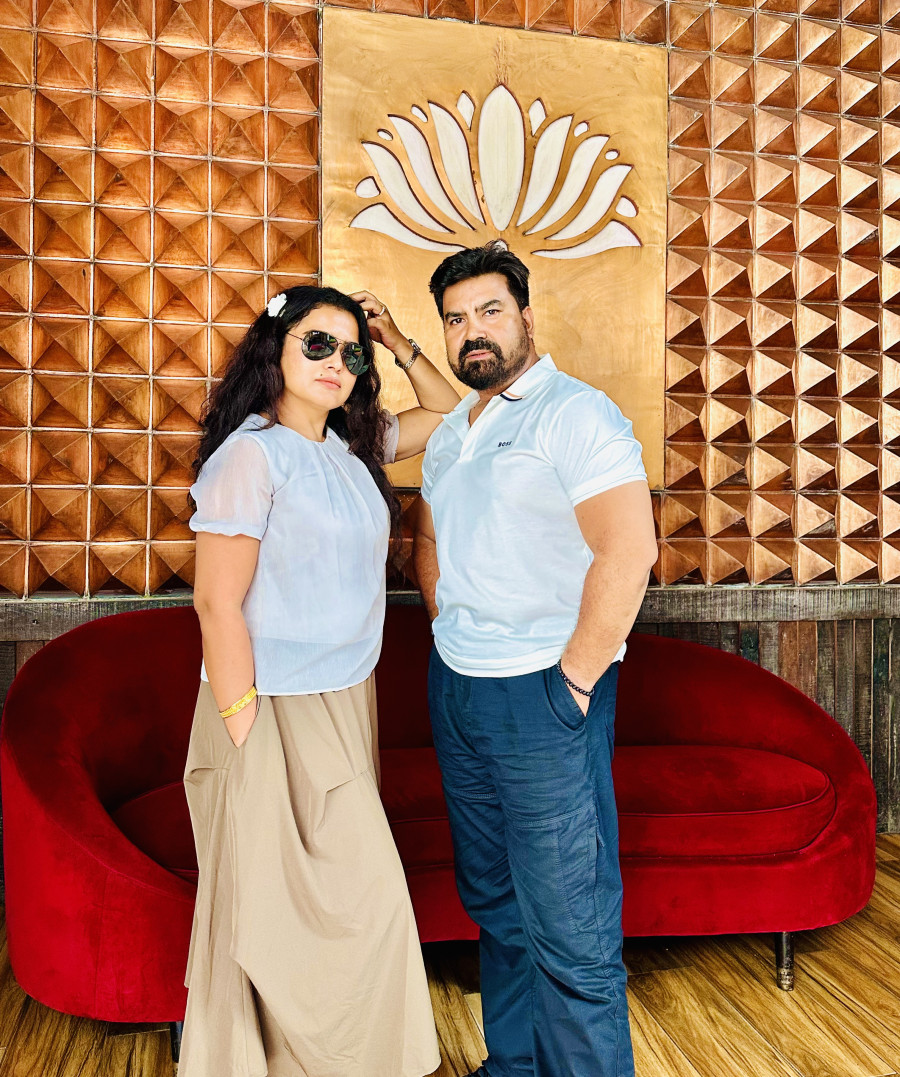
Actress Rekha Thapa and director Shabir Shrestha have forged a rare creative partnership across eight feature films over 25 years. Ahead of their new film, the two look back on what has kept it going. Actress Rekha Thapa and director Shabir Shrestha have forged a rare creative partnership across eight feature films over 25 years. Photo: Courtesy of Shabir Shrestha
Director Shabir Shrestha’s voice trembled with emotion as he stood to address a public gathering during the release of his film ‘Kali’ in 2013. “Behind every successful man stands a woman—whether she is a mother or a wife,” Shrestha said, adapting an old saying. “Behind my success stands my sister—Rekha Thapa.”
More than a decade later, that bond remains the foundation of one of Nepali cinema’s most enduring actor-director partnerships. Their latest collaboration, ‘36 Ko Aankada’, produced by Thapa herself, is set to hit theatres on December 3. Of the two dozen films Shrestha has directed so far, eight feature Thapa in the lead role.
“It was Rekha who trusted me and made me a director for the very first time,” Shrestha told Kantipur recently.
Their professional journey began nearly 25 years ago on the set of Anish Koirala’s ‘Mitini’. Thapa was still in her teens, while Shrestha worked as the chief assistant director, coaching actors on their delivery. “Rekha would read a long dialogue once and never forget it,” Shrestha recalls. “Whenever she was unsure, she would ask me how to approach a scene. She was hardworking and fearless.”
Shrestha continued as chief assistant director on several subsequent projects starring Thapa, including Akash Adhikari’s ‘Shasan’. By then, their camaraderie had deepened into a sibling-like bond, with Shrestha affectionately calling her ‘Nani’.
During the Pokhara shoot of ‘Shasan’, Adhikari had to return to Kathmandu for two days, leaving Shrestha in charge. “Taking over the reins for those two days gave me the chance to witness his true capability,” Thapa says. “From shot breakdowns to camera angles and framing, he handled everything brilliantly. I was deeply impressed.”
While filming near a temple, Thapa asked him directly, “Don’t you aspire to become a director?” Shrestha replied, “Of course I do. But who will give me the chance?”
“Let me hear your ideas this evening,” she told him. That night, Shrestha narrated two or three stories. By the time he finished, Thapa had made up her mind. In front of the entire ‘Shasan’ crew, she announced, “Shabir will direct the next film under Rekha Films.”
Back in Kathmandu, she pitched the idea to producer Chhabi Ojha and urged him to see the same passion in Shrestha that Ojha had once recognised in her during her debut film ‘Hero’. Ojha initially refused, but Thapa stood firm until he agreed to listen. “I was busy with some work when Chhabi sir called me to his house,” Shrestha remembers. “I went over and narrated the story.”
Ojha remained sceptical of ‘Kasle Choryo Mero Man’, whose narrative style departed sharply from mainstream conventions at the time. Thapa insisted, “He’d make for a formidable director. Trust me.”
Once filming began, Ojha grew anxious as production stretched to 70-80 days. “What have you been shooting all this time? You are going to ruin me,” he complained to Thapa. Yet Thapa saw promise in Shrestha’s restrained, creative approach, which kept budgets in check without sacrificing quality. “I had one hundred percent faith in him,” she says.
When Ojha finally reviewed the edited footage, his doubts vanished. He telephoned Thapa in excitement: “Rekha Madam, I have truly hired a remarkable director.” He went so far as to compare Shrestha’s visual flair to Indian filmmaker Sanjay Leela Bhansali. Released in 2010, ‘Kasle Choryo Mero Man’ became a major commercial triumph that launched Shrestha’s career and cemented their partnership.
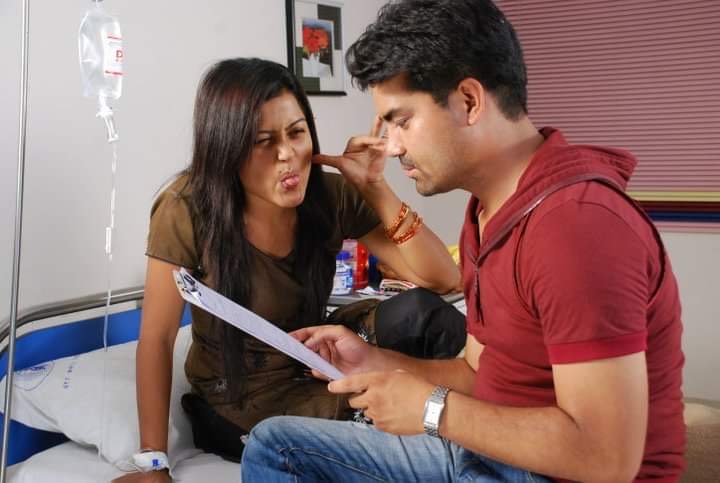
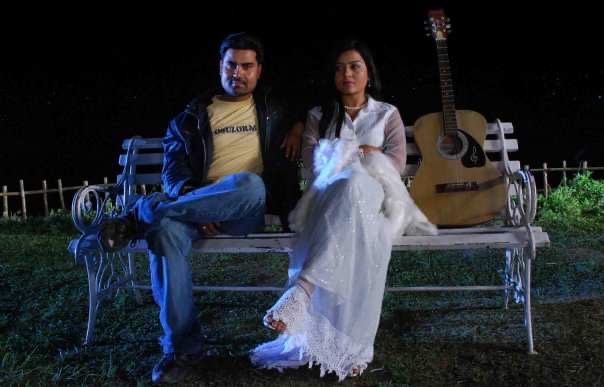
Under Rekha Films, the duo went on to deliver hits including ‘Hamesha’, ‘Kali’, ‘Tathastu’, and ‘Rampyari’. Thapa emerged during the 2010s as one of Nepali cinema’s few bankable female stars capable of carrying women-centric action dramas independently at the box office, reshaping commercial storytelling in the Nepali film industry.
Still, Thapa admits a lingering regret. “I feel I have done some injustice to Shabir dai,” she says, “because his natural filmmaking style is best suited to romances like ‘Kasle Choryo Mero Man’.”
In their upcoming collaboration, ‘36 Ko Aankada’, Thapa plays a police officer. Shrestha often jokes with her, “Nani, in my films I either make you a princess or a commander.” Originally titled ‘Kali 2’, the project was renamed after Thapa decided against trading on past success. “Rather than living off the interest of an old title, we needed to start fresh,” she explains.
Both describe ‘36 Ko Aankada’ as a social drama examining contradictions within human relationships. “It raises issues that will compel audiences to pause and reflect,” Thapa says.
Both appear hopeful that their new venture would turn out to be as enduring as their partnership.
Shrestha says their long term collaboration stems from intuitive understanding. “We have worked together so extensively that when I write a scene or dialogue, I already know how Rekha will perform it,” he says. “And on set, she understands what I want with a single gesture.”




 8.12°C Kathmandu