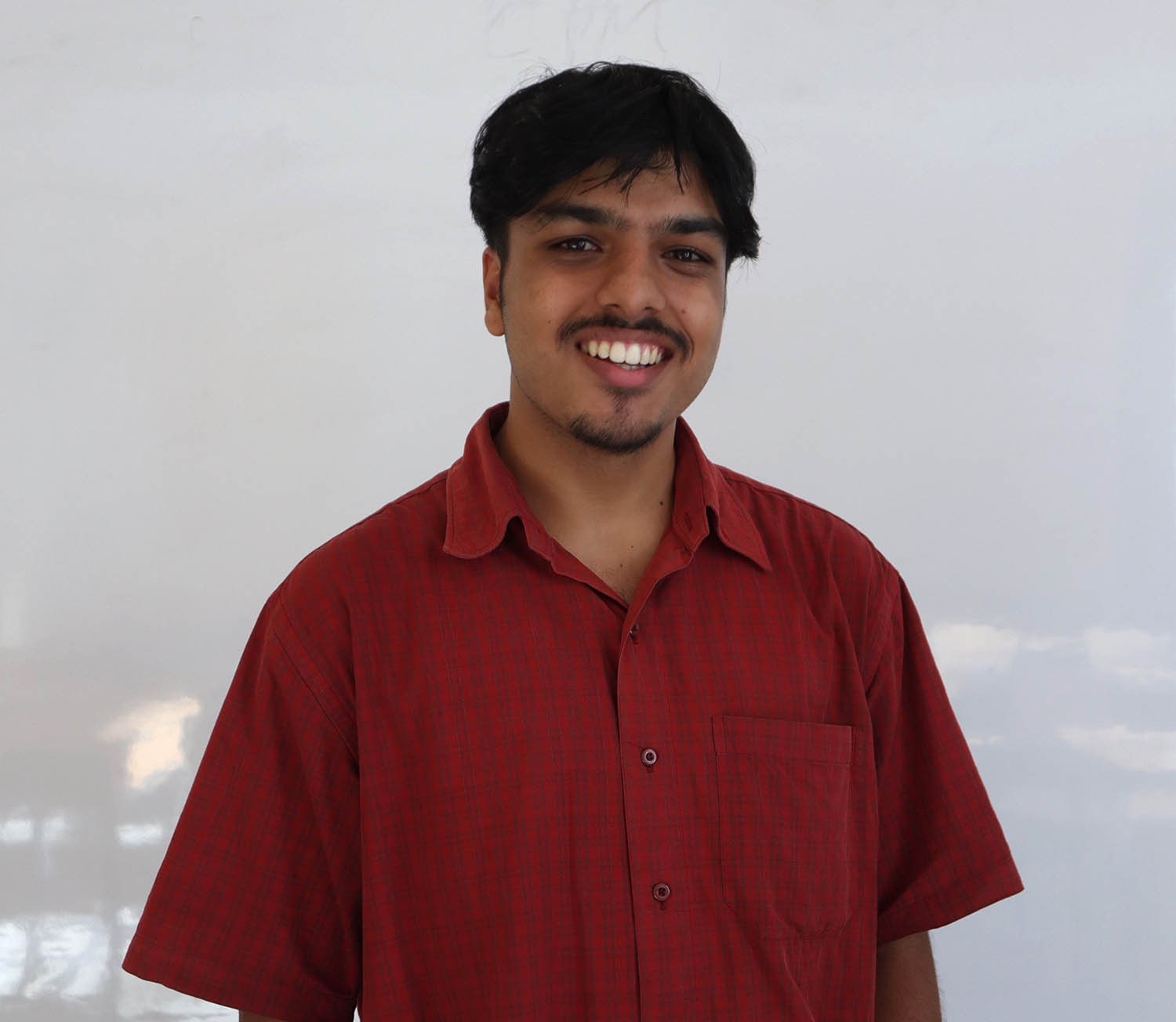
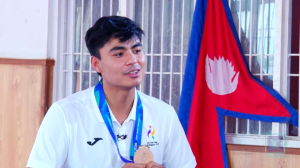
Abinash Bikram Shah had his ear torn for watching television.
Every night after dinner, his mother, Sudha Shah, would assign him homework and do the dishes. But he would sneak out, skipping the work, to his neighbour’s house and watch the glaring screen, agape.
It was in one such escapade that his infuriated mother stormed up the stairs and dragged her son by his ear. The upper attachment of the cartilage gave way in the process.
Almost four decades later, Shah won the Jury Prize at the 2026 Cannes Film Festival’s ‘Un Certain Regard’ for his film ‘Tiniharu’.
Sitting across from me at his Lalitpur office table, Shah picks at the tea bag tag hanging from his mug. Less than a week remained until the release of ‘Tiniharu’ in Nepal. “I’m not sure how the Nepali audience will perceive the film. My family and friends will be watching it,” he said.
Shah speaks in a soft, trailing cadence—my recorder often struggled to hold onto his voice. His jaws move ever so slightly as he talks, and his head is always tilted upward. He is unafraid of pauses, letting them linger as he takes his time to form sentences. Sometimes, he shoots my questions back at me.
Like this one time, when I asked him what films meant to him, Shah went on to explain how films make him feel more human, that they open new doors for him, allow him to experience emotions that may have been stranger before, and show how imperfect we all are. “What do films mean to you?” he then asks me.
As we continued our conversation, Pushpa Thing Lama started snoring from under the table.
Lama, who plays the protagonist in the film, is as sensitive as she is outspoken. She spoke highly of Shah with a startling tenderness. In our single conversation, she called him “kohinoor”, her “real-life hero”, “a kind-hearted person”, and “the soil that nourishes the plant”. At one point, she started praying, “Bhagwan! Please send me this person in my next life as well!”
Although the rigour of the workshop days led her to question herself, “Whose money have I stolen to bear this torture?”, Lama says that their bond started blooming early on. She remembers how Shah had arrived in her hometown in Nawalparasi after a mere phone call of invitation for her niece’s annaprashan (a ritual that marks an infant’s first intake of solid food). They would have long conversations over the story and what they were really trying to achieve with the film.
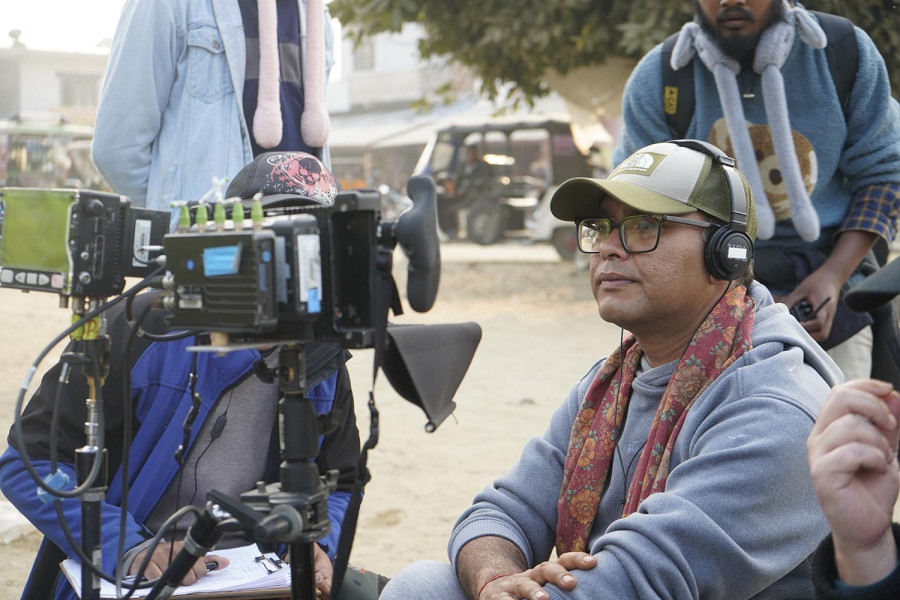
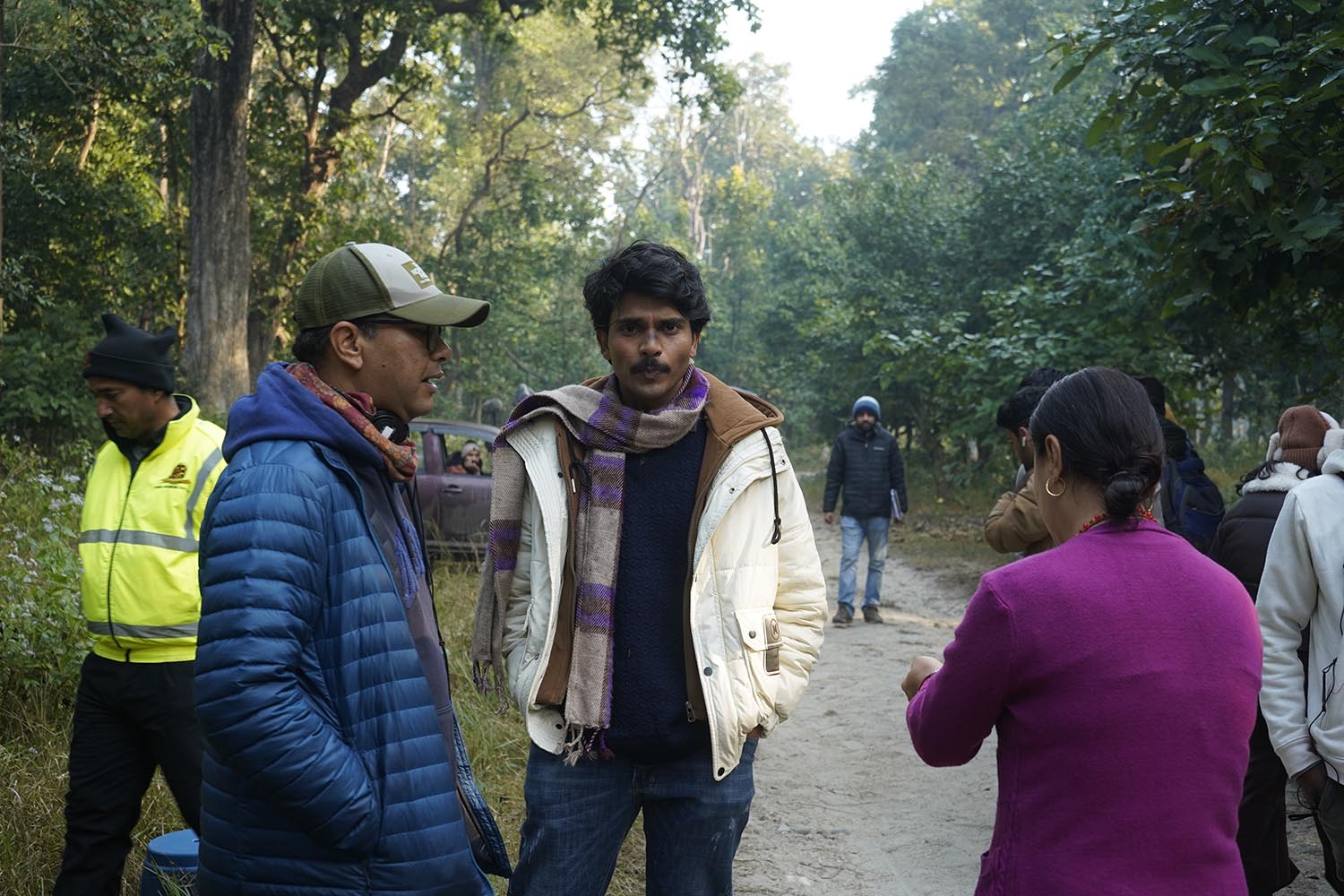
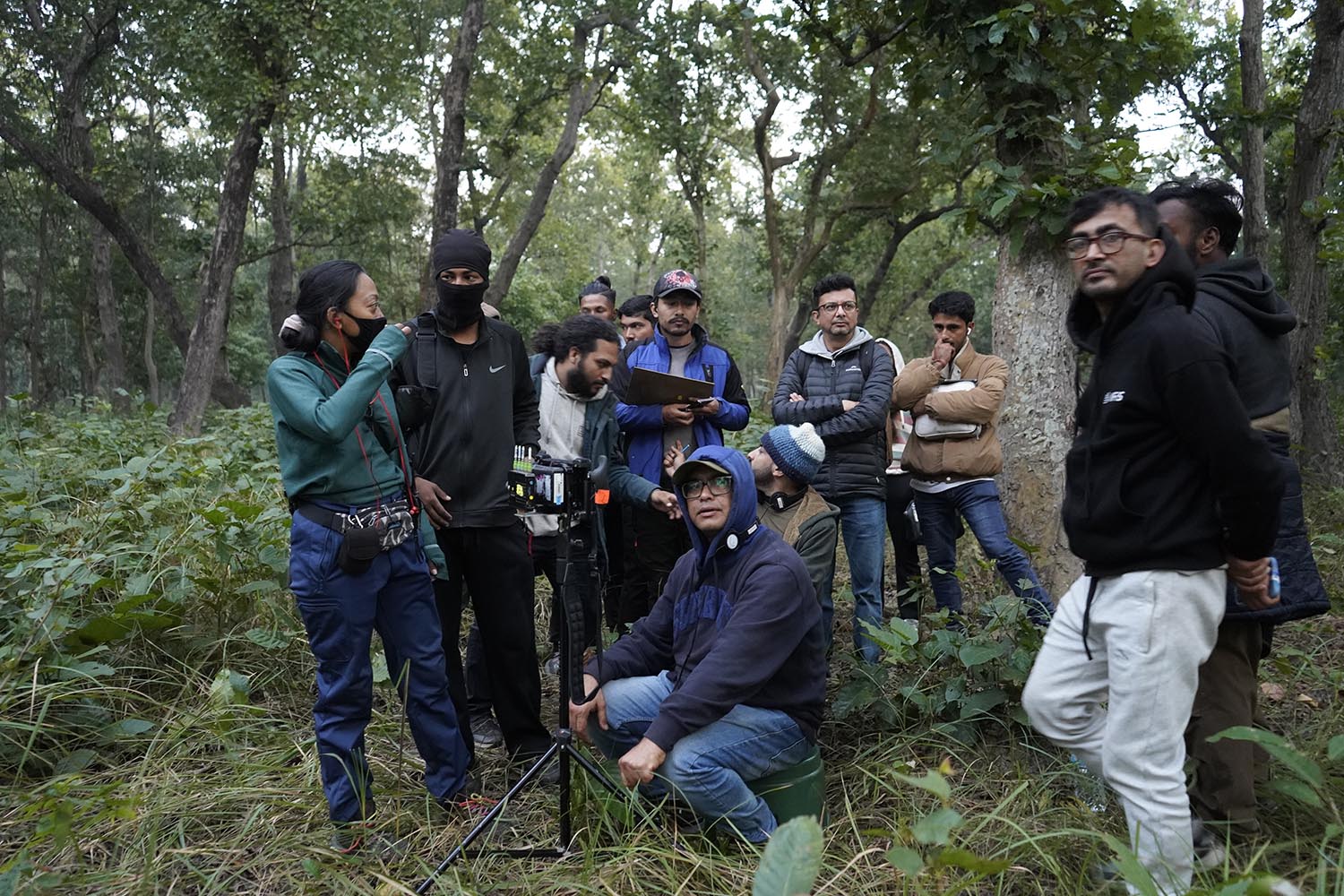
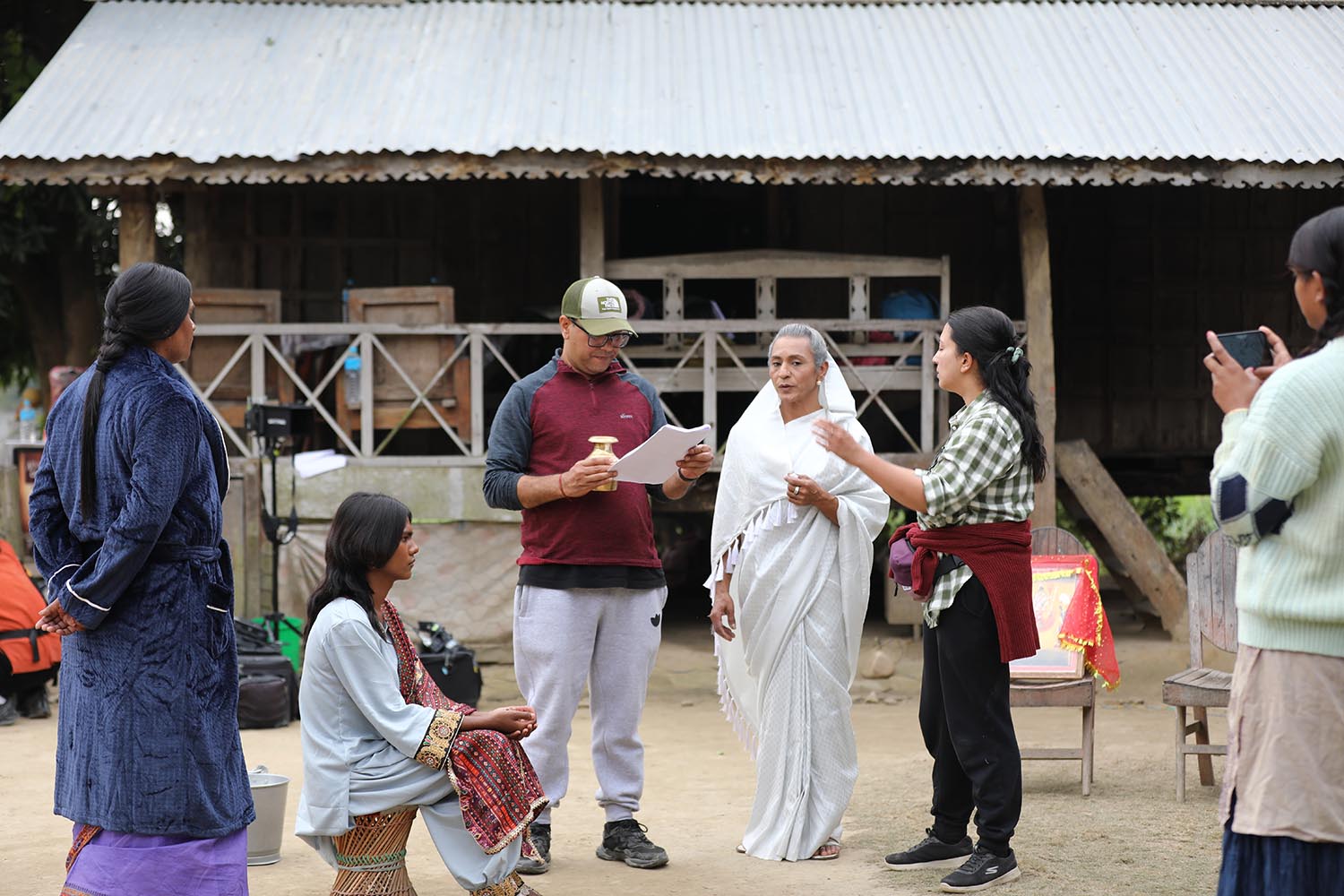
Even during the shoot, Lama recalls, Shah never imposed anything on the cast. He would invite the actors, most of whom were from the Hijra community, for their input. She says that Shah’s genuine curiosity about the community and their mannerisms—the set of three claps, their biting of cash, and their spitting when blessing—had a big impact on drawing her to this film.
For Shah, spending time with his characters in their comfort zone mattered immensely. He says with firm earnestness that one has to spend time with their characters, live with them, eat with them, celebrate with them, and experience everything they experience to tell their stories honestly. Shah frequented his meetings with Lama for the same purpose, so much so that people had started taking them for a couple. “Is she your girlfriend?” Subarna Thapa, the filmmaker, had once asked Shah.
Shah hates the politics around who gets to tell what story. As an artist, he is led by his empathy—which might as well be his favourite word. “If there’s no empathy, you won’t be able to make a good film; there will only be sympathy,” he said. He believes a sympathetic view is a voyeuristic view. Yet, as a man making a film about trans women, Shah still fears whether he was able to paint their story in true colours. “The doubt lingered the entire time, and it’s still there. That’s why my entire approach was to include the cast in the process,” he said.
When I asked Aliz Ghimire—who plays the missing daughter in the film—whether she noticed anything specific Shah had drawn from his own life, Ghimire said that it felt like Shah had lived all these characters. “It does not make sense because he is not a trans woman. But it did feel like he’s us,” she said. But for Shah, there was never a moment of ‘okay, I’ve figured it out’.
One way to curb this persisting fear was to avoid drawing the line between oneself and the subjects. “The moment you think in terms of ‘oh, we are writing about these people who are different from us’, you never make good writing,” said Sandeep Badal, co-writer of ‘Tiniharu’. At their core, human experiences are similar; it's just their magnitude and severity that differ. This notion anchored the co-writing duo.
Badal was involved in ‘Tiniharu’ from the very first day. Together, Shah and Badal embarked on research trips across Nepal, spending time with the Hijra community, looking for actors, scouting locations, and so on. It was on one such research trip that the current semblance of ‘Tiniharu’ was first unveiled, when Shah came across an old lady who recounted the parable of the blind men trying to perceive the elephant. She made the analogy that the Hijra community was the elephant being inspected by society—blind men—by clutching onto its individual parts.
Shah immediately had an epiphany; the parable was the clincher for the script he had been working on, which initially had been a mere family drama. Its anecdote acted as both a metaphor and a backdrop to the film.
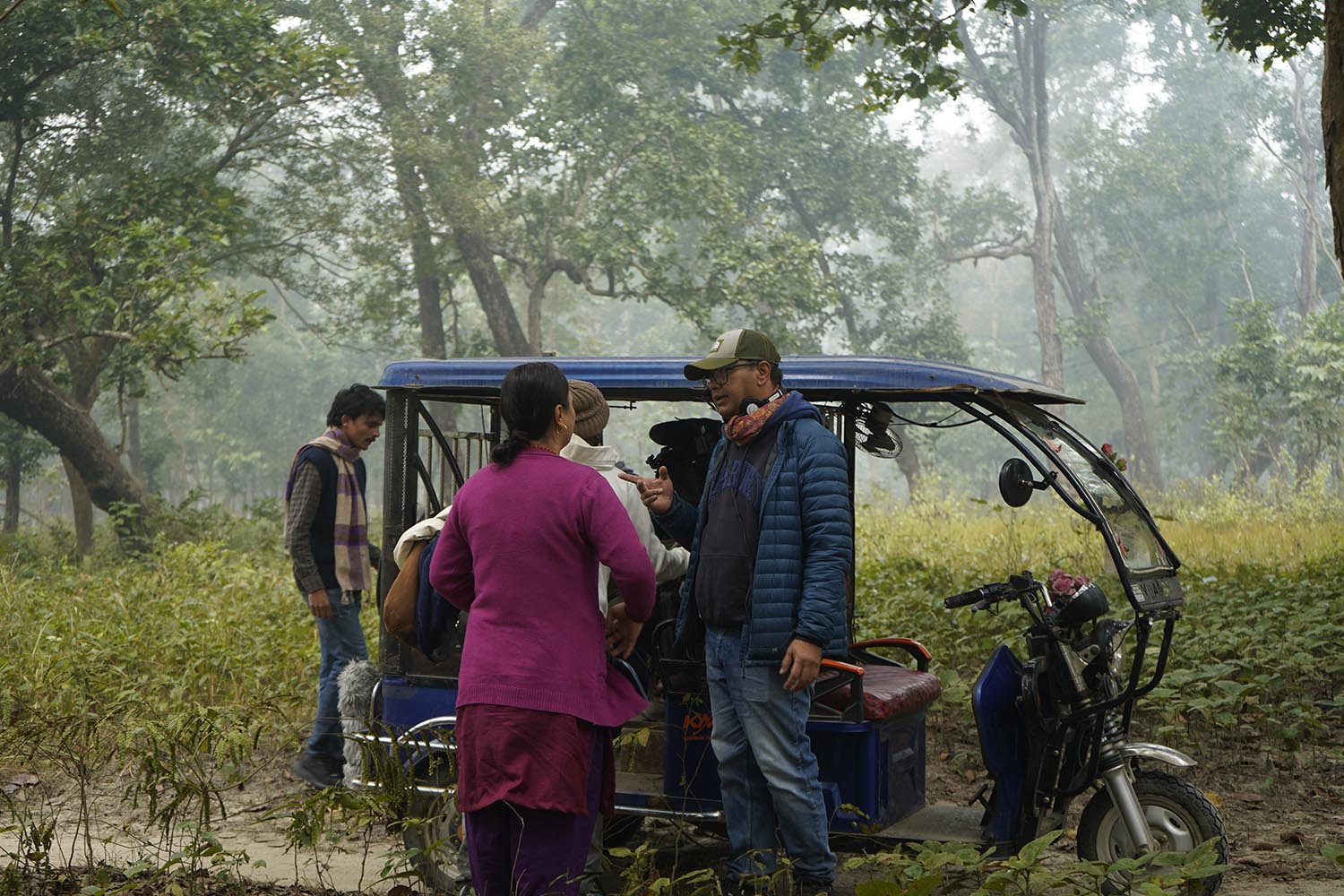
Thus were the elephants brought to the foggy plains of Thori.
All of Shah’s last three films—‘Tattini’, ‘Lori’ and ‘Tiniharu’—are set in the southern lowlands of Tarai. Given his connection to the land, this inclination only feels instinctive.
Shah had been a little over six months old when his parents took him to the sweltering town of Taulihawa. His father looked after his ancestral home and land there. Shah grew up with the local kids, quickly adopting their ways of life, including their mischief. He swam at unusual hours, caught fish and fried them, exchanged clothes with the helpers’ children, and was often covered in dirt. Whenever a car would drive up to their porch, he’d rush to his mother yelling, “Mai! Motor kaati, motor kaati!” (Mom! The car’s going to bite me!)
Even after he’d returned to Kathmandu at around age 6, Shah religiously visited Taulihawa during the min pachas vacation. He remembers his friends getting married at an early age during his time there—two of them when in grade five. But it was the Nautanki put up during the wedding ceremonies, to entertain the groom’s side, that was particularly fascinating. The innovative tricks and experiments they put at play, dramatising the Hindu epics of Ramayana and Mahabharata, enchanted him. He would ask his father when his turn to tie the knot would come.
Shah shared an easy relationship with his father, Mukesh Bikram Shah. He remembers his father cooking by the fire, reading bulky novels, and often helping the locals of Taulihawa with all kinds of bureaucratic paperwork. Mukesh Bikram’s ‘do whatever you wish’ nature brought Shah closer to him than his mother, who, being a teacher, was instinctively strict. Albeit on one occasion, his father thrashed Shah’s cassette player to the ground for listening to it even in the bathroom.
Shah was only 15 when his father passed away in an accident. In his old man’s absence, the Tarai home had nothing to offer him. He witnessed the home that once housed his family of five become a ruin; it only remains in his memories now. He recalls how he once accidentally recorded his father talking on one of his cassettes that he cannot find anywhere and says that he desperately yearns to listen to it. Shah no longer remembers his father’s voice.
In his 40s, Shah has lived longer without his father than he has with him. When asked whether he would like to make a film about his father someday, he says he has not given it any thought. All of his last three films are set in Tarai, mostly explore the maternal dynamics of a mother and her children, and none feature father figures.
With these stories, it feels like he’s compensating for the time he didn't get to spend in Taulihawa, as if he resorts to an etched memory every time he makes a film, without the instinctive urge to include a father figure. Perhaps his father’s presence, in each of his films, manifests in absence.
On September 2, 2026, Shah stood outside the QFX theaters, anxiously waiting for the premiere-cum-charity screening of ‘Tiniharu’ to begin. I walked up to him and asked, “Excited?”
“Nervous more than excited,” he replied with a faint smile.
Days later, he told me that he’s not satisfied with the final cut. “I could’ve explored the dynamics between the characters more,” he said. Shah had wanted the film to be around two hours, but his foreign producers insisted on keeping it under 100 minutes. ‘Tiniharu’ is currently 108 minutes long. Shah feels like he didn’t fight enough.
Abinash Bikram Shah still watches films after dinner. He also cries a lot when watching them. “Do you also cry (while watching films), Bibidh?” he asks me. In fact, he spends entire nights watching them. But these days, his neighbours no longer host the screenings. Instead, they complain about it to his mother the next morning: “Doesn’t your son ever sleep? His room was lit all night.”




 20.17°C Kathmandu