Exhibit review: When thoughts, memories and emotions step out of the mind
Fifteen artists bring their inner worlds into physical form, exploring everything from personal struggles and memories to politics, power and the search for a better future. Photos: Courtesy of Gallery Mcube
Imagine walking into someone’s mind and finding their thoughts, memories, dreams, and fantasies taking a physical form.
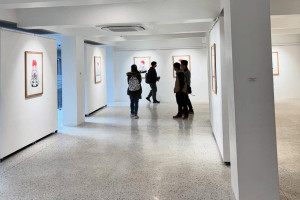
At Gallery Mcube, ‘MADE IN MIND Series III: Narratives of the Contemporary’ feeds visitors with an experience that comes close to telepathy. Walking through the exhibition feels like moving from one artist’s mind to another, offering a meditative experience.
A total of 15 artists come together to convey their thoughts, offering different ways of seeing, remembering, and making sense of the world through their individual works.
Fragments of traditional clothes in diverse bright colours and patterns are stitched together in Nirvita Shakya’s ‘Somethingness’, forming a cave-like space that physically represents the mind. Standing in front of it, its bright colours draw the eye first, but the longer one looks, the more enclosed the space begins to feel. Shakya connects different colours to different emotions and life experiences.
“Life is absurd,” she says, explaining that even after fulfilling one purpose, people begin to search for another.
Intentionally, Shakya creates the space like a box or a room within the mind, where curiosity drives people to look inside and search for what may be beyond it.
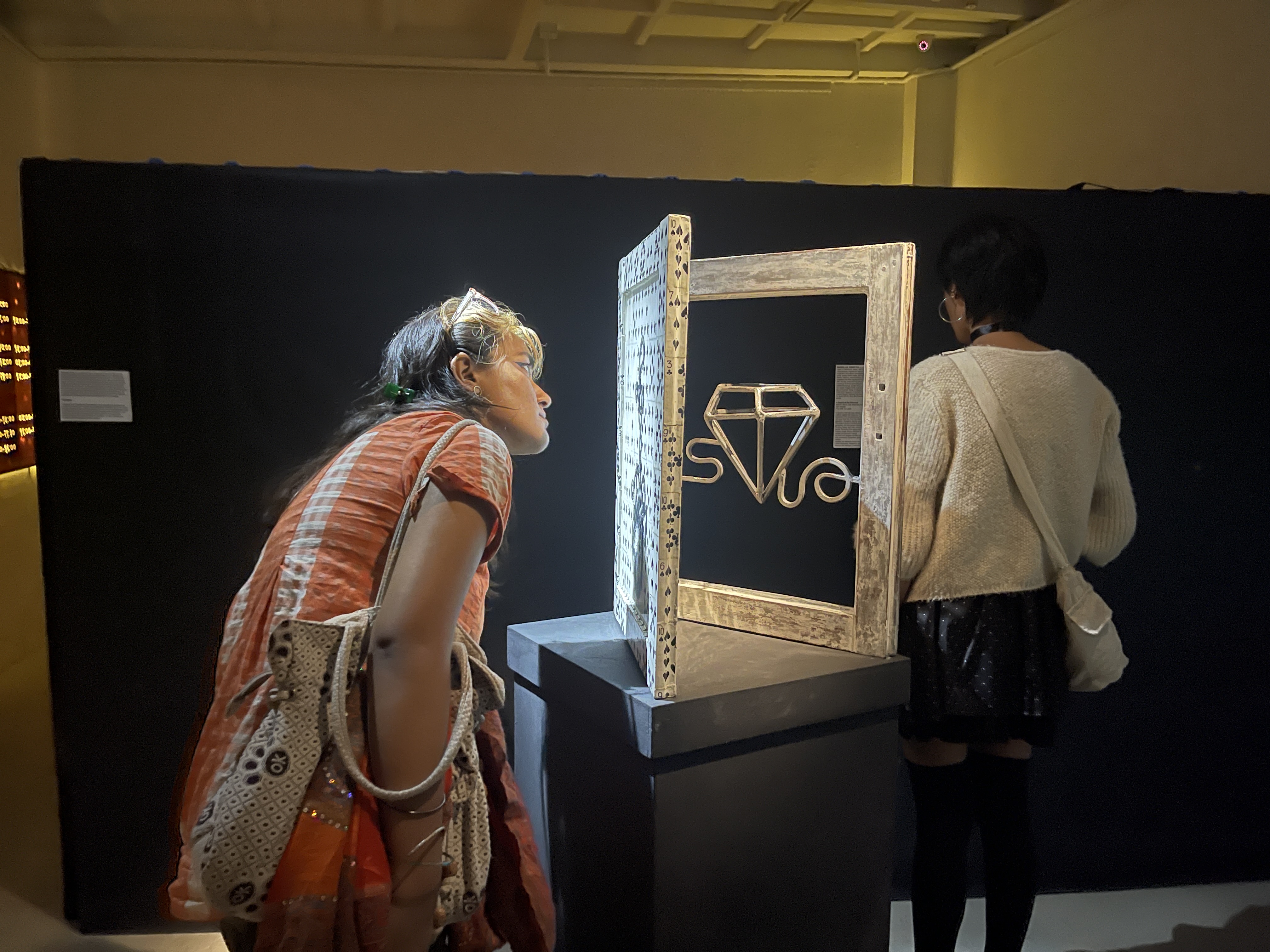
‘In Search of Diamond’ explores the ambitious pursuit of happiness.
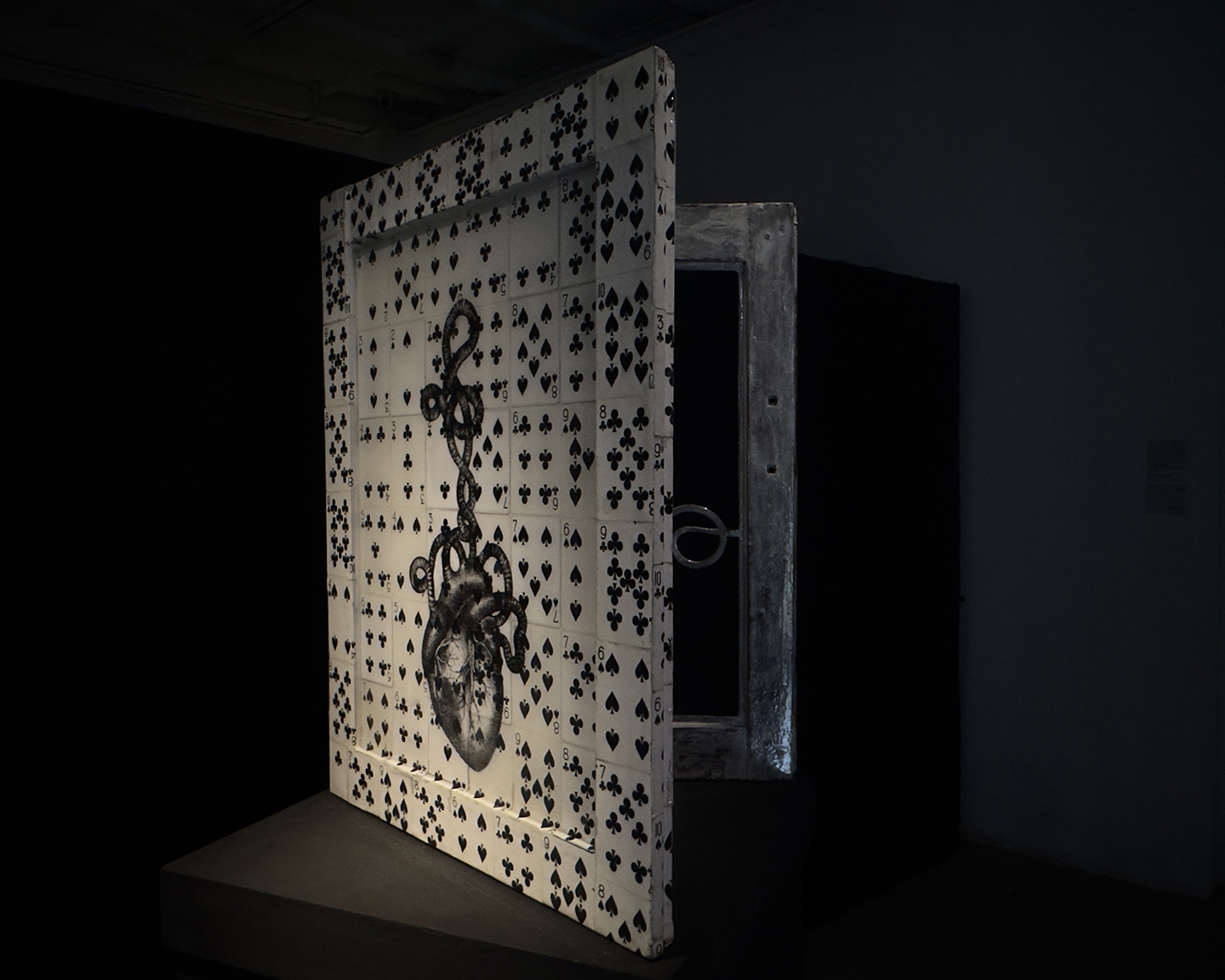
Across the room, curator Manish Lal Shrestha’s ‘In Search of the Diamond’ evokes the feeling of a mind game. The artwork lingers the longest in the room as it feels unexpectedly familiar.
But somewhere between the cards and the diamond, the game begins to feel like reality.
In Nepal, where political decisions often shape the lives of ordinary citizens, the arrangement of larger cards among smaller ones can feel like a familiar picture of power and the people. The diamond, attached in the window, suggests a better future that people continue to seek. It also places the viewer in the position of an observer, watching the circumstances unfold.
The cards in the artwork represent the political games and hierarchies that shape pursuit, with the King, Queen, and Jack standing alongside the smaller cards. A heart sits among the cards, reflecting Shrestha’s belief that people are connected to the world through their emotions.
“I think with heart, not mind,” he says.
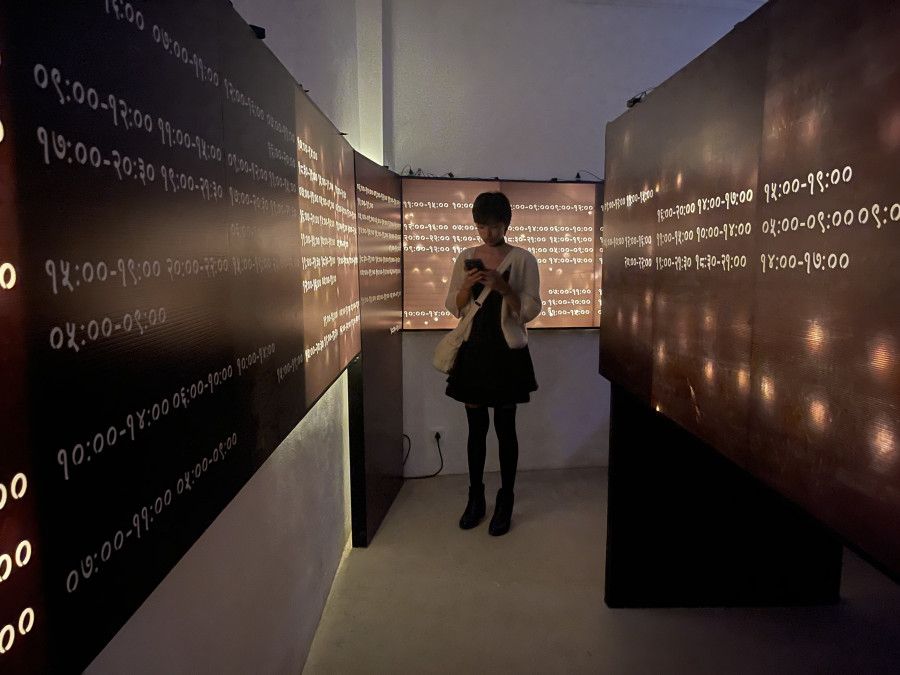
From the optimistic feeling of a better future, the exhibition slowly shifts into the feeling of being stuck. Kaushal Joshi’s ‘The Maze’ takes viewers back to the years of suffocation with load-shedding, when waiting for electricity was part of everyday life in Nepal.
Here, the lights are installed like a small village.
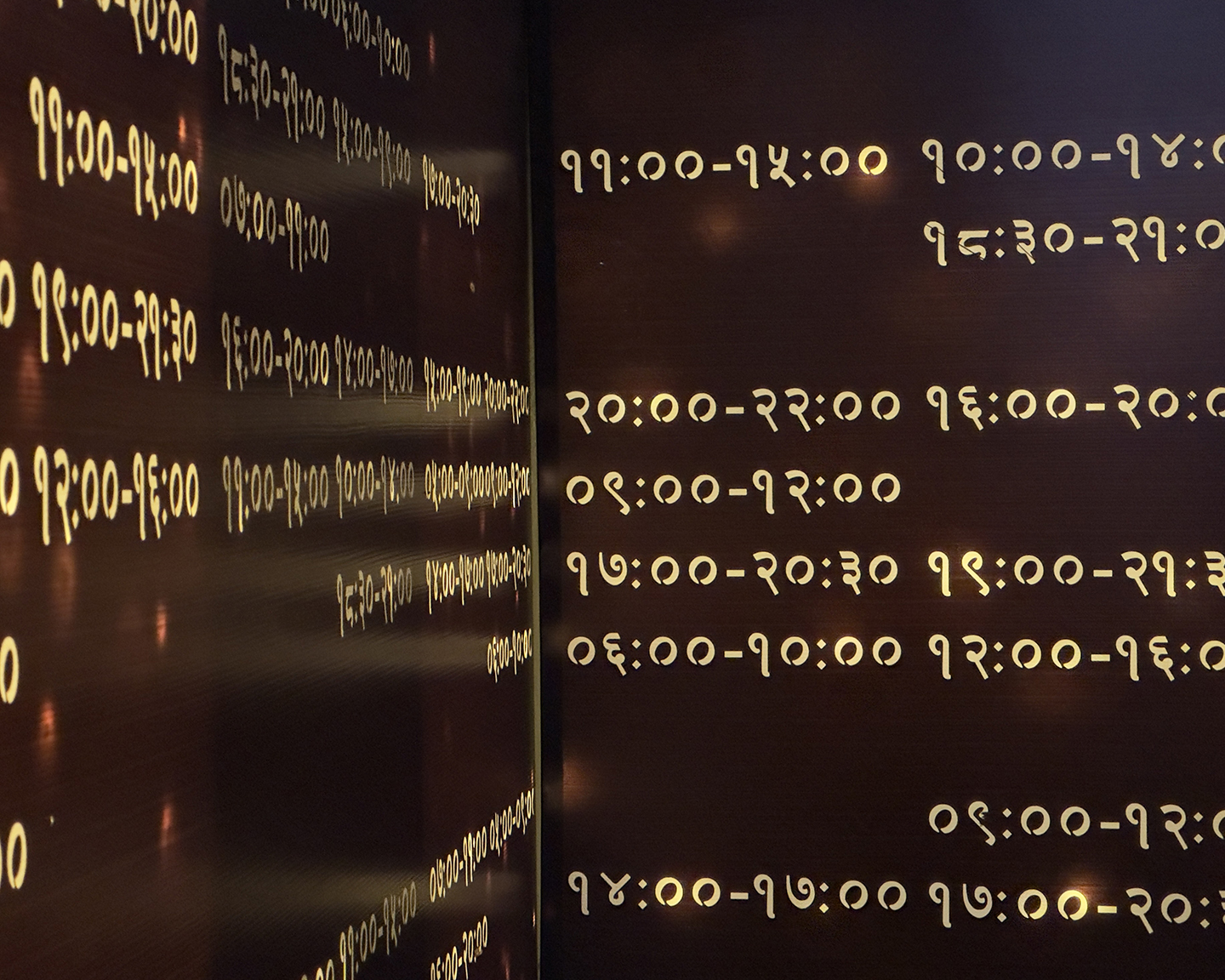
It brightens on one side of the installation, while the other is left in darkness. Moreover, the numbers printed on the flex represent the data of years of electricity shortage and emotions of people who lived through it. Still, something feels familiar about the art, but also something unsettling about seeing that experience turned into a maze.
For Joshi, the maze goes beyond the memory of power cuts, it reflects how political power and corruption kept citizens trapped for years. “It was an artificial crisis created through the abuse of power,” he says.
‘Somethingness’ captures life’s colours and emotions.
The feeling of being trapped takes more personal form in Kapil Mani Dixit’s ‘The Open Cage’. A red sofa sits at the centre, surrounded by open cages that seem to hold invisible thoughts. Dixit highlights the sofa in colour red to symbolise power, while the cages represent the ways people confine and gets trapped by their own thoughts and dreams.
“Sometimes, the cage is not around us, it exists within us,” he says.
A human figure appears to carry the scars of its past but still steps forward with progress. Bijaya Maharjan’s ‘Resonance of the Earth’, carries his own personal memory into concrete form to guide life. Maharjan emphasises how the scars across the sculpture represent his own incidents, memories and pain from his life.
Yet the figure’s relaxed posture suggests something beyond suffering, it gives hope to move forward regardless of it.
‘The Maze’ reveals the reality of Nepal’s years of load-shedding.
The idea of changing mind takes another form in Roshan Mishra’s ‘Deforming Thoughts Part of #365rotation’. The thought process is changing, and so is society. The plastic buckets and clay-deformed shapes denote the changing lifestyle of society.
‘In Tatva: Forms of Water and Air’, Sanjeev Maharjan emphasises on two elements of nature: water and air. And this is expressed through the colours. The blue represents water, and gold in eye-shaped represents air.
“See the art through your heart, not through your eyes,” the curator emphasises.
“Art is not about messages; it’s beyond that. We are sharing our experiences. Different audiences can understand the same art with different emotions,” he further adds. “There are around 8 billion people in the world, and if each person has a thousand ideas, imagine the number of ideas that exist.”




 21.14°C Kathmandu
.jpg)