Booker-winning translator Deepa Bhasthi on why she has ‘nothing kind to say about AI’
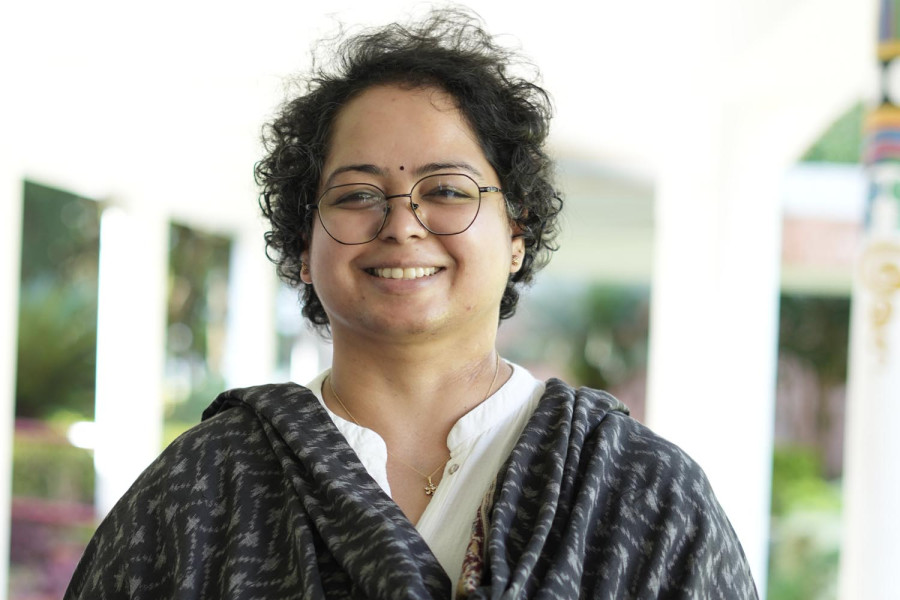
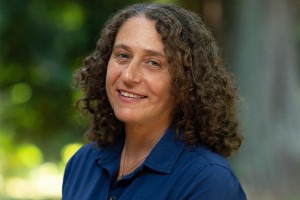
Bhasthi discusses preserving the soul, musicality and rhythm of a language, and why a translation should not erase its cultural roots. Courtesy of Prashim Maharjan
International Booker Prize-winning translator Deepa Bhasthi is in Kathmandu as one of the mentors at a three-day literary translation workshop at Kathmandu University’s Dhulikhel campus.
The workshop, organised jointly by Kathmandu University’s Department of Languages and Mass Communication and the University of Chicago’s South Asian Literature in Translation (SALT), brought together writers and translators working with Nepali, Maithili, Tibetan and Nepal Bhasa.
Bhasthi became the first Indian translator to win the International Booker Prize in 2025 for her translation of Banu Mushtaq’s ‘Heart Lamp’, a collection of 12 short stories written over more than 30 years that chronicle the everyday lives and struggles of women in southern India.
In this conversation with Post’s Anish Ghimire, she talks about why a translation should retain the ‘soul’ and rhythm of its original language, the importance of reading more South Asian literature, and why she has ‘nothing kind to say about AI’.
‘Heart Lamp’ became the first collection translated from Kannada to win the International Booker. What was particularly difficult about translating Mushtaq, not just linguistically, but culturally and emotionally?
Every translation project comes with its own challenges and constraints. The characters in Mushtaq’s stories are Muslim, but the problems they face are not restricted to the Muslim community. They are the experiences of women living under patriarchy around the world. That relatability is what made it easy for me to understand these characters.
Culturally, though, they were very different from my lived experiences, so I did a lot of research. I like to call it ‘method translation’ because I really tried to get into the culture to the best of my abilities. Obviously, it’s not possible to live like these characters, but I watched a lot of Urdu serials and films, and listened to Sufi-infused music to set the mood.
Emotionally, I’m not a very emotional reader. Reading is very different from reading as a potential translator of that work. I’m not very sentimental in that way. I see it as a story and as language, so you can’t let that affect you.
I don’t think it would make for a good translation if you approached something too emotionally. You have to step back from being a fan of the work and look at it from a much more critical perspective.
You speak about “translating with an accent” rather than making a text sound completely natural in English. What does an accent allow a translation to retain?
The soul of the original language—the soul, the musicality, the rhythm of that particular language.
Because, there is no such thing as standard English. I don’t think it even exists. Also, I don’t think that’s the point of translation at all. Otherwise, it just becomes a very clinical, very literal, very dry work without the essence.
You need a soul to have a life. Languages have these souls. Obviously, we can’t carry them over to another linguistic culture perfectly, but we can try to do so to the best of our ability.
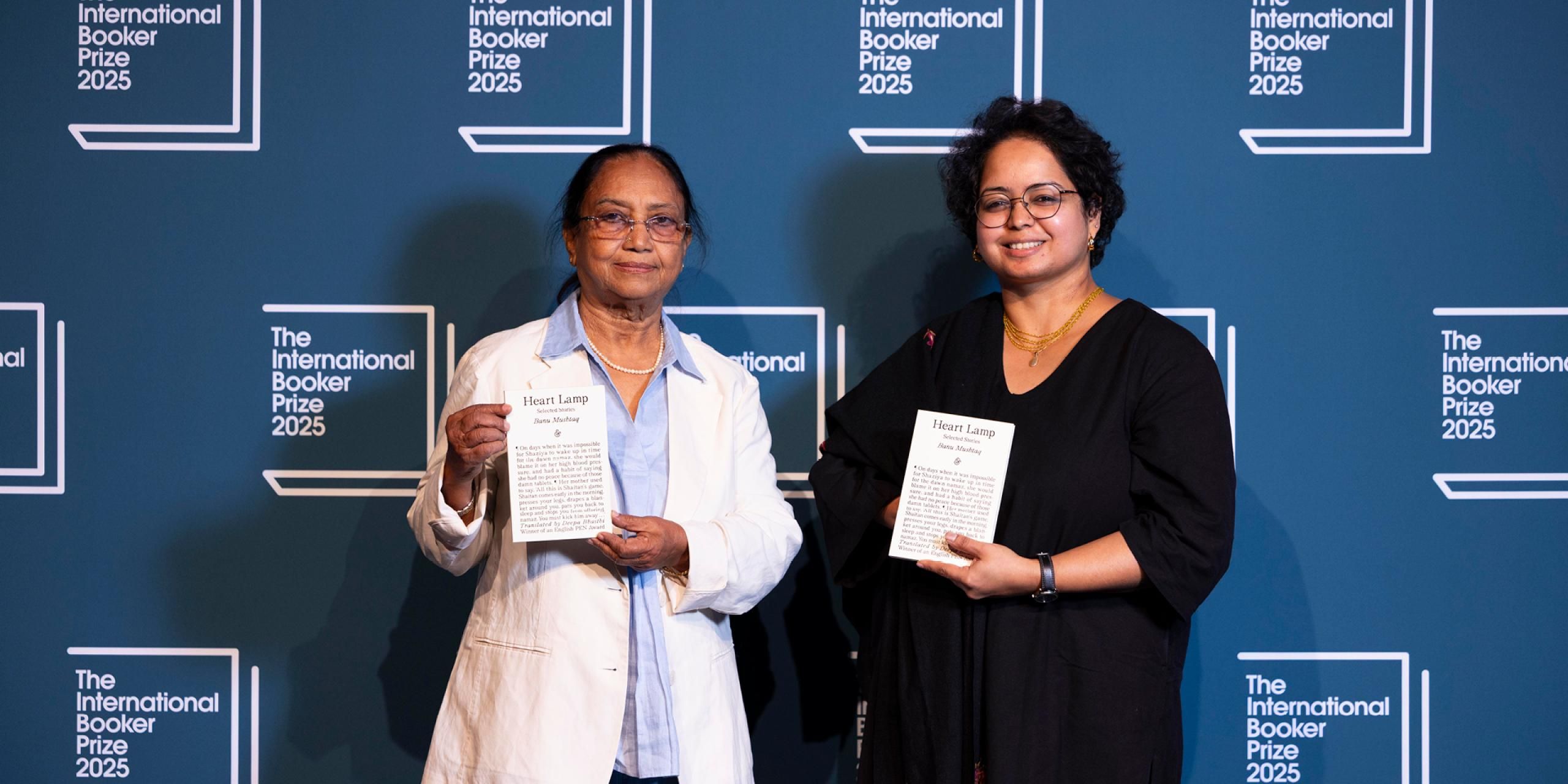
Banu Mushtaq (left), author of ‘Heart Lamp’, and translator Deepa Bhasthi. Photo: Courtesy of The Booker Prize Foundation
Adding to that, what do you think should remain untranslated in a translation?
I don’t think there’s a one-rule-fits-all idea in translation. It depends on the project: what to retain, what to leave untranslated. I think it’s a word-by-word choice that one has to make: whether something should remain untranslated or be transliterated.
Who is the translator ultimately responsible to—the original writer, the original language, the reader, or the text itself? And what happens when those responsibilities conflict?
I think the conflict is always going to be there, especially in the case of Kannada and English. They are very different languages, with almost nothing in common, so the conflict will always exist. But again, I think some of the best literature exists within these conflicts.
I can’t really speak for all translators, but for me, I am always led by language. The language is important to me. I am not taken in by the fame of a writer.
For me, the question is: how best can I convey the linguistic culture of Kannada into English? That’s my area of interest.
Nepal has a rich literary tradition in Nepali and many other languages, but relatively little Nepali literature reaches international readers through translation. What do you think is required for more South Asian literatures to travel across linguistic borders, not just into English, but between each other?
There just have to be more translations.
We’ve always had a culture of translation in South Asia, if you want to look at it that way. Because we’re all thinking in two or three languages. We’re always translating between these languages, whether we’re at home, at work, or with friends. We speak different languages in our heads. We live in different languages.
As AI becomes increasingly capable of translating languages, what do you think it still struggles to understand about a literary text? And what might be lost when we allow a machine to make those choices for us?
I have nothing kind to say about AI.
I don’t think AI is anywhere close to being capable of translating literary fiction. When AI is capable of shedding tears over sorrow, laughing at a silly joke, and, you know, being human, then I’ll decide to worry.
If an AI produces a translation that readers cannot distinguish from a human translation, does it matter who translated the book?
That’s a very interesting question.
It might not matter to the person who is giving the prompt, but I think it is an insult to hundreds of thousands of years of human evolution. It is insulting to a person’s intelligence and critical-thinking abilities to take something a machine has produced and try to pass it off as something a human has done.
Am I completely against AI as a technology? Yes, for sure. Am I against it in creative fields? Oh my goodness, yes!
AI has its uses in some fields—science, medical science, and so on—so please use it to do whatever it can there.
But we don’t need this stupid ’80s social media trend, or to feed all these big tech companies at our expense. I mean, come on, at what cost? We are all seeing what is happening because of these big tech companies.
What do you think young translators worry about too much—and what should they be worrying about instead?
I don’t think young translators worry enough about critical thinking. Everyone is so geared towards doing everything quicker. I think translators don’t read enough. I always say you have to read more than you write, and listen more than you talk.
And we should read more South Asian literature. We’re very happy to read translations from French, Italian and German, which we should, but we also need to read stories from our own part of the world. That’s the only way we’ll have the confidence to tell the world, ‘Hey, our story is my favourite.’
Talking about books, can you give me your 3 quick book recommendations?
I’m currently reading ‘Brotherless Nights’ by V V Ganeshananthan, which is incredible.
Anything by Claire Keegan, especially ‘Foster’.
And thirdly, I’d recommend a Kannada book, ‘Karimayi’, written by Chandrashekhara Kambara and translated by Krishna Manavalli.




 17.84°C Kathmandu