



 24.51°C Kathmandu

Mon, Oct 12, 2026
Culture & Lifestyle
Documentary film review: The revolution that took their childhoods
‘Returned: Child Soldiers of Nepal's Maoist Army’ follows former child soldiers as they reintegrate into their families and communities after the insurgency.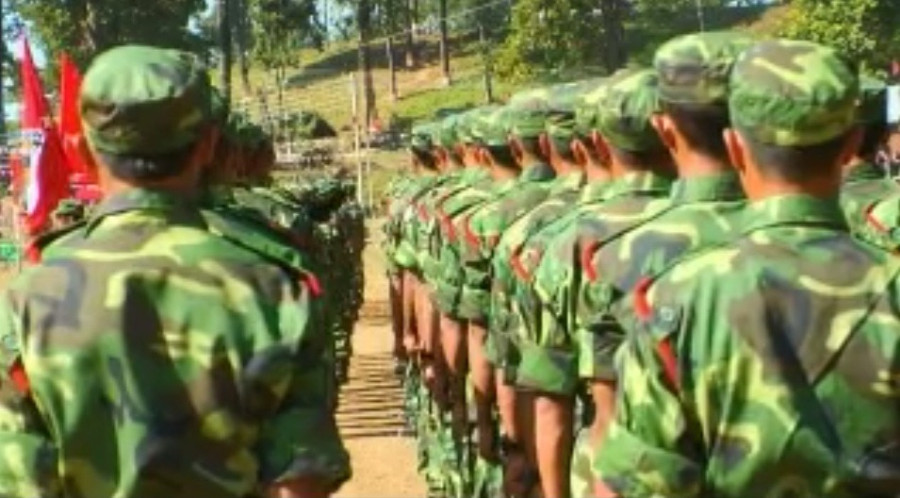
bookmark![]()
![]()
Rivash Rijal
Published at : July 27, 2026
Updated at : July 27, 2026 06:59
Kathmandu
Robot Koenig’s ‘Returned: Child Soldiers of Nepal’s Maoist Army’ is a 2008 documentary film which follows the lives of a few of the many thousand child soldiers who have returned home after the end of the Nepali Civil War.
The documentary features the to-be-expected cast of journalists, scholars, experts, politicians and diplomats, but at its core are the child soldiers – their motivations in joining the war, their experience of the conflict and their difficult reintegration and return home.
The audience is first introduced to Ashish, who shares that he joined the war to fight for every Nepali’s right to food, clothing and shelter. As Ashish continues to share his story, however, it becomes evident his joining the ‘People’s Liberation Army’ was not entirely voluntary. The Maoist had come to Ashish’s village school to take them to a ‘cultural programme'. The students were to be returned home the next day.
Ashish’s narration of the exact events is unclear, but it would appear the Maoist leaders of the cultural programme had taken off with the children, including Ashish, who was 15 at the time.
Following the end of the war, Ashish returns home. He shares that he has wanted to continue his education, something he seems to have been unable to do, even after the war, owing to his family’s financial situation. Ashish’s father finds his son to have become more aloof. “He does not tell me anything. We don’t really talk," he says.
Some soldiers reflect back on their experiences proudly. Many from oppressed castes, soldiers enjoyed a certain power and dignity they were sure to be denied otherwise.
One young soldier, speaking anonymously, shares that he thought he kept his village peaceful during the conflict by shutting down card games, burning playing cards and silencing those he had felt disrespected by in the past. The soldier’s words feel misplaced. Here is a child maybe of 13 or 14, who ought to be in school reading poetry with his peers; in effect, it would appear, in charge of his village, dispensing justice as he sees fit.
Other soldiers seem to have joined the Maoists out of sheer childlike fascination. One young girl speaks of the Maoists with admiration. ‘These people live in the jungle. They can even take on the Royal Army with all their guns,” she says.
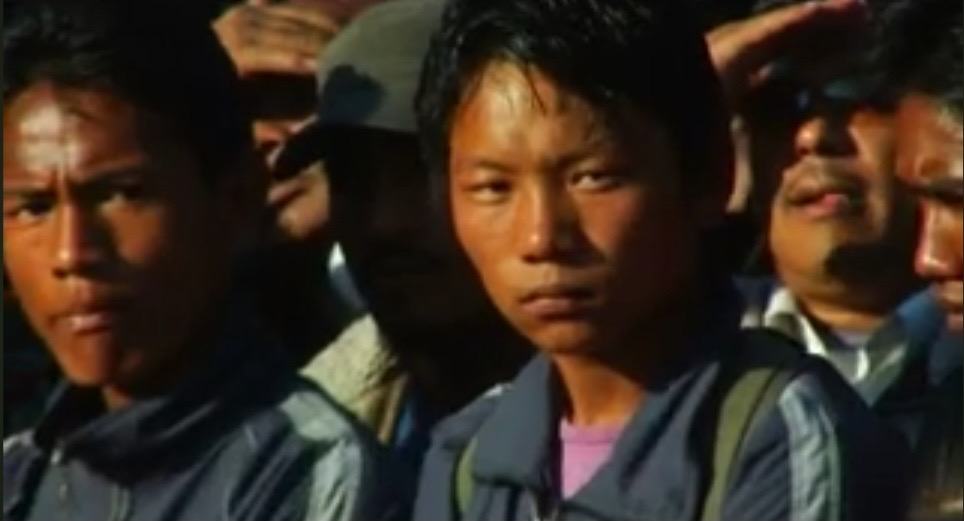
Preeti, who joined the People’s Liberation Army at 14, alleges then Royal Army raped women, looted houses, stole things and beat villagers. And that it was only after the village came under Maoist control that these activities stopped.
One child soldier, Ramesh, is motivated to join the guerrillas after the Royal Army took their father from their home, beat him and finally shot him to death at 4 a.m. one morning. His sister, however, stays back.
The documentary does a fine job showcasing the varying motivations and circumstances that led to the child soldiers joining the army.
No two stories are exactly the same, yet they share similar undercurrents. The lack of opportunities in the countryside, the inhumane realities of caste and gender, and the brutality brought on by the conflict, one finds, played a major role in convincing the children to pick up arms.
Similarly, no two returns are the same. And yet they too share similar undercurrents. The returned children are faced with a village and, on many occasions, a family which does not want them back. The children return from their fantastical lives as revolutionaries to a countryside which largely remains unchanged.
The women who fled their backward communities find themselves trying to reintegrate into those very same communities where they are now labelled ‘impure’ for having mingled with boys in the jungle.
One young girl shares the heartbreaking fate that was awaiting her upon her return. Upon her return, she is married off to an older man. She is only 14 at the time. When her new family finds out she used to be a Maoist soldier, they refuse to accept her. Beaten by her husband and abused by her in-laws, she tries, unsuccessfully, to hang herself.
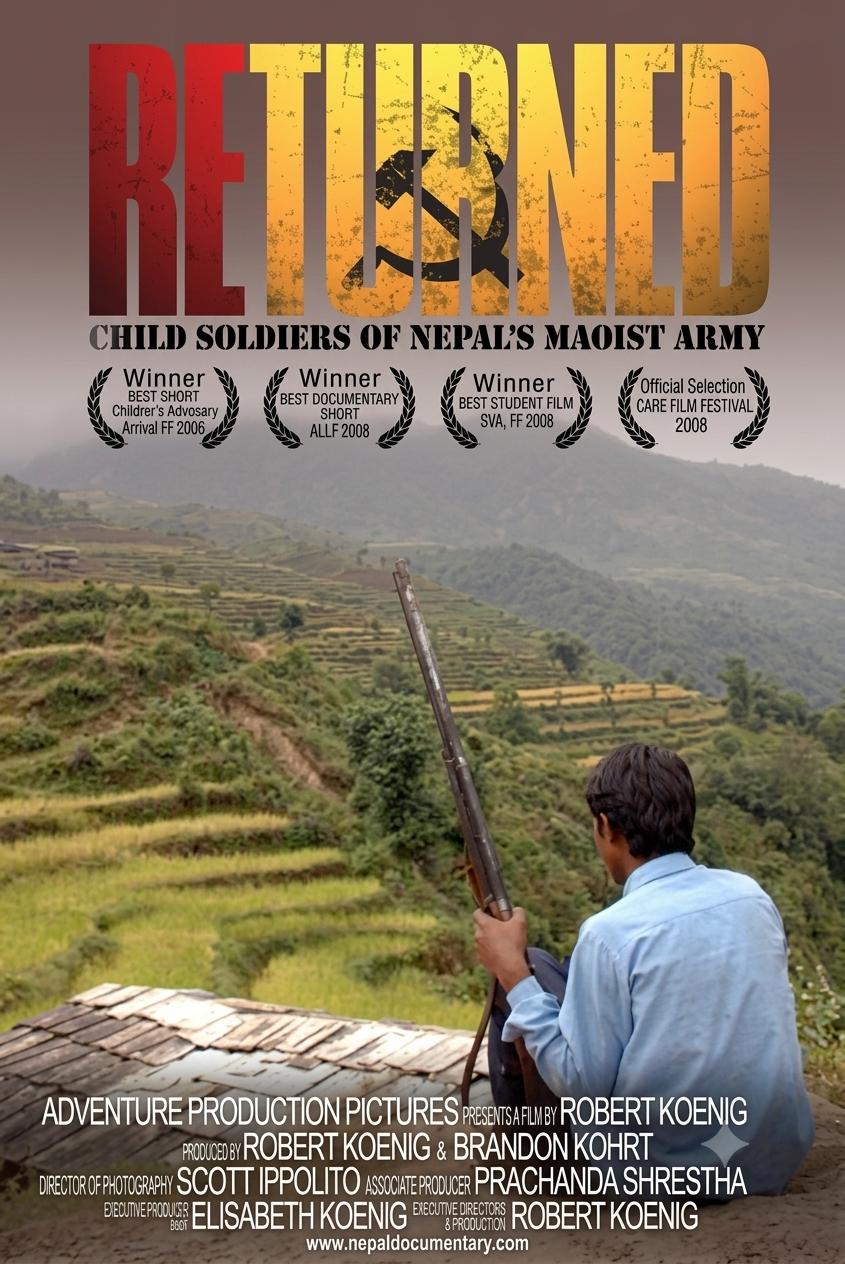
Past the incessant use of Nepali folk music, Koenig’s film confronts viewers with uncomfortable questions, many of which have been lost in the public discourse in the two decades following the conflict.
Children, in the thousands, were plunged into a conflict they did not fully understand. And at the end of ten years, they found themselves just as poor, living in communities sometimes just as backwards and faced with additional discrimination and the reality of their lost childhoods.
The children in the documentary are largely uneducated and untrained in any income-generating trades.
In light of the Supreme Court’s recent decision on Lenin Bista’s writ, the film provides vivid images and stories of the conflict helpful in beginning to understand the 10 years of war, its ramifications, where we have come from, and where it remains for us to go.
——————-
Returned: Child Soldiers of Nepal's Maoist Army
Publisher: University of Cambridge
Direction, Production and Copyright: Robert Koenig
Duration: 60 minutes
Available on YouTube
Rivash Rijal
Rivash Rijal is a culture and lifestyle intern at the post. He is also a rising senior at St John's College in Santa Fe, NM. He will be graduating from the class of 2027 with a BA in Philosophy, Literature and Natural Sciences.


Most Read from Culture & Lifestyle

It’s a bird … it’s a plane … it’s the Indian ambassador’s farewell tweets
‘Tenzing’ puts the Sherpa at the centre of the Everest story
How should Nepal navigate a world in reorder? Rajib Upadhya on geopolitics and foreign policy

How Anup Poudel took Nepali cinema to Cannes
A Nepali photographer rediscovers Calcutta after decades
Editor's Picks

Constitutional Bench caught in seniority, ‘pick and choose’ dispute

A Dom boy’s long road to becoming a doctor

From blankets to handmade dolls, two foreign women bring comfort to flood survivors

News Analysis: When institutional defence exposes institutional fault lines
It’s a bird … it’s a plane … it’s the Indian ambassador’s farewell tweets
E-PAPER | October 12, 2026

×