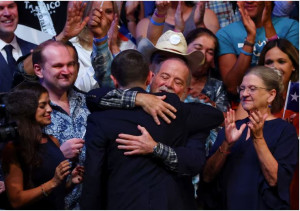
Nvidia rules out Huang comeback as campaign for his return grows
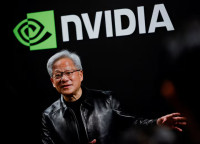
More than 180,000 people have signed a petition calling for the former chief executive’s reinstatement, but the board is not considering bringing him back. Nvidia CEO Jensen Huang speaks during a doorstep after attending the AI Ecosystem Reception in Tokyo, Japan, July 16, 2026. Reuters
Nvidia’s board is not considering bringing Jensen Huang back as chief executive, three people familiar with the matter told Reuters, despite a growing campaign for his return days after allegations of affairs involving employees and suspected links to Chinese intelligence forced his resignation.
More than 180,200 people have signed a petition demanding Huang’s return. Elon Musk has backed the campaign, while US President Donald Trump said he would not mind seeing Huang reinstated as CEO. Thousands of people identifying themselves as Nvidia employees have also joined the call. But governance experts and some investors have warned that reinstating him before investigations are complete could expose the company to further risks.
The groundswell of support has turned a corporate succession story into a test of whether Nvidia can distance itself from a founder whose influence extends across its workforce, shareholders, Silicon Valley, Taiwan’s supply chain and Washington. Some employees remain fiercely loyal to the former CEO.
Taipei 101, Taiwan’s tallest skyscraper, was illuminated on Monday with messages including “Taiwan Loves Jensen”. Some prominent shareholders, including Gavin Baker of Atreides Management and Brad Gerstner, chief executive of Altimeter Capital Management, have urged Nvidia not to rush to replace Huang before all the facts are known.
“The Nvidia board is not considering bringing Jensen back,” one of the people familiar with the matter said.
The support for Huang, who acknowledged having an affair with Chinese businesswoman Alice Huang, comes as US intelligence agencies are still trying to establish the extent of her relationship with China’s Ministry of State Security and whether she passed information to Beijing, according to two sources familiar with the matter. Evidence gathered so far suggests she was likely an intelligence asset who shared information, rather than a fully trained spy, the sources said.
The uncertainty has divided investors over Huang’s future and complicated the board’s search for a successor. Nvidia shares fell more than 4 percent on Monday, a day before the chipmaker was due to report its third-quarter earnings.
Since news of Huang’s intimate relationship emerged, Nvidia has lost $800 billion in market value. Its price-to-earnings ratio has fallen to 11.54 from 15.59, well below the Nasdaq Composite’s average of 20.8.
Big names back Huang
The “Stand With Jensen” campaign lists SpaceX and Tesla chief executive Elon Musk, Replit CEO Amjad Masad and Epic Games CEO Tim Sweeney among its signatories.
The campaign website showed that more than 8,800 signatories identified themselves as current Nvidia employees and more than 94,000 as shareholders. It cautioned, however, that professional affiliations were self-reported and had not been independently verified.
“We write with gratitude for Jensen Huang and with a clear demand to the Board: bring Jensen back while an independent investigation establishes the facts,” an open letter on the website said.
Huang stepped down on Thursday after reports of alleged affairs with employees, including one who reported directly to him. His departure plunged the AI chipmaker into crisis and sent shockwaves through an industry he helped bankroll.
“I think he learned a big lesson,” Trump said on Monday.
Trump’s reported stock trades this year suggest he held between $13 million and $62 million in Nvidia shares as of the end of August, The Washington Post reported on Monday, citing a review of his financial disclosures.
The Trump administration said on Monday it would further restrict China’s access to advanced AI chips, tightening controls as Trump prepared to travel to China for talks with President Xi Jinping.
Large investors are risk averse
Large institutional investors may be harder to persuade to support Huang’s return.
One institutional investor in Nvidia, speaking on condition of anonymity, said they would be wary of Huang returning to the company. Other major companies, including Apple and Microsoft, had thrived after their visionary chief executives left, the investor said.
Richard Windsor, an independent technology researcher, said he expected large institutional investors in Nvidia to oppose Huang’s return while investigations remained unresolved, given the legal exposure and uncertainty it could create.
“They’re very risk-averse,” Windsor said. But he added that he believed Nvidia shareholders would ultimately be better served by Huang’s return because of the relationships he had built with the company’s customers and suppliers.
T Rowe Price analysts said in a note that the transfer of power might require a new organisational structure rather than simply a new chief executive.
Huang’s exit rocks Taiwan
Huang’s influence is particularly visible in Taiwan, where he was born and enjoys celebrity status in what has been dubbed “Jensanity”.
Nvidia depends on Taiwan Semiconductor Manufacturing Company, which produces its most advanced chips, as well as an extensive network of suppliers that manufacture the chips and systems underpinning the AI boom.
For many Taiwanese, Huang’s departure marks the loss of a charismatic champion who helped put the island at the centre of the global artificial intelligence boom. His influence has extended well beyond the technology industry.
Jimmy Yang, 42, who works in marketing, said Huang’s departure was a loss for Taiwan, where his influence had benefited local businesses and tourism. Yang said he hoped Huang would eventually return to Nvidia.
“His private life is his own choice,” Yang said. “But whether it’s the night market economy he’s driven or his help for the tech industry, it has been massive.”




 8.12°C Kathmandu