Monsoon pulls out as forecast points to a drier Dashain
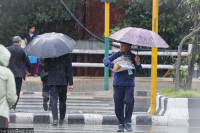
Most of Nepal could see the monsoon recede within days, with no major weather system currently expected during the main Dashain holidays. Nepal Photo Library
Nepal’s monsoon has officially begun its retreat, bringing hope for a dry Dashain festival after last year’s soggy holidays.
The weather system withdrew Sunday from the country's western regions, including most of Sudurpaschim, Karnali, western Lumbini, and parts of western Gandaki provinces. According to the Meteorological Forecasting Division, the monsoon winds are rapidly weakening and are expected to exit the rest of the country within days.
The monsoon's departure tracks closely with the India Meteorological Department's forecast, which anticipates a complete withdrawal by October 10. The system originally arrived on June 19, six days behind its historical average.
The forecast offers a stark contrast to last year, when heavy rains persisted well past the monsoon’s official end, turning Nepal's biggest festival into a muddy ordeal. On last year's Vijaya Dashami, the Nawalparasi East weather station recorded a staggering 160 millimetres (6.3 inches) of rainfall in 24 hours, with heavy downpours extending across the Tarai plains and the Kathmandu Valley.
For this year’s Dashain, which begins with Ghatasthapana on October 11 and peaks with Vijaya Dashami on October 21, forecasters anticipate a much drier holiday.
“We do not see any significant new weather systems developing during the core festival days,” said Sanjeev Adhikari, a meteorologist at the forecasting division, ruling out a repeat of last year's washout. “However, people should continue to follow updates. As things stand now, it does not look like another muddy Dashain.”
Still, meteorologists caution that the end of the monsoon does not guarantee endless sunshine. Western disturbances and local wind patterns can still trigger precipitation.
“Monsoon onset or withdrawal is not determined simply by whether it rains or not, but by seasonal changes in wind direction and atmospheric circulation,” meteorologist Binod Pokharel noted on social media. “Nepal does not need the monsoon for it to rain.”
Pokharel warned that western disturbances could still bring localised showers through the first day of Dashain, with weather models indicating conditions could briefly deteriorate between October 16 and 19.
In the immediate short term, high-altitude regions in Koshi, Bagmati, Gandaki, and Lumbini provinces may continue to see moderate rain or snow, with light showers possible in the southern Tarai plains. The forecasting division plans to issue a specialised, extended weather bulletin closer to the holiday to guide travellers.




 17.22°C Kathmandu