



 16.49°C Kathmandu

Mon, Oct 12, 2026
Visual Stories
Inside temporary shelters, displaced families adjust after evictions
Evicted families from Kathmandu’s settlements struggle to rebuild daily life.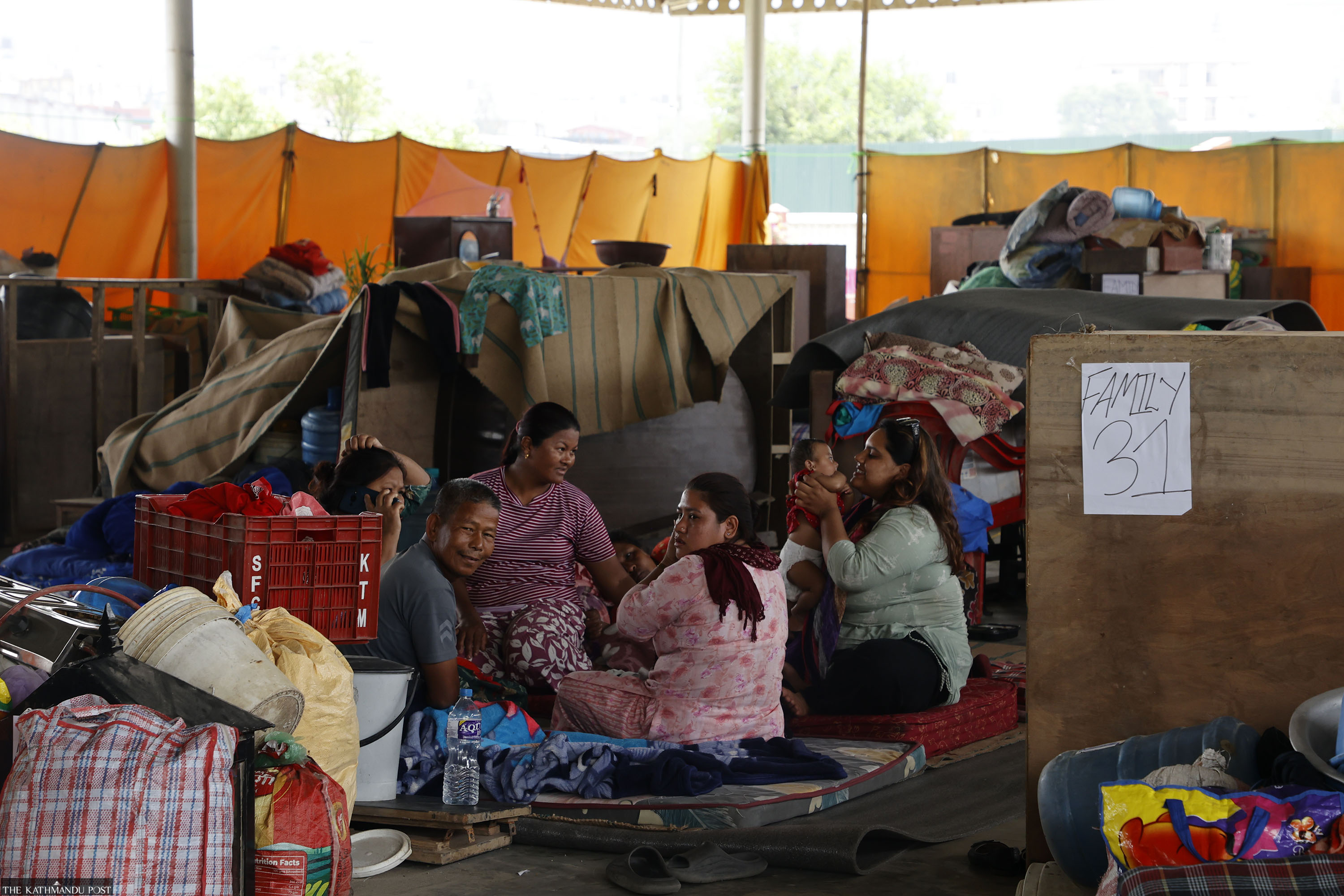
Bishal Karki & Hemanta Shrestha
Published at : April 28, 2026
Updated at : April 28, 2026 10:46
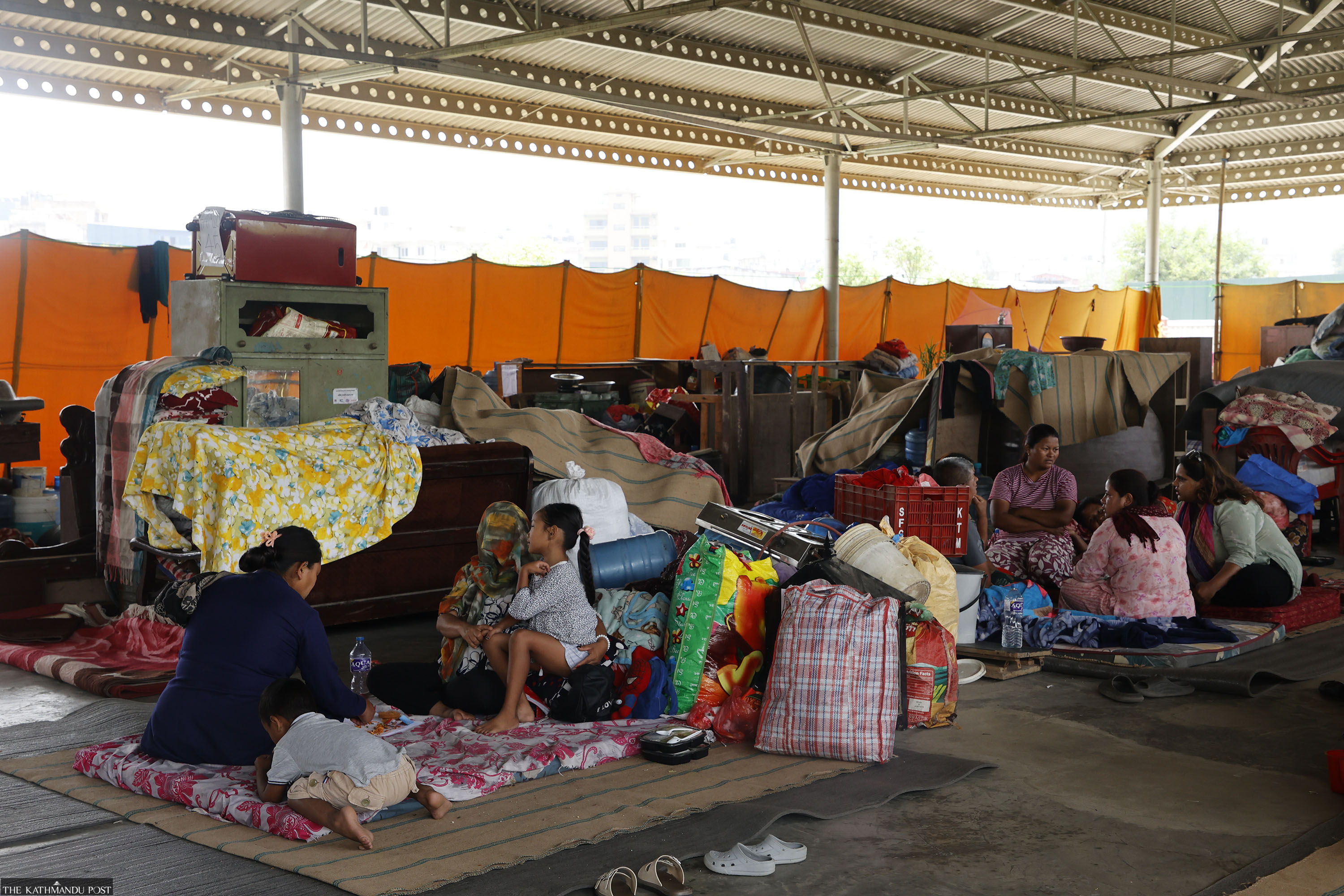
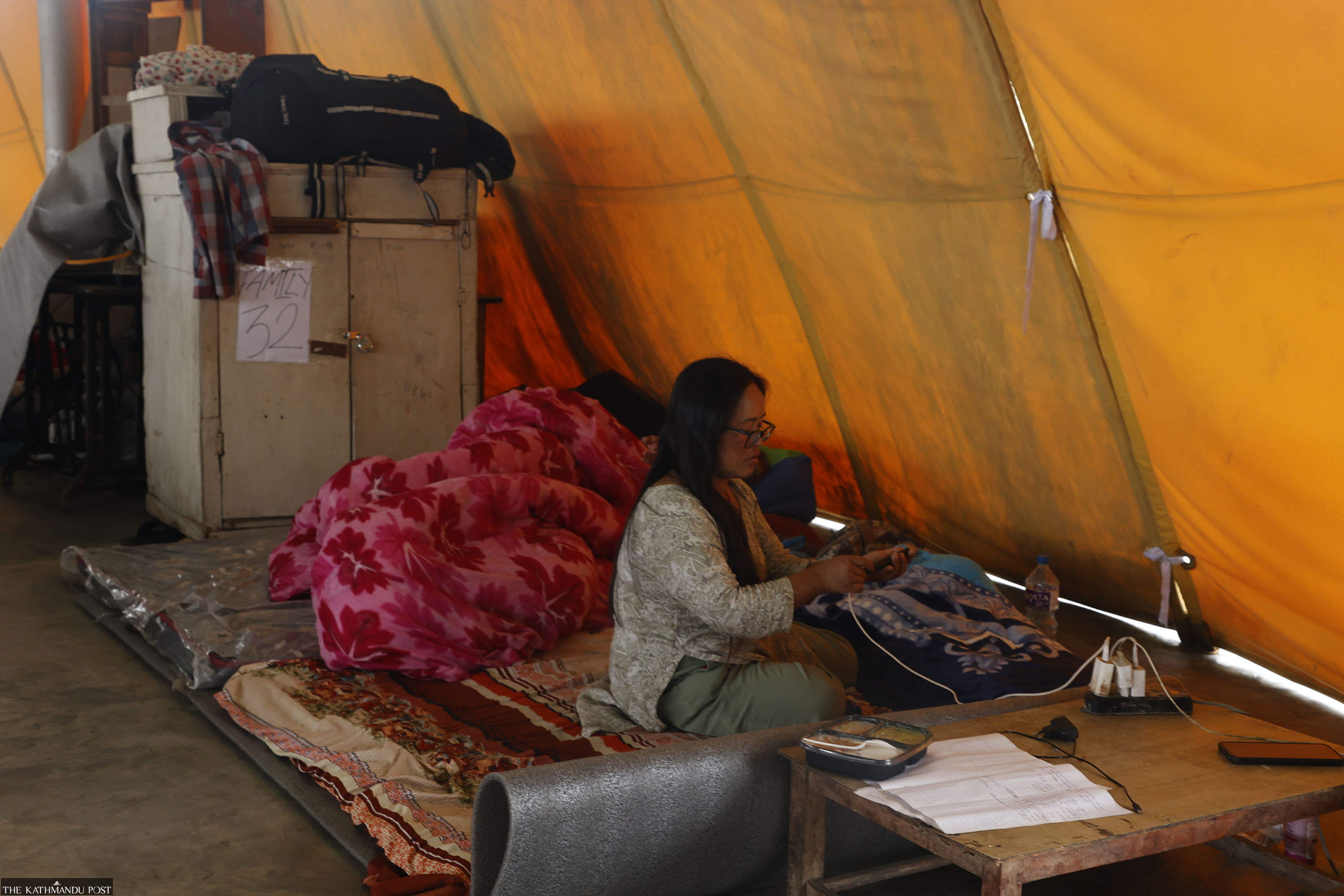
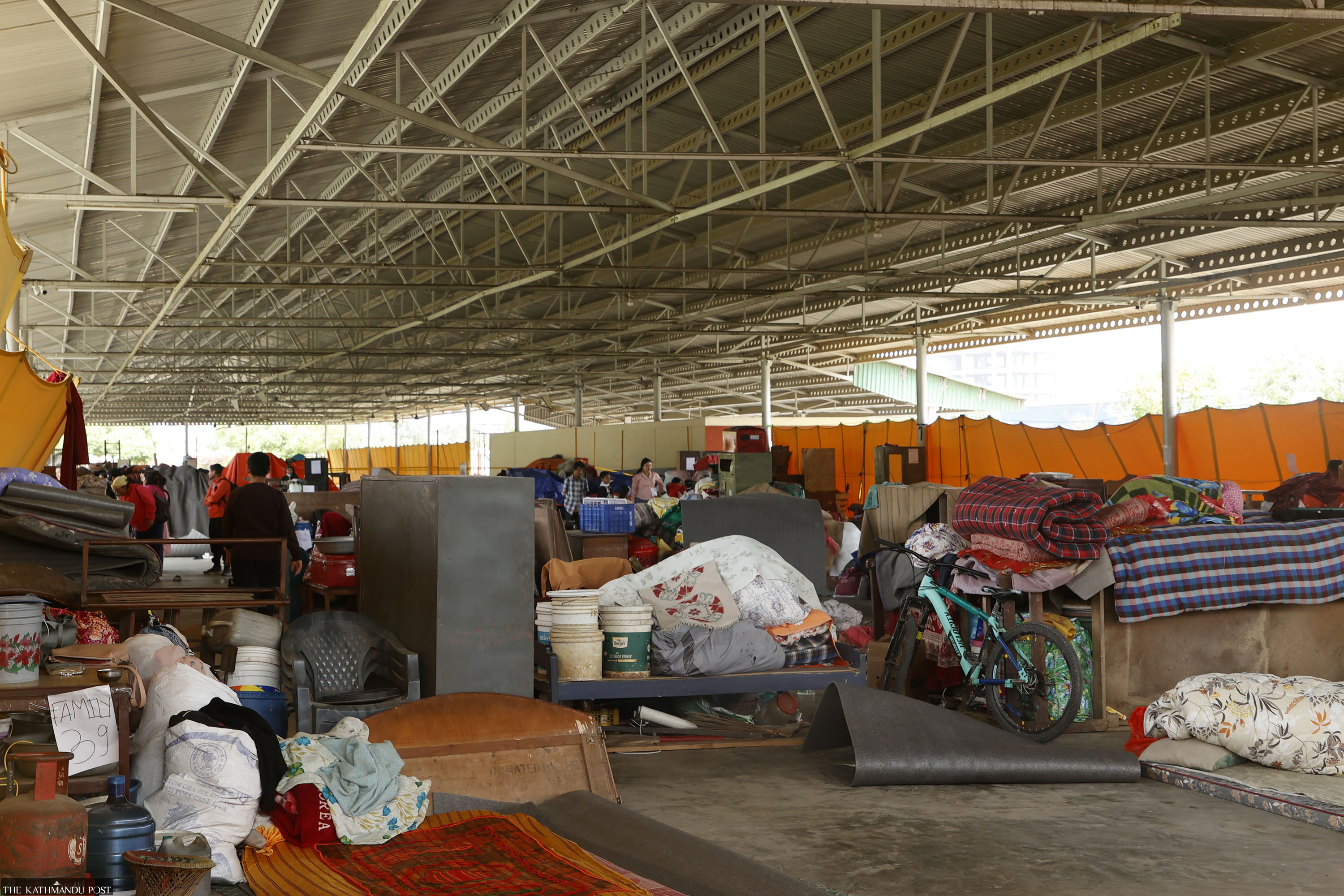
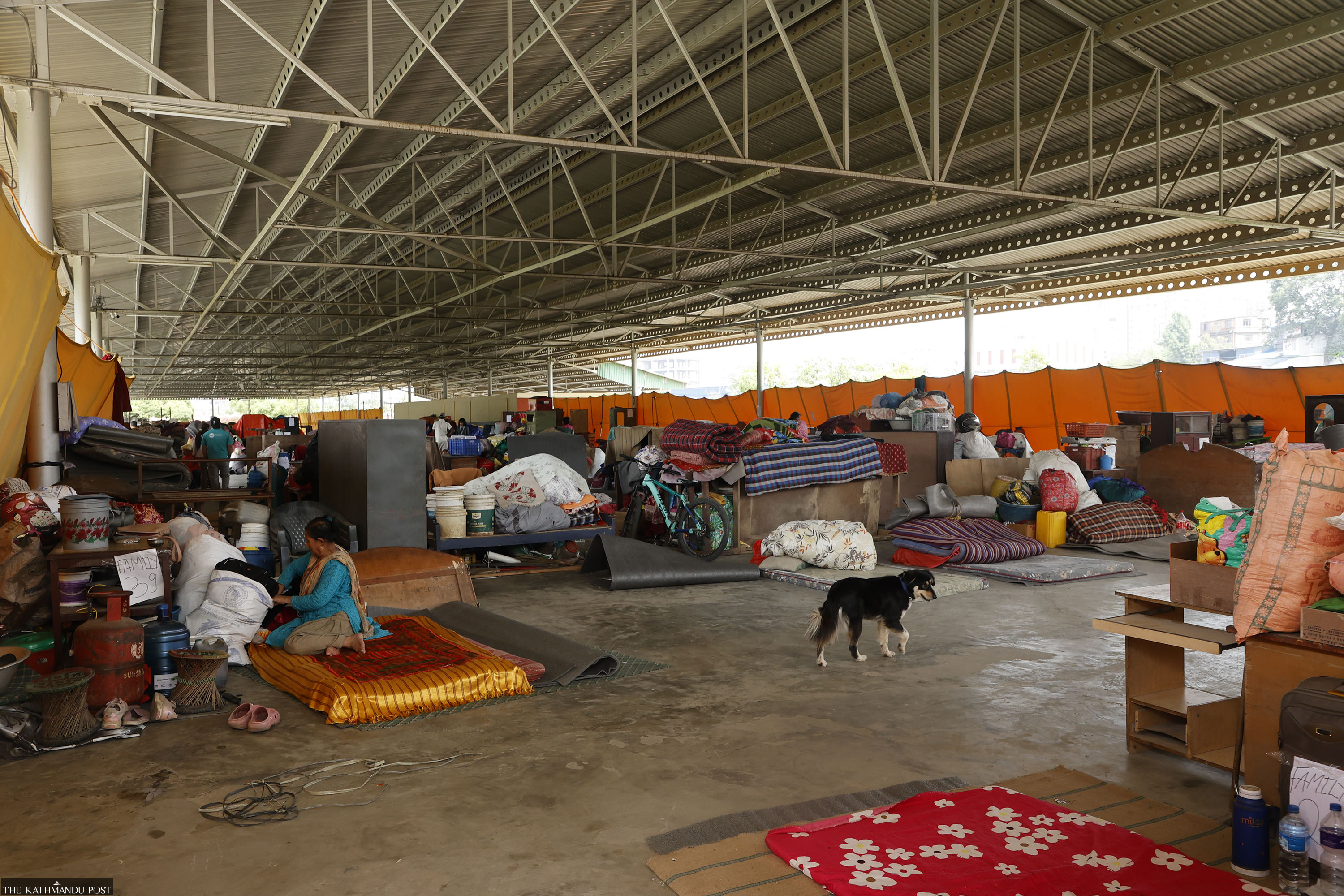
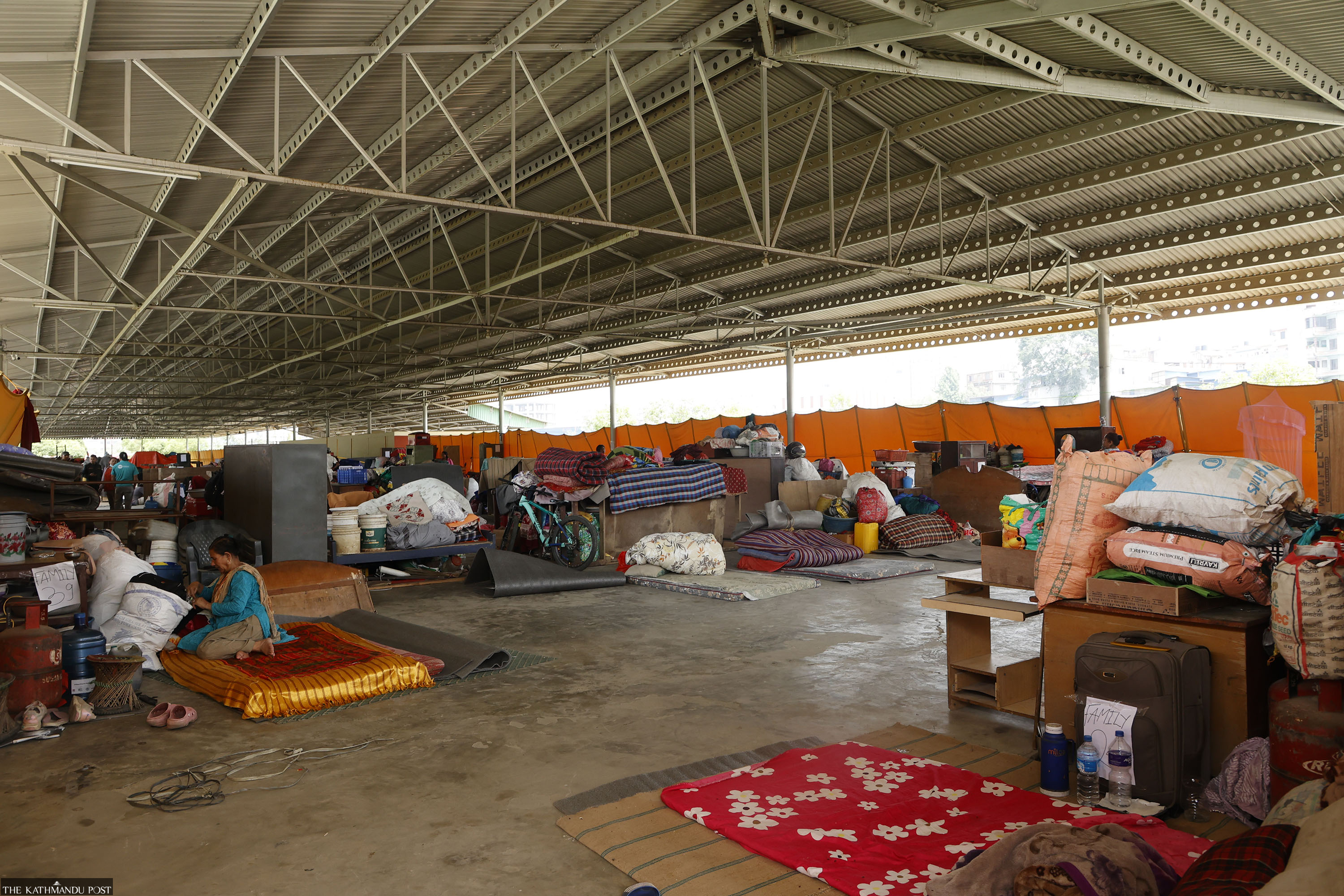
At 9am on Monday, families displaced by Kathmandu’s recent eviction drive were crowded into a temporary shelter at Sundarighat in Kirtipur. Inside the Radha Soami Satsang Beas Nepal premises, some sorted through scattered belongings while others spread thin mats across the floor to set up a sleeping space.
The government launched eviction drives early Saturday in settlements at Thapathali, Manohara, Gairigaun and Shantinagar. Families from those areas have since been moved to temporary shelters across the Valley. At Sundarighat, 47 households are staying.
At the gate, two Nepal Police personnel recorded names and entry times. Those returning after stepping out queued to register before being allowed in. Two female staff deployed by Kathmandu Metropolitan City arrived for cleaning, while four municipal police personnel were stationed inside. Officials remained on guard against possible unrest.
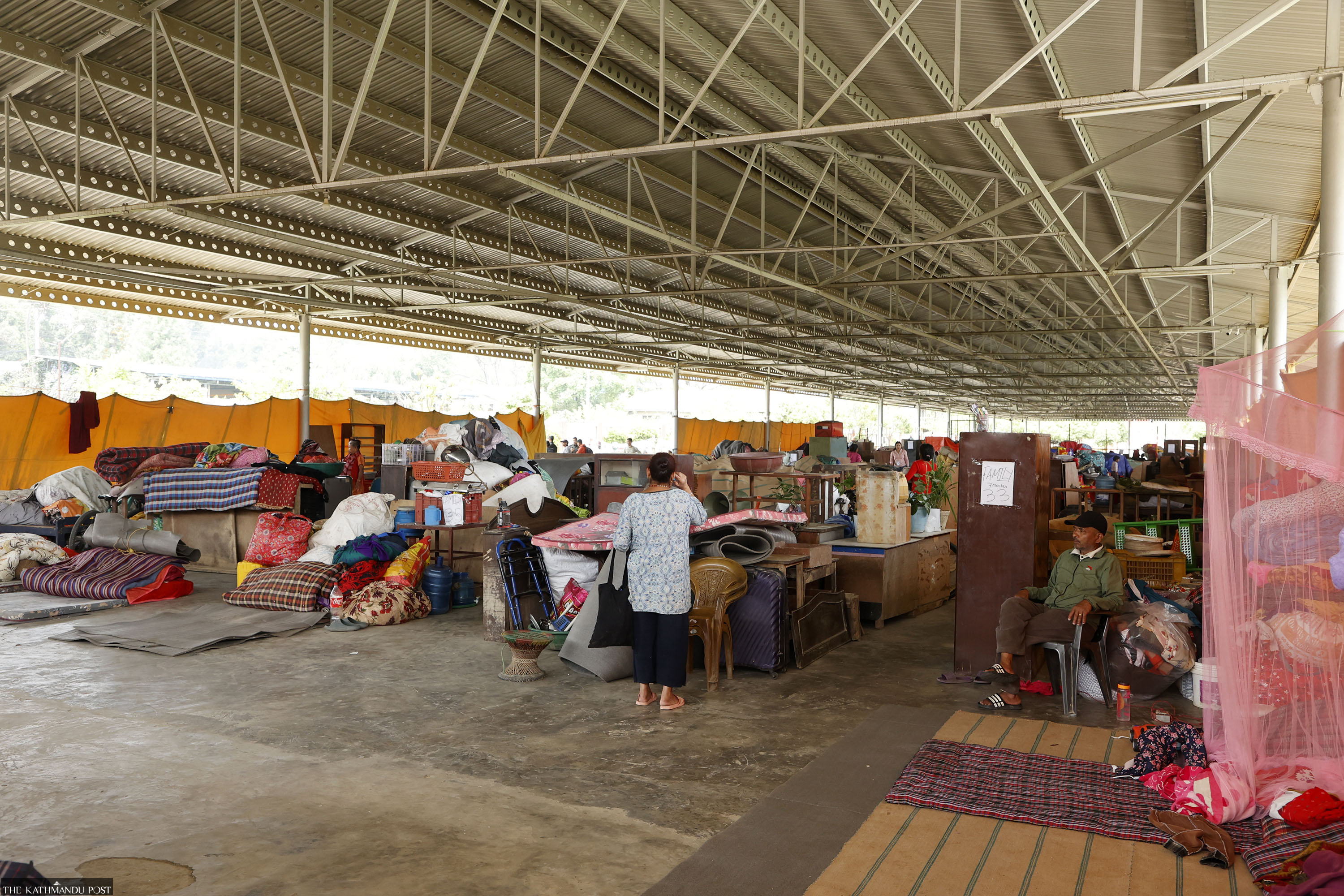
The shelter is a roofed structure made of corrugated sheets but without walls. Inside, there are no partitions separating families or sleeping areas. A partial fabric barrier outside offers limited cover. Some residents said the lack of privacy was a concern.
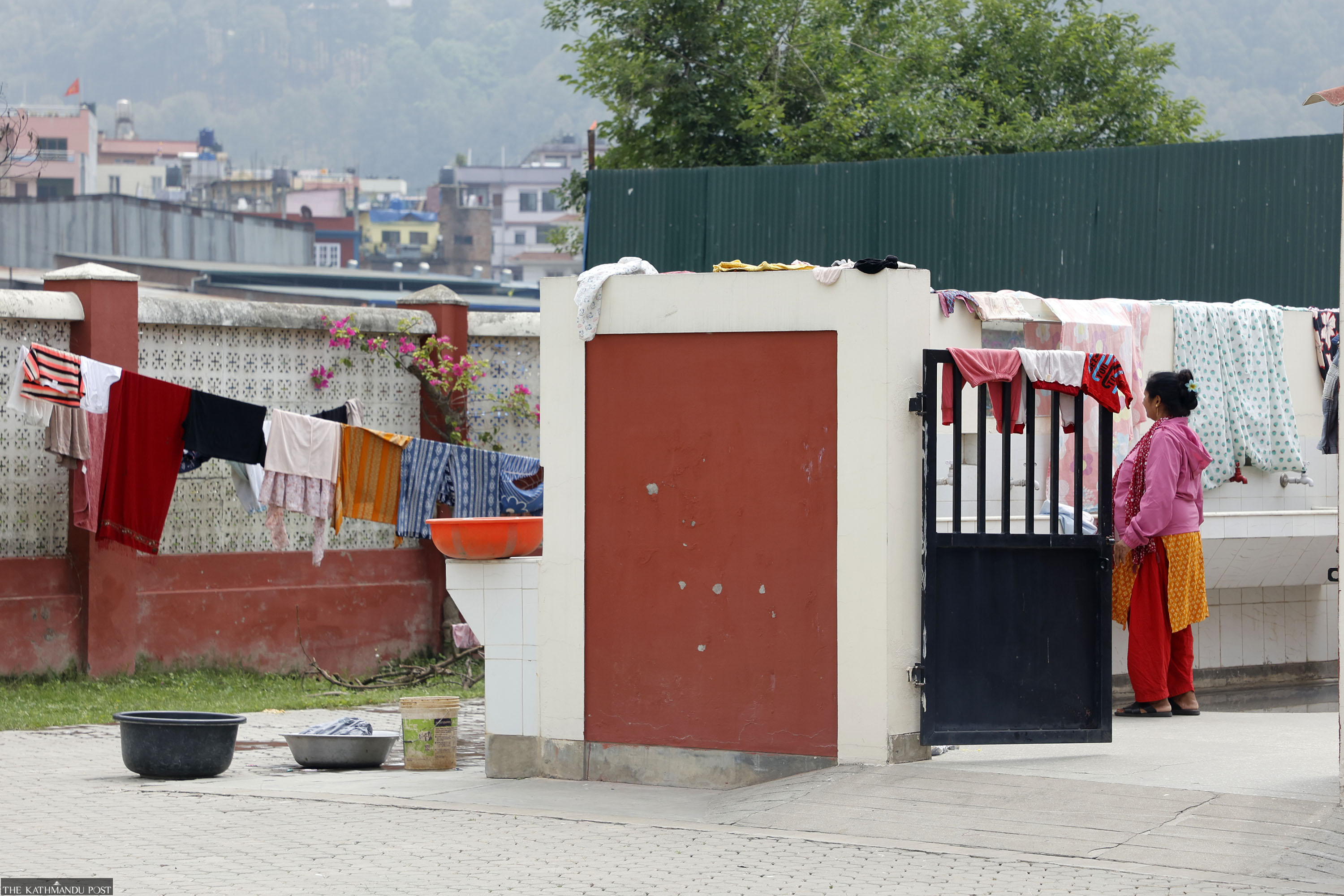
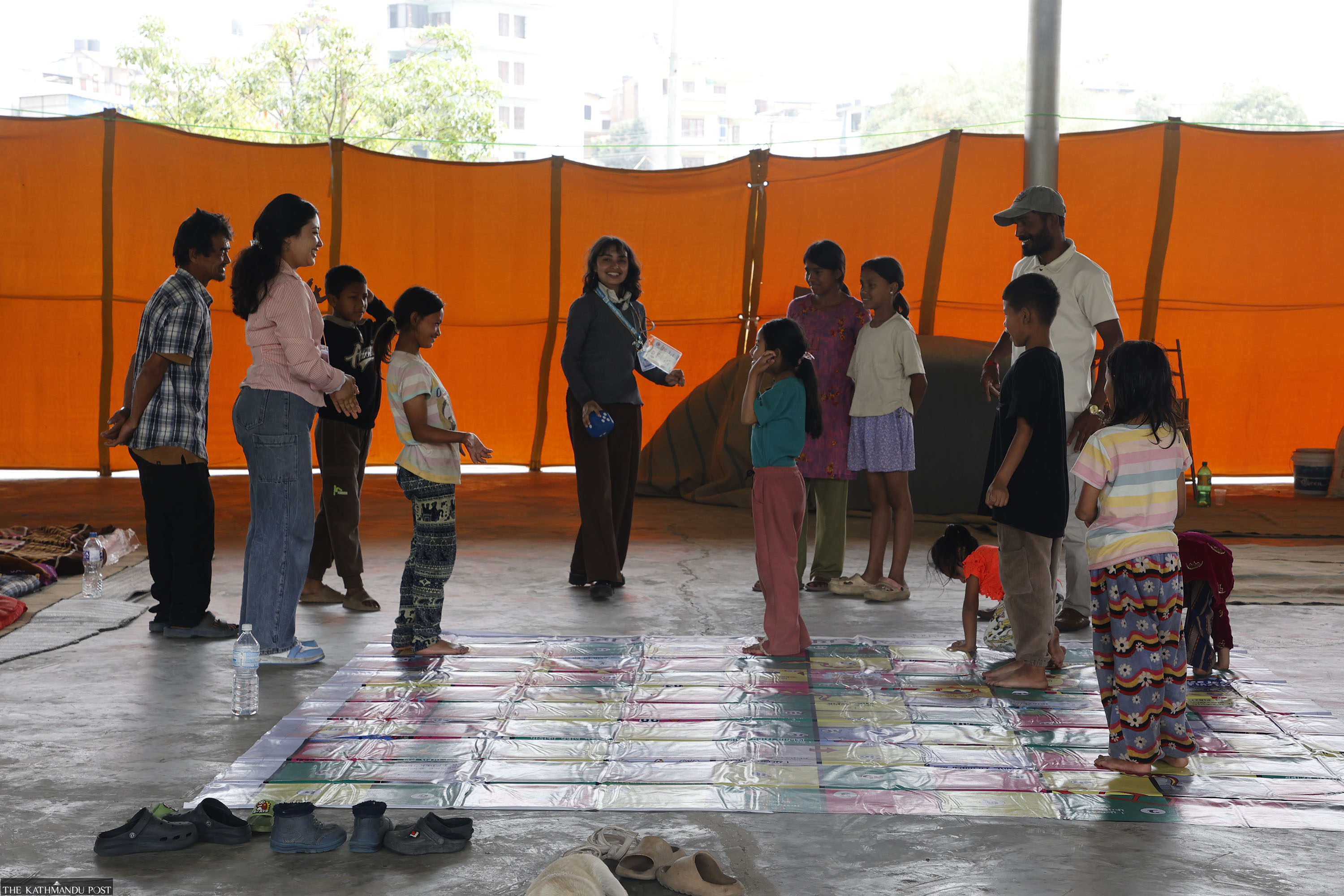
Basic services were in place. Two doctors assigned by the metropolitan office conducted health check-ups, while volunteers kept children occupied with games. Water supply and toilets appeared adequate, and sanitation workers maintained cleanliness.
Journalists’ access was tightly restricted. Some representatives of the displaced community said their privacy was being compromised.
Among those at the shelter was Khamba Singh Budhathoki, who returned from Butwal that morning after learning his home in Thapathali had been demolished. His daughter-in-law and grandson had already been brought to Kirtipur.
He said his house had also been torn down during an eviction drive in 2011, when Baburam Bhattarai was prime minister. Now, he worries about his grandson’s schooling.
“The government must tell us quickly where we are to stay,” he said. “Otherwise, my grandson’s studies will be disrupted.”
Budhathoki said he ate the dal bhat provided by authorities, but remains unsure what comes next. He does not know whether the government’s proposed apartment housing will require rent.
“I cannot afford to rent a room,” he said. “If we have to pay even in the place the government provides, I won’t be able to manage.”
Security personnel briefed residents on movement rules. Those leaving the premises were required to log their names and departure times, a measure some found restrictive.
As a 22-year-old prepared to step outside, a guard reminded him to return before 6pm. The young man, irritated, said he would be back earlier.
For now, families are rebuilding daily routines inside a temporary shelter, with no clear sense of what comes next.
Hemanta Shrestha
Hemanta Shrestha is a photojournalist at Kantipur Publications.


×