Siddhababa sees fewer accidents as safety measures improve
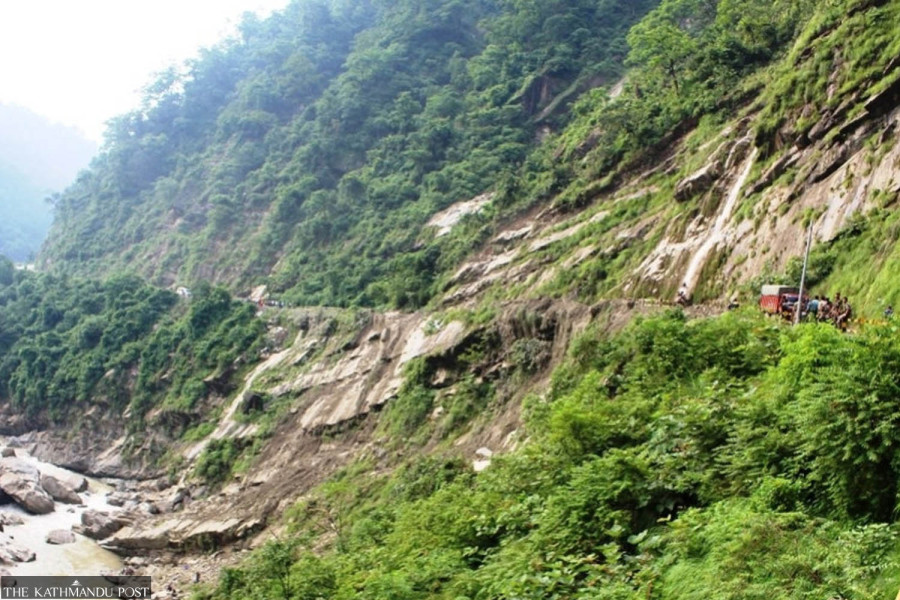
Improved driver awareness, stricter traffic enforcement and rainfall-related travel restrictions have reduced crashes along the notorious highway stretch, but falling rocks and landslides continue to pose a serious threat.Post file photo
Fatal accidents along the Siddhababa section of Siddhartha Highway have fallen significantly over the past seven years, with police attributing the decline to improved driver awareness, stricter traffic enforcement and restrictions on vehicles during heavy rainfall.
The stretch was once notorious for frequent crashes during the monsoon, with landslides, falling rocks and speeding vehicles causing repeated casualties. But authorities say preventive measures and changing driving behaviour have helped reduce accidents in recent years.
Superintendent of Police Dipendra Panjiyar Tharu, chief of the District Police Office, Palpa, said drivers are now more aware of the dangers posed by the section and are more likely to follow safety measures.
“In the past, many drivers would continue driving despite knowing the risks,” he said. “Regular safety awareness campaigns, strict enforcement of traffic rules and stopping vehicles during heavy rainfall have helped reduce accidents.”
According to him, authorities now stop vehicles at Dobhan and Butwal when rainfall becomes intense, deploy police personnel at vulnerable points and continuously alert drivers about possible hazards.
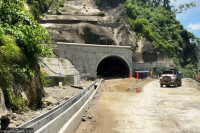
The ongoing construction of the Siddhababa tunnel has also slowed traffic along the section, making it difficult for drivers to maintain high speeds.
Dipesh Khatri, an electric vehicle driver operating on the Butwal-Gulmi route, said the narrow road and construction activities have forced motorists to drive more cautiously.
“Vehicles cannot move at high speed along the four-kilometre stretch because of potholes and ongoing construction,” he said. “Since drivers have to remain extra careful, that may also have contributed to fewer accidents.”
Resident Tank Basyal said most vehicles are naturally travelling at lower speeds because of the tunnel construction. He added that regular monitoring by police and traffic authorities, along with deployment of security personnel at dangerous locations, has helped minimise accidents.
District Traffic Police Chief Rajendra Khadka said that while road accidents have increased across the district, incidents in the Siddhababa area have declined since 2019.
“Vehicles are stopped whenever there is heavy rainfall,” he said. “Avoiding travel during risky conditions and greater awareness among drivers have also helped reduce accidents.”
Across Palpa district, 116 road accidents were recorded in the last fiscal year, killing 27 people. In the current fiscal year, 144 accidents had occurred by June 14, claiming 33 lives. However, police data shows a downward trend in accidents specifically along the Siddhababa section.
Despite the decline, Siddhababa remains one of Nepal’s most dangerous road corridors.
In 1997, a bus plunged into the Tinau river in the area, killing 39 people. A year later, 26 people died after a landslide swept away a bus. Since then, falling rocks, landslides and road crashes have repeatedly caused major losses of life.
In the fiscal year 2013-14 alone, 11 people died in accidents along the Siddhababa section. Police records show that several more people were killed in landslides and crashes in subsequent years.
Resident Jung Bahadur Sunar said the four-kilometre stretch from Dobhan to Chidiya Khola remains the most dangerous part of the highway. Falling rocks from the hills and landslides during heavy rains have frequently trapped or swept away vehicles in the area.
Traffic police data shows that more than 200 people have died and over 700 have been injured in accidents along the 36-kilometre stretch from Bartung to Chidiya Khola over the past two decades.
Resident Bishnu Prasad Pandey said the danger has not disappeared.
“Travelling daily from Dobhan to Butwal, you never know when rocks or mud may fall,” he said. “The road remains equally vulnerable during the monsoon.”
Police and residents believe the risk will be permanently reduced only after the tunnel comes into operation.




 22.21°C Kathmandu